


Dapper Development, a real estate company, is now facing serious legal action from buyers who claim the company misled them and caused significant financial harm. The case has drawn together a group of people with similar experiences, raising important questions about what a class action lawsuit is and how it can serve as a path to accountability for those caught in the middle.
For anyone affected by the Dapper Development lawsuit, understanding available legal options is the first step toward potential compensation. Sparrow simplifies the process for those looking to join class action lawsuits, removing the confusion and paperwork that often keeps people from taking action.
Table of Contents
- What Is the Dapper Development Lawsuit About?
- What Are the Main Allegations in the Lawsuit?
- What Is the Current Status of the Dapper Development Lawsuit?
- Eligibility Requirements and How to File a Claim in the Dapper Development Lawsuit
- Tips for Avoiding Missed Settlement Payments
- How Sparrow Helps You Track Lawsuit Settlements and Unclaimed Funds
- Start Finding Money You May Be Owed with Sparrow
Summary
- Internal business disputes between equal co-owners are far more financially destructive than most people assume. The Dapper Development case involved four partners, each holding a 25 percent membership interest in two LLCs, and the combined settlements across related proceedings totaled $11 million. A single refusal to honor a buyout offer triggered frozen accounts, stalled construction projects, and years of compounding legal costs.
- Operating agreements function as the only objective reference point when equal partnerships fracture. In this case, the Restated Operating Agreement signed February 10, 2022, defined voting rights, removal conditions, and the redemption process for a departing member. When the North Carolina Business Court issued rulings in September 2024 and July 2025, both decisions turned on the plain language of that document rather than the competing narratives of either side.
- Governance disputes can escalate into operational emergencies within weeks. After his removal as manager, the defendant allegedly caused the companies’ operating accounts to be frozen in late June or early July 2023, cutting off payroll, supplier payments, and construction draws at a moment when the companies needed liquidity. What began as a courtroom argument became a cash flow crisis before any ruling was issued.
- Even after a significant ruling, the most consequential questions often remain unresolved. The July 2025 opinion confirmed that the defendant no longer holds membership status, but left the dollar value of his former 25 percent interest entirely open. The parties are in active discovery on company financials and real estate appraisals with no trial date set and no settlement on record as of April 2026.
- Judicial transitions add friction to already slow proceedings. Judge A. Todd Brown, who authored the decisive 2025 ruling, retired effective March 3, 2026, with a new judge inheriting the full record of a complex LLC valuation dispute. That kind of hand-off stretches timelines in ways that never appear in headlines but affect every pending motion and scheduled hearing.
- Billions of dollars in class action settlements go unclaimed each year, not because people are ineligible, but because the notice never reached them, the forms felt overwhelming, or deadlines passed before anyone acted. Sparrow addresses this by scanning new lawsuits weekly, matching them to user profiles, and tracking every submitted claim through a single dashboard until the payout arrives.
What Is the Dapper Development Lawsuit About?
The Dapper Development lawsuit is a business ownership dispute centered on exactly what happened after three co-owners of Dapper Development, LLC and Tantalum Holdings, LLC voted to remove their fourth equal partner, Andrew Cordell, following a breakdown in the working relationship in 2023.
“A business ownership dispute involving the forced removal of an equal partner raises critical questions about LLC governance, voting rights, and the legal limits of majority rule.” — Business Law Principle
🚨 Key Context: This case involves two separate LLCs — Dapper Development, LLC and Tantalum Holdings, LLC — making the ownership dispute especially complex across multiple business entities.
💡 What’s at Stake: When equal partners are removed from an LLC, the core legal questions typically involve operating agreement violations, fiduciary duties, and whether the removal vote was legally valid under state law.
| Key Detail | Specifics |
|---|---|
| Case Type | Business Ownership Dispute |
| Entities Involved | Dapper Development, LLC & Tantalum Holdings, LLC |
| Removed Partner | Andrew Cordell |
| Ownership Structure | Four Equal Partners |
| Year of Dispute | 2023 |
| Action Taken | 3 co-owners voted to remove the fourth |

Who are the parties involved in the Dapper Development lawsuit?
The case was filed in the North Carolina Business Court. Each of four individuals held a 25 percent membership interest in both companies. When Brendan Gelson, Kyle Tudor, and Mason Harris voted to terminate Cordell’s employment and remove him as a member, Cordell rejected the buyout offer and disputed the vote’s validity. The multi-year legal battle centered on whether the operating agreements authorized that removal and what Cordell’s interest in the companies was worth.
Why the operating agreement became the battlefield
The critical document in this dispute is the Restated Operating Agreement signed February 10, 2022, which defined each member’s voting rights, conditions for member removal, and the process for valuing and redeeming a departing member’s interest. When the relationship broke apart, that agreement became the only objective reference point either side could cite. The North Carolina Business Court’s September 2024 ruling confirmed that the majority vote was a valid triggering event, and its July 2025 ruling granted judgment that Cordell no longer holds membership status under the plain language of those agreements.
What does the Dapper Development lawsuit reveal about equal-partnership disputes?
This pattern appears in equal-partnership businesses across industries: four equal owners, no clear tiebreaker, and an operating agreement that either saves the company or becomes the center of a years-long court fight. This case illustrates what happens when buyout negotiations collapse, and one partner refuses to honor the redemption process. According to Reserved Powers, the combined settlements across the two related cases reached $11 million, demonstrating the financial weight these internal ownership disputes can carry.
Most people searching for this lawsuit assume it affects them directly. It does not involve homebuyers, tenants, or construction defects. But the scale matters for a different reason. Reserved Powers also reports a $7 million VPPA privacy settlement connected to related proceedings, a reminder that corporate disputes at this level generate ripple effects well beyond the original parties.
How do most people lose money they are already owed in settlements like this?
That gap between eligibility and awareness is where most people lose money they are already owed. Platforms like Sparrow address that friction directly, helping consumers identify settlements they qualify for and file claims without having to decode legal documents or track court dockets. The barrier was never eligibility—it was the complexity standing between a person and a payout already bearing their name. But understanding what the lawsuit is about is only the first layer of this story; the allegations beneath the surface are sharper than most people expect.
What Are the Main Allegations in the Lawsuit?
The Dapper Development lawsuit contains five distinct claims, each targeting specific moments in which the plaintiffs allege that Cordell chose personal advantage over legal obligation. These claims are not minor procedural complaints — they represent a structured legal argument that Cordell systematically prioritized self-interest at the direct expense of investors and stakeholders.
“The lawsuit identifies five distinct claims, each pinpointing a separate moment of alleged misconduct — painting a picture of repeated choices that favored personal gain over legal duty.” — Case Filing Summary
🚨 Key Allegation: The core argument across all five claims is that Cordell’s decisions were not isolated mistakes — plaintiffs argue they reflect a deliberate pattern of conduct.
| Claim # | Focus Area | Core Allegation |
|---|---|---|
| Claim 1 | Fiduciary Duty | Breach of trust owed to investors |
| Claim 2 | Disclosure | Failure to disclose material information |
| Claim 3 | Self-Dealing | Personal enrichment at stakeholder expense |
| Claim 4 | Misrepresentation | False or misleading statements made |
| Claim 5 | Legal Obligation | Violation of statutory duties |
💡 Why It Matters: With five separate claims filed, the plaintiffs are building a multi-layered case — meaning even if one claim is dismissed, the remaining allegations can still proceed independently.

The breach that started the chain reaction
On June 14, 2023, Gelson, Tudor, and Harris voted to end Cordell’s employment and membership, triggering mandatory redemption language in Section 10 of the Operating Agreements. The plaintiffs offered $485,000 cash plus quitclaim title to the 1742 Winston property, which Cordell refused. The North Carolina Business Court confirmed the plaintiffs had presented sufficient facts showing a triggering event occurred and that the refusal violated the clear terms of the redemption clause. An unresolved ownership stake freezes capital allocation and blocks clean title transfers on every active project.
How did a frozen bank account turn the Dapper Development lawsuit into an operational emergency?
After his removal as manager under Article 5, Cordell contacted Bank OZK and froze the companies’ operating accounts in late June or early July 2023. The freeze halted payroll, supplier payments, and construction draws when the companies needed liquidity most, prompting legal action against the bank. A governance dispute became an operational emergency within weeks.
What additional claims did the Dapper Development lawsuit bring against Cordell?
Across the remaining three claims, Cordell allegedly used every available means—implied covenant violations, breach of a December 2023 Consent Scheduling Order, and abuse of process—to secure a higher personal payout rather than honor the majority’s documented offer. Abuse of process requires proof of an ulterior purpose and a willful act outside regular proceedings. The complaint links Cordell’s timing directly to that standard: immediate lawsuit after termination, bank freeze, and rejection of a written offer with a specific dollar figure.
How much does a multi-party business court case in North Carolina actually cost?
A multi-party business case in North Carolina’s Business Court typically takes six to twelve months. Attorney fees start around $25,500 and can exceed $50,000 once discovery, appraisals, and motions accumulate. The companies lost money during this period while awaiting resolution. What the allegations show is not a contract fight but how quickly a single refusal can lead to frozen accounts, stalled projects, and years of litigation. The court has not issued a final ruling on the merits, and Cordell’s counterclaims present a different version of these events.
Related Reading
- What Is A Class Action Lawsuit
- What Is A Class Action Settlement
- How Do Class Action Settlements Work
- How To Find Unclaimed Money
- Are Class Action Settlements Taxable
- Doge Transparency FOIA Lawsuit
- Google Android Cellular Data Lawsuit
- Pima County Sheriff Lawsuit
- Ozempic Lawsuit
- General Motors V8 Engine Lawsuit
What Is the Current Status of the Dapper Development Lawsuit?
The Dapper Development case is still active as of 2026. According to Rayburn Cooper & Durham’s roundup of N.C. Business Court Opinions, the July 15, 2025 ruling (2025 NCBC 33) settled membership rights but left the dollar value of Cordell’s former 25 percent interest unsettled. That unsettled valuation now moves the case forward.
“The July 15, 2025 ruling (2025 NCBC 33) settled membership rights but left the dollar value of Cordell’s former 25 percent interest unsettled.” — Rayburn Cooper & Durham, N.C. Business Court Opinions Roundup, 2025
🎯 Key Point: The 2025 NCBC 33 ruling resolved who holds membership rights — but the critical question of how much those rights are worth remains an open legal issue.
⚠️ Warning: Do not confuse the settled membership rights ruling with a full case resolution — the valuation dispute is still very much alive and will determine the final financial outcome.
| Case Element | Current Status |
|---|---|
| Case Activity | Active as of 2026 |
| Ruling Reference | 2025 NCBC 33 (July 15, 2025) |
| Membership Rights | Settled |
| Cordell’s 25% Interest Valuation | Unsettled — pending |
| Next Phase | Valuation proceedings |

Where the case actually stands right now
The parties are deep in discovery on company financials and real estate appraisals, with no trial date set and no settlement on record as of April 2026. This is where the real money fight plays out: the phase most people never see because it lacks the drama of a ruling.
How does a judicial transition affect the Dapper Development lawsuit timeline?
A change in judges adds delays to this already slow process. Judge A. Todd Brown, who wrote the important 2025 NCBC 33 decision, retired from the Business Court on March 3, 2026, and Judge A. Graham Shirley took over the next day. A new judge must learn the entire case file, earlier court orders, appraisal rules, and pending motions before making major decisions. This transition causes longer wait times that affect every delayed motion and rescheduled hearing.
What happens after a ruling that leaves key questions unanswered?
A ruling that sounds final often leaves the most important questions unanswered. Platforms like Sparrow help solve this problem by allowing consumers to track active settlements and file claims without having to read court documents or understand legal terms. The real barrier between a person who qualifies and their money is rarely about eligibility; it is about knowing the settlement exists and finding where to look.
Who actually has standing here
The case, Dapper Dev., L.L.C. et al. v. Cordell, Case No. 24CV018718-590, involves only Dapper Development, L.L.C., Tantalum Holdings, LLC, and four original members: Brendan Gelson, Kyle Tudor, Mason Harris, and Andrew Cordell. As Law Monarch’s analysis of the Dapper Development lawsuit claims and rulings confirms, this is an LLC buyout dispute, not a consumer class action. No homebuyers, contractors, outside investors, or members of the public have claims or can recover.
What does the Dapper Development lawsuit reveal about LLC governance failures?
The Dapper Development lawsuit demonstrates how internal LLC governance failures can freeze capital, stall projects, and compound legal costs. The cases worth tracking are those courts certify on behalf of large consumer groups, where a single filing can recover money that already belongs to you without a single day in court. The most surprising part of how settlement money moves from courtrooms to consumers is something most people have never learned.
Related Reading
- Costco Sonoma County Lawsuit
- Apple Class Action Lawsuit
- At&t Class Action Lawsuit
- Temu Lawsuit
- Hexclad Lawsuit
- Nightfall Group Lawsuit
- Turbotax Lawsuit
- Amazon Prime FTC Settlement Lawsuit
- Isotonix Lawsuit
- Capital One Class Action Lawsuit
- Life360 Lawsuit
- Dapper Development Lawsuit
- Amazon Fire TV Stick Lawsuit
- Minnesota Ice Lawsuit
- Turbotax Lawsuit
Eligibility Requirements and How to File a Claim in the Dapper Development Lawsuit
This lawsuit is a private business dispute between company owners, not a consumer class action. This distinction determines who has legal standing to participate and who is eligible for compensation.

Who Actually Holds Standing
Only the four original 25-percent members and the two limited liability companies have legal standing. The July 15, 2025 opinion (2025 NCBC 33) confirmed that Cordell’s membership ended on June 14, 2023, with the majority vote. The remaining dispute concerns the value of that former interest and any outstanding breach claims between the parties. Homebuyers, contractors, outside investors, lenders, and members of the general public have no rights in this case.
Why No Public Claim Form Exists
North Carolina law treats LLC member disputes as private contract and governance matters controlled by Operating Agreements, which bind only signatories. Because the case never sought class certification and never alleged harm to a broader group, the court never created a claims process. Competitors publishing “how to file” guides often confuse this with the separate Dapper Labs NFT securities settlement or VPPA privacy settlement—entirely different lawsuits against different companies. The real-estate LLC case contains none of their features: no fund, no administrator, no deadline, no online portal.
What the Court Record Actually Shows
The official case number is 24CV018718-590. Every filing, order, and opinion lists the same six parties. The 2024 NCBC 63 ruling allowed certain claims to move forward; the 2025 NCBC 33 ruling decided membership status. Discovery and valuation work continue among these parties. Nothing in the public docket opens the door to third-party claims. Any website promising a claim form for “the Dapper Development lawsuit” either uses old Dapper Labs settlement language or describes a process the North Carolina Business Court never approved.
What You Should Do Instead
If you believe you have a separate contract, construction, or payment dispute with Dapper Development or Tantalum Holdings, consult your own lawyer and review your written agreements. You would need to file your own case if the facts support it. For the internal member dispute itself, only the named parties and their attorneys receive notices, attend hearings, and negotiate any eventual buyout or judgment. No public registration step exists because there is no public recovery.
Tips for Avoiding Missed Settlement Payments
Missing a settlement payment usually happens because of missed deadlines, old contact information, or not knowing you qualify in the first place. Taking action ahead of time helps you stay informed and significantly reduces the amount of unclaimed money.
“The most common reasons people miss settlement payments are preventable — outdated records, missed deadlines, and simple unawareness are the real culprits.”
💡 Tip: Always update your contact information with any settlement administrator as soon as you move or change your email — even a small delay in communication can cost you your payment.
⚠️ Warning: Never assume you don’t qualify. Many people leave legitimate settlement funds unclaimed simply because they never checked their eligibility.
| Common Cause | How to Avoid It |
|---|---|
| Missed deadlines | Set calendar reminders for all claim filing dates |
| Outdated contact info | Update your address and email with administrators immediately |
| Unaware of qualification | Regularly check settlement databases and class action registries |
✅ Best Practice: Proactive monitoring of open settlements — combined with accurate personal records — is the single most effective strategy for ensuring you never miss a payment you’re owed.

Set Up Reliable Deadline Tracking Systems
Create a dedicated digital folder or spreadsheet for all possible settlements, noting important dates such as claim deadlines, fairness hearings, and payment distribution windows. Update entries when you find new information, set calendar reminders two weeks before deadlines, and send follow-up alerts. This prevents notices from getting lost in daily emails and mail, ensuring you take action on time even months after becoming eligible.
Maintain Comprehensive Purchase Records
Keep digital scans or photos of receipts, order confirmations, and credit card statements in one central, searchable location organized by product category. Include purchase dates, amounts, and seller details; administrators need this verification for claims. Regular reviews of bank statements help you catch overlooked transactions and turn potential misses into successful filings.
Monitor Multiple Communication Channels
Check your physical mailbox, email spam folders, and online accounts weekly for notices from administrators. Sign up for alerts from consumer rights organizations or reliable platforms. Notifications arrive through different channels and can get lost in regular mail, causing valid claims to expire unnoticed.
Leverage Specialized Tools Like Sparrow for Streamlined Management
Sparrow scans new lawsuits and identifies class action cases you likely qualify for based on your profile. You don’t need to prove anything to join. Our service completes the forms, handles printing and mailing with postage included, and guarantees your money back if you don’t recover at least as much as your subscription costs.
Review and Follow Up on Submitted Claims Regularly
After filing, record confirmation numbers and check status websites or contact administrators every 30 days during distribution phases. Respond promptly to requests for additional information to avoid processing delays. This follow-through ensures approved claims convert to actual payments, as pro-rata distributions depend on validated submissions reaching completion without administrative holds.
How Sparrow Helps You Track Lawsuit Settlements and Unclaimed Funds
Settling a lawsuit like Dapper Development’s is one thing. Knowing it happened, qualifying to file, and completing a claim before the deadline closes is another. Most people lose in the gap between “a settlement exists” and “money lands in your account.”

“Most people lose in the gap between ‘a settlement exists’ and ‘money lands in your account.’” — The hidden cost of being uninformed
💡 Tip: Sparrow monitors lawsuit settlements and unclaimed funds on your behalf — so you never miss a qualifying claim window or filing deadline again.
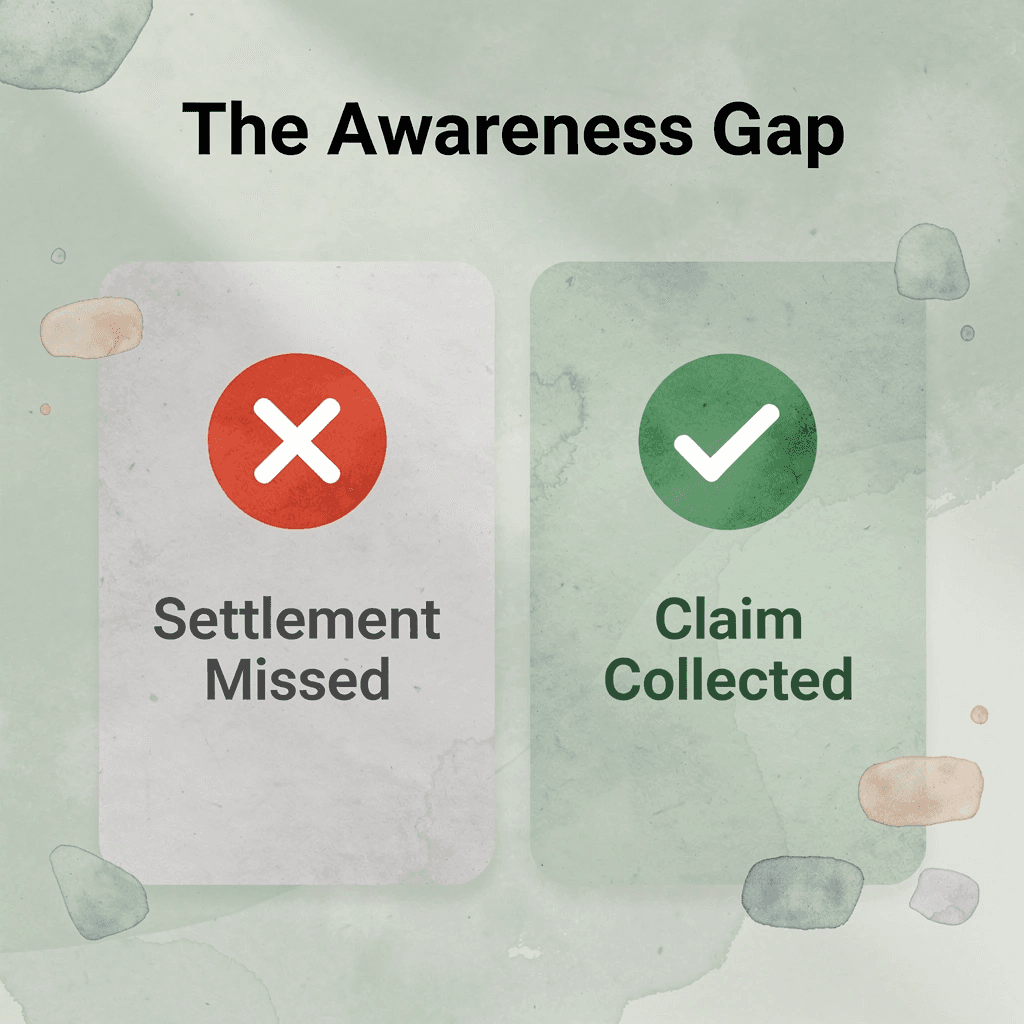
🎯 Key Point: The real barrier to collecting settlement money isn’t eligibility — it’s awareness. Most claimants miss out not because they don’t qualify, but because they never knew the settlement existed in the first place.
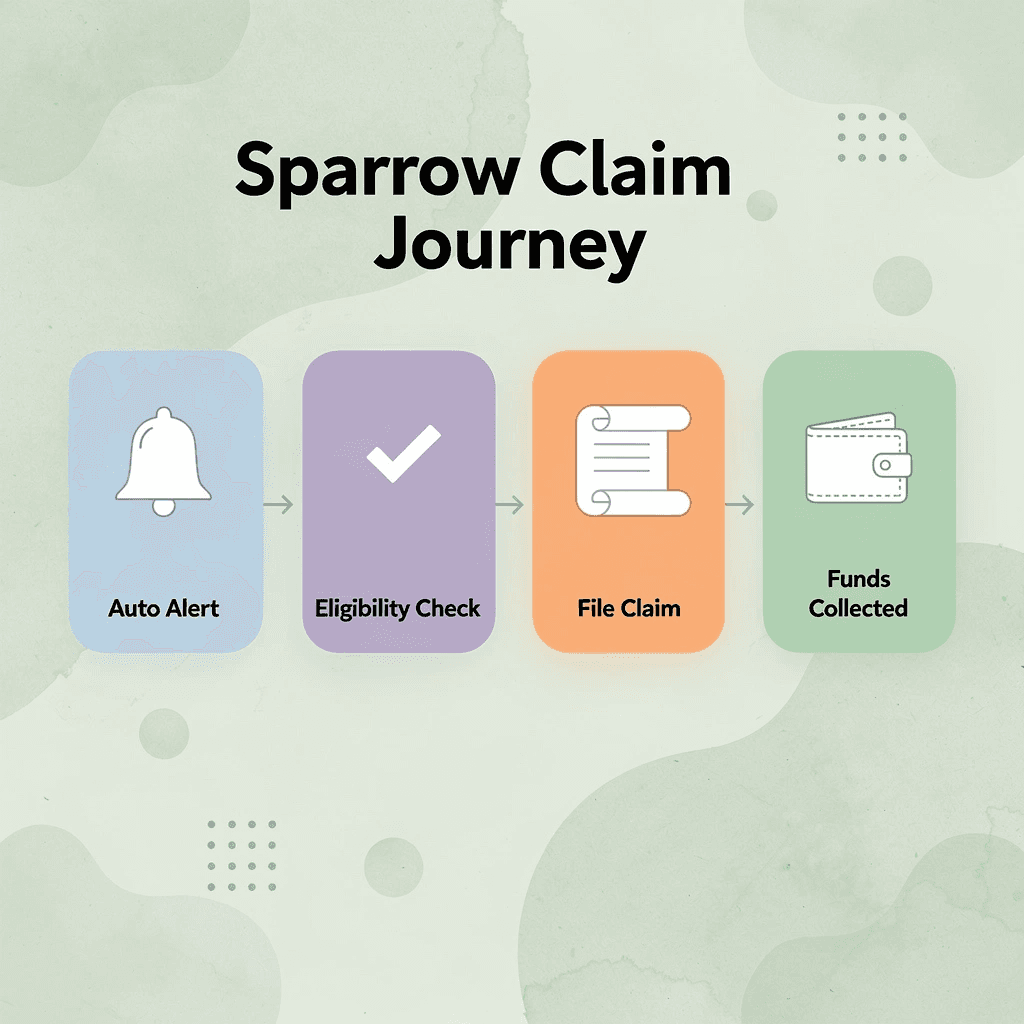
| Stage | Without Sparrow | With Sparrow |
|---|---|---|
| Discovery | Manual searching, easily missed | Automatic alerts sent to you |
| Qualification Check | Guesswork and confusion | Guided eligibility review |
| Filing | Risk of missing deadlines | Deadline tracking built in |
| Payout | Uncertain and delayed | Status updates throughout |
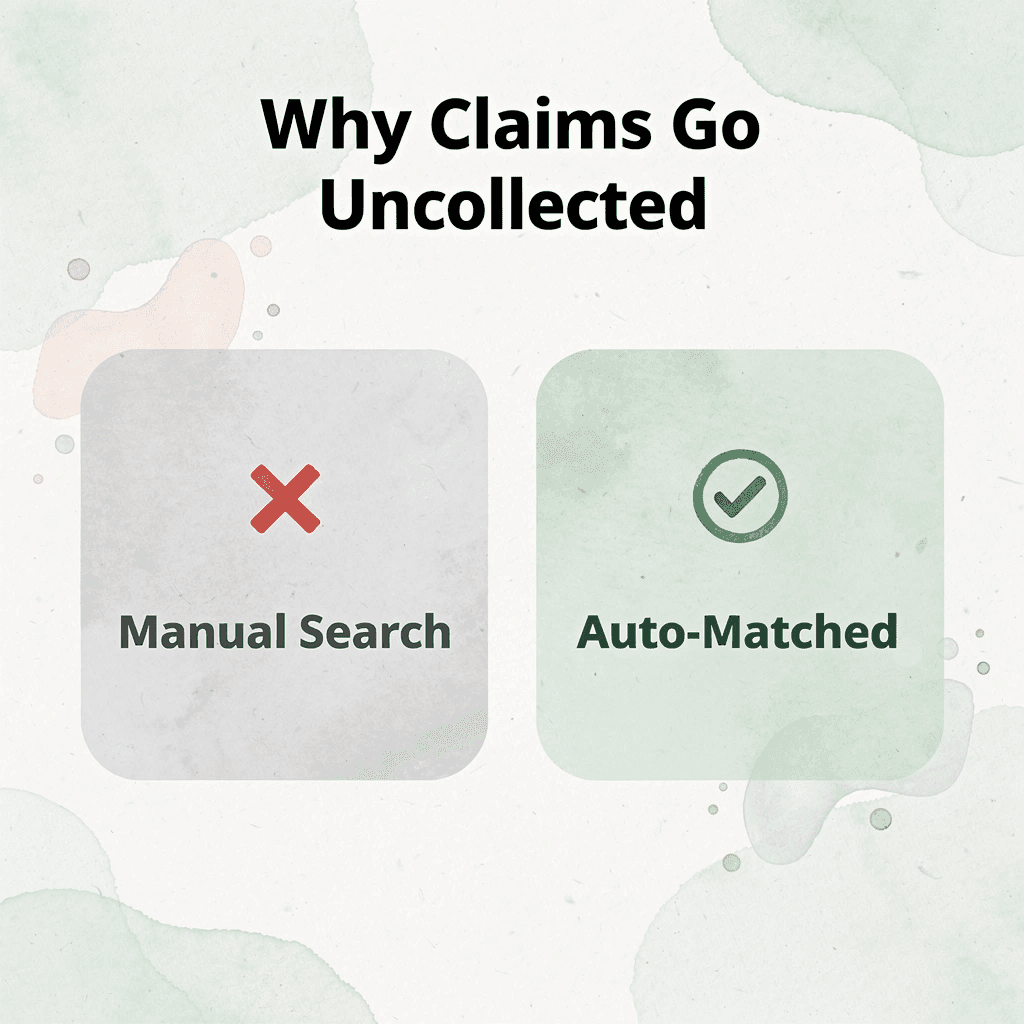
Why do qualifying class members miss settlement payouts?
Qualifying class members miss payouts not because they were ineligible, but because the notice never reached them, the form felt overwhelming, or life interrupted before the deadline. Billions of dollars sit unclaimed every year for this reason: a logistics problem, not a legal one.
How does Sparrow help you avoid missing a Dapper Development Lawsuit deadline?
Most people track settlements using bookmarks, occasional Google searches, or unfinished newsletters. This works until deadlines pile up and a $300 payout quietly expires unclaimed. Platforms like Sparrow solve this by scanning new lawsuits weekly, matching them to your profile, prefilling claim forms, and tracking every submission in a single dashboard until the payout arrives.
What makes weekly matching different from searching yourself?
A general search returns hundreds of irrelevant results. Sparrow shows only settlements with verified evidence that match your purchase history, location, and demographic profile. Every match is actionable. Sparrow has a 4.8 rating out of 5 across 95,500 reviews, demonstrating that finding the right matches matters to users.
Why tracking after filing matters as much as filing itself
Filing is not the finish line. Settlement administrators manage thousands of claims simultaneously, payout timelines shift, and checks do get lost. Without checking your claim status after submission, a $400 payout could expire in a queue you never reviewed. Sparrow’s dashboard keeps every submitted claim visible until the funds arrive, maintaining clarity from the first match to the final deposit. The money is already out there; the only thing standing between you and it is whether someone built a system to close that gap for you.
Start Finding Money You May Be Owed with Sparrow
Most people who qualify for class action settlements never collect because finding, filing, and tracking claims requires patience most lack.
“The biggest reason eligible consumers miss out on settlements isn’t ineligibility — it’s inaction. Millions of dollars go unclaimed every year because people don’t know where to look.”
💡 Tip: If you’ve purchased a product, used a service, or been affected by a data breach, you’re likely already eligible for at least one active settlement.
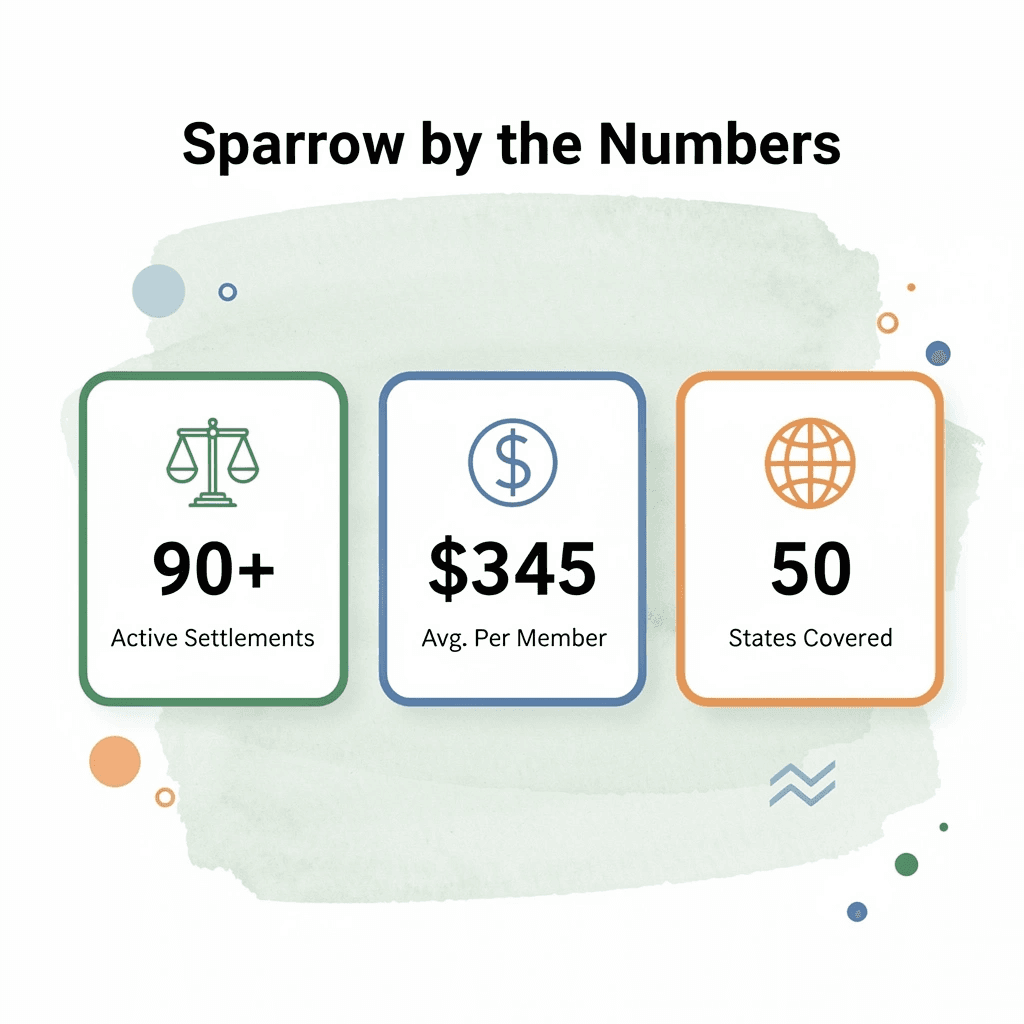
Sparrow matches your profile to active settlements across all 50 states, pre-fills claim forms, and tracks submissions until payout. Our platform typically gives members access to 90+ active settlements and helps them recover an average of $345 per year — backed by a money-back guarantee if Sparrow doesn’t outpace its membership cost.
| Feature | What It Does |
|---|---|
| Profile Matching | Finds settlements you already qualify for |
| Pre-Filled Forms | Eliminates manual paperwork |
| Submission Tracking | Monitors claims until payout |
| 90+ Active Settlements | Maximizes your recovery opportunities |
| Money-Back Guarantee | Zero risk if Sparrow doesn’t outpace its cost |
🎯 Key Point: Sparrow doesn’t just find settlements — it handles the entire claims process from match to payout, so you never leave eligible money on the table.
Not every lawsuit produces a public settlement you can file against. But countless consumer class actions exist where your eligibility is already established—you need only show up. Create your Sparrow account and let it do the searching.
⚠️ Warning: Every unclaimed settlement has a deadline. The longer you wait, the greater the risk of missing your window to collect money you’re owed.
Related Reading
- Settlemate
- Rocket Money
- Is Settlemate Legit
- Celsius Lawsuit
- Truebill
- Is Claimmoney.com Legit
- Claim App
- At&t Lawsuit
- Fortnite Lawsuit
- Poppi Lawsuit
- Catch

Leave a Reply