


Millions of Apple customers may be owed money from legal settlements tied to products they already own, yet most never file a claim. Understanding what a class action lawsuit is helps clarify why it is a legal case where a group of people with the same complaint against a company pursue compensation together, splitting any awarded funds among eligible members. Knowing whether a settlement applies to you, and acting before the deadline, is the difference between receiving a payout and missing it entirely.
Sparrow simplifies that process by scanning purchase history, confirming eligibility, and guiding users through each filing step without requiring any legal knowledge. For anyone looking to join class action lawsuits connected to Apple settlements, Sparrow removes the guesswork and helps ensure no valid claim goes unfiled.
Table of Contents
- What Is the Apple Class Action Lawsuit About?
- Who Is Eligible to File an Apple Class Action Lawsuit Claim?
- What Compensation Could Eligible Apple Users Receive?
- How to Confirm Eligibility to File a Claim for the Apple Class Action Lawsuit
- How to File an Apple Class Action Lawsuit Claim in 7 Steps
- How Sparrow Helps You Find and Claim Class Action Settlements
- Start Finding Money You May Be Owed with Sparrow
Summary
- Apple’s $95 million Siri privacy settlement, stemming from the case Lopez et al. v. Apple Inc., filed in 2019, resolved claims that Siri was recording private conversations without intentional activation and that contractors were reviewing those recordings without meaningful disclosure to users. The case gained additional weight when a judge sanctioned Apple for deleting relevant data during proceedings, and final court approval came in October 2025 after more than six years of litigation.
- Eligibility for the Siri settlement is broader than most consumers realize. Approximately 37 million iPhone owners qualify, and the case extends beyond iPhones to include iPads, Apple Watches, MacBooks, iMacs, HomePods, iPod touches, and Apple TVs owned between September 17, 2014, and December 31, 2024. The key eligibility requirement centers on experiencing at least one unintended Siri activation during a private or confidential conversation, and claimants are not required to produce technical evidence to support their account.
- The advertised per-device payout of up to $20 (with a five-device cap) is a ceiling, not a typical outcome. Because the settlement fund is fixed while the eligible claimant pool runs into the tens of millions, actual payouts scale down as more valid claims enter. Real recipients reported receiving anywhere from under ten dollars to around forty dollars, depending on device count and total claim volume, a gap that consistently surprises people who filed based on the headline figures.
- Attorney fees and administrative costs reduce what claimants actually receive before any individual check is written. In this settlement, legal fees alone totaled roughly $28.6 million drawn from the same pool, a structurally normal feature of class action litigation that most recipients never account for. The result is that the advertised settlement size and the money reaching individual users are two meaningfully different figures.
- Most eligible consumers never file at all, and the failure point is almost always logistics rather than disinterest. Settlement notices frequently arrive as postcards that resemble junk mail or emails that get filtered, and by the time someone realizes they qualify, the filing window has often closed. The average person who files consistently across multiple settlements recovers over $345 per year, according to Sparrow’s internal data, reflecting the compounding effect of moving from occasional manual claims to a reliable, repeatable process.
- Apple’s legal exposure did not end with the Siri case. A separate $250 million settlement has been proposed to resolve claims that Apple misrepresented AI features on iPhone 15 and 16 models, suggesting a broader pattern of courts and consumers responding to gaps between what technology companies advertise and what their products actually deliver.
- Sparrow addresses the discovery and filing gap directly by scanning active settlements, matching them to a user’s specific device history, and handling the claim submission process, including printing and mailing physical forms when required.
What Is the Apple Class Action Lawsuit About?
Millions of Apple customers received a share of a $95 million settlement after a landmark privacy dispute revealed that Siri was allegedly recording private conversations without being intentionally activated. The case, Lopez et al. v. Apple Inc., filed in 2019 in the Northern District of California, accused Apple of allowing human contractors to review those unintended recordings — sometimes capturing sensitive personal moments inside people’s own homes — without meaningful disclosure to users.
“Millions of Apple customers received a $95 million settlement after allegations that Siri recorded private conversations without intentional activation — exposing some of the most sensitive personal moments in users’ homes.” — Lopez et al. v. Apple Inc., 2019
🚨 Warning: This wasn’t a case of intentional eavesdropping by users — Siri’s accidental activations allegedly triggered recordings during completely private moments, with no clear user consent or awareness.
💡 Key Point: The $95 million payout makes this one of the most significant consumer privacy settlements ever reached against a major tech company, setting a critical precedent for accountability in voice assistants.
| Case Detail | Information |
|---|---|
| Case Name | Lopez et al. v. Apple Inc. |
| Filed | 2019 |
| Court | Northern District of California |
| Settlement Amount | $95 million |
| Core Allegation | Siri recording conversations without intentional activation |
| Key Concern | Human contractors reviewing private recordings |
How the allegations took shape
A 2019 report revealed that Apple had contractors listen to Siri recordings triggered by background noise rather than by the “Hey Siri” command. Apple admitted this practice violated its own privacy promises, which became central to the plaintiffs’ legal argument. The lawsuit expanded from a single California complaint into a proposed class action representing tens of millions of device owners.
What evidence shaped the Apple class action lawsuit claims?
Plaintiffs said the audio was used for advertising without fair warning to customers. A judge also sanctioned Apple after finding relevant data had been deleted, strengthening claims about how the company handled evidence.
Why did most eligible consumers miss out on the settlement?
Most eligible consumers never pursued the settlement. They received notice, assumed the payout was too small, or couldn’t navigate the process. Platforms like Sparrow address this by scanning purchase history, confirming eligibility, and filing claims without requiring consumers to track deadlines or review court documents.
What Apple said in response
Apple said it did nothing wrong and described the $95 million settlement as a practical way to resolve the case rather than an admission of fault. The penalty over deleted data and the settlement’s size indicate this was not a case Apple could easily dismiss. Final court approval came in October 2025, closing a legal fight that lasted more than six years.
What does the Apple class action lawsuit mean for future tech disputes?
The settlement sits alongside a separate dispute: a $250 million settlement proposed to resolve claims that Apple misrepresented AI features on the iPhone 15 and 16 models. Two major settlements in close succession demonstrate how courts and consumers are responding to gaps between what tech companies advertise and what their products deliver. The question of what Apple did is now settled. What remains unclear is whether you were part of it.
Who Is Eligible to File an Apple Class Action Lawsuit Claim?
The Siri privacy settlement covers U.S. residents who owned a Siri-enabled Apple device between September 17, 2014, and December 31, 2024, with the voice assistant feature turned on, and who experienced at least one unintended activation during a private or confidential conversation. Qualifying devices include iPhones, iPads, Apple Watches, MacBooks, iMacs, HomePods, iPod touches, and Apple TVs. According to CBS News, approximately 37 million iPhone owners are eligible.
“Approximately 37 million iPhone owners are eligible for the Siri privacy settlement — covering devices used between September 17, 2014 and December 31, 2024.” — CBS News
🎯 Key Point: You don’t need to own just an iPhone to qualify — 8 different Apple device types are covered, meaning your Apple Watch, HomePod, or MacBook could also make you eligible.
✅ Eligibility Checklist: Use this table to quickly confirm whether you qualify:
| Eligibility Requirement | Details |
|---|---|
| Residency | Must be a U.S. resident |
| Device Ownership Period | September 17, 2014 – December 31, 2024 |
| Siri Feature Status | The voice assistant must have been turned on |
| Triggering Event | At least 1 unintended Siri activation during a private conversation |
| Qualifying Devices | iPhone, iPad, Apple Watch, MacBook, iMac, HomePod, iPod touch, Apple TV |
🔑 Takeaway: With 37 million potential claimants, this is one of the largest consumer privacy settlements in Apple’s history — if you used any Siri-enabled device during the 10-year window, it’s critical to check your eligibility.

What counts as an “unintended activation”?
The key phrase in the eligibility criteria is “confidential or private communication.” Courts are targeting moments when the device turned on without a deliberate “Hey Siri” command or button press, during conversations where a reasonable expectation of privacy existed: a quiet phone call about a medical diagnosis, a financial discussion at the kitchen table, or a sensitive argument behind closed doors. If Siri woke up without being asked during any of those moments, that activation is what the settlement addresses.
What evidence does the Apple class action lawsuit actually require from you?
A pattern emerges repeatedly among affected people: targeted ads appearing surprisingly quickly after private conversations, with topics too specific to be coincidental. This uncomfortable experience drove the lawsuit forward. The settlement doesn’t require ad logs or technical evidence. The claim process relies on your account of what happened, not a detailed technical check of your device.
How do you avoid leaving your Apple class action lawsuit claim unclaimed?
Most people assume someone official will contact them or that the process will be too difficult. That hesitation causes eligible consumers to leave real money unclaimed. Platforms like Sparrow eliminate that friction by surfacing settlements you qualify for and handling the filing process, so you’re not left searching for claim forms or decoding legal eligibility language.
Who is automatically excluded?
The settlement excludes Apple employees, their lawyers, judges, and their close family members connected to the case. Individual claims are limited to five devices per person, with each device counting as a separate claim. The per-device structure means the total payout increases with the number of qualifying products you owned during the claim period. What you owe, once eligibility is confirmed, has a clearer answer than most people think.
Related Reading
- What Is A Class Action Lawsuit
- What Is A Class Action Settlement
- How Do Class Action Settlements Work
- How To Find Unclaimed Money
- Are Class Action Settlements Taxable
- Doge Transparency FOIA Lawsuit
- Google Android Cellular Data Lawsuit
- Pima County Sheriff Lawsuit
- Ozempic Lawsuit
- General Motors V8 Engine Lawsuit
What Compensation Could Eligible Apple Users Receive?
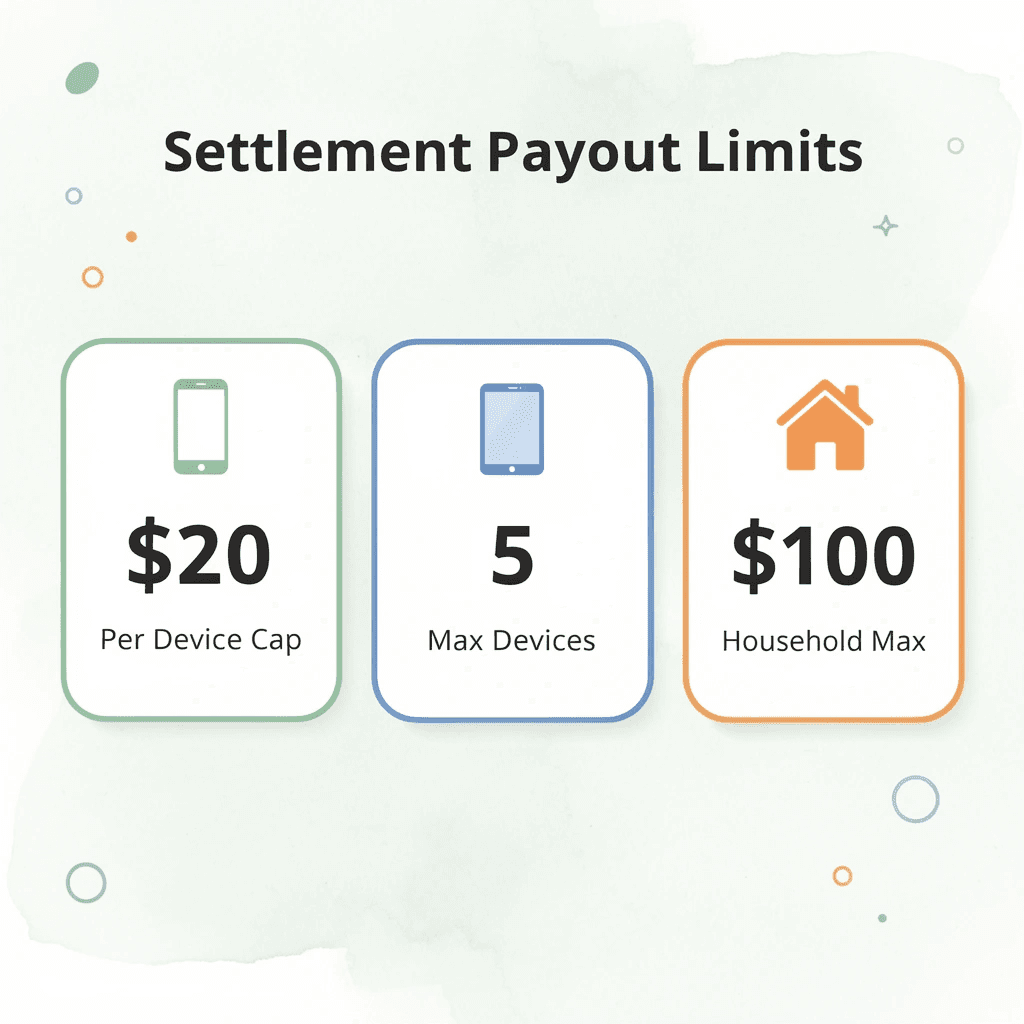
The per-device cap is $20, with a maximum of five devices per household, capping total claims at $100. However, settlement math typically reduces actual payouts significantly.
“The per-device cap is $20, with a household maximum of $100 — but actual payouts are often reduced once all eligible claims are tallied.” — Settlement Terms
| Claim Factor | Amount |
|---|---|
| Per-device cap | $20 |
| Maximum devices per household | 5 devices |
| Maximum household payout | $100 |
| Likely actual payout | Reduced by settlement math |
💡 Tip: File for every eligible device in your household to maximize your claim — up to five devices could mean up to $100 total.
⚠️ Warning: Don’t assume you’ll receive the full $20 per device. Settlement math — dividing the fund among all claimants — can significantly reduce your final payout.
What the fund actually delivers per person
The $20 cap is a ceiling, not a guarantee. According to Consumer Reports, eligible claimants can receive up to $20 per Siri-enabled device, with a maximum of 5 devices per person, but the final payout decreases as more valid claims are added to the pool. With tens of millions of potentially eligible users, most claimants will receive well below the cap.
Why does the headline number mislead most people in an Apple class action lawsuit?
ABC7 Los Angeles reported that eligible iPhone owners could receive up to $95, the upper limit of the payout range. This assumes low claim rates, which rarely occur once settlements receive media attention. People who received payments reported receiving between $10 and $40, depending on how many devices they owned and the total number of participants.
What happens when most eligible people never file a claim?
Most eligible people never file claims, collecting nothing while reducing per-claimant payouts for those who do. Platforms like Sparrow address this by scanning for qualifying settlements and handling the filing process, including printing and mailing claim forms, thereby eliminating the barrier of having to figure it out.
The legal fee math that changes the real picture
Before any person owed money receives a dollar, attorney fees and administrative costs are deducted from the total fund. Legal fees alone reach roughly $28.6 million, drawn from the same pool that pays claimants. That reduction results in smaller individual checks, and most recipients never realize the deduction occurred. The advertised settlement size and the money reaching actual users are two different figures.
What does the Apple class action lawsuit actually pay out to individuals?
The gap between what Apple agreed to pay and what individual users recover illustrates how class action economics work by design: companies resolve liability at scale, legal teams earn their fees, and consumers receive symbolic acknowledgment rather than proportional restitution. For a company generating billions in quarterly revenue, a $250 million settlement is a manageable line item. For the person who received a $9 cheque, the math tells a different story.
Related Reading
- Nightfall Group Lawsuit
- Gmail Class Action Lawsuit
- Life360 Lawsuit
- Amazon Prime FTC Settlement Lawsuit
- Isotonix Lawsuit
- Minnesota Ice Lawsuit
- Turbotax Lawsuit
- Dapper Development Lawsuit
- At&t Class Action Lawsuit
- Temu Lawsuit
- Amazon Fire TV Stick Lawsuit
- Hexclad Lawsuit
- Capital One Class Action Lawsuit
- Costco Sonoma County Lawsuit
How to Confirm Eligibility to File a Claim for the Apple Class Action Lawsuit
Check if you qualify before you apply. The requirements are easy to understand, and making sure you meet them first stops delays, incomplete applications, or rejections.
“Making sure you meet eligibility requirements before applying is the single most important step to avoiding delays and rejections.” — Filing Best Practices
💡 Tip: Always confirm your eligibility before filling out a single field — it saves you significant time and prevents your claim from being automatically disqualified.
⚠️ Warning: Skipping the eligibility check is the most common mistake claimants make — it leads to rejected applications and missed compensation.
| Eligibility Factor | What to Check | Why It Matters |
|---|---|---|
| Device Ownership | Did you own an affected Apple device? | Core requirement for filing |
| Purchase Timeframe | Does your purchase fall within the claim period? | Determines if you’re legally covered |
| Proof of Purchase | Do you have receipts or records? | Prevents delays or rejection |

Gather Your Device Ownership Records
Gather proof of ownership or purchase for any Siri-enabled Apple products you owned between September 17, 2014, and December 31, 2024. This includes iPhones, iPads, Apple Watches, MacBooks, iMacs, HomePods, iPod touches, or Apple TVs used in the United States or its territories. Check emails from Apple, credit card statements, and original boxes with serial numbers to establish a timeline within the eligibility window.
Verify Siri Was Enabled on Those Devices
Check your Apple device settings or iCloud account history to confirm that Siri remained active during the relevant time period. Review system logs or document specific voice interactions to strengthen your case before submitting any official complaint.
Recall or Document Unintended Activations
Remember specific times when Siri turned on without you saying “Hey Siri” or pressing a button, particularly during private conversations such as medical discussions, financial talks, or family matters. Write down the dates, what was happening, and which devices were involved. This helps distinguish regular users from those who experienced this problem.
Check for Direct Notification from the Settlement
Check your mail and email for notices about the Lopez Voice Assistant Class Action Settlement. These may include a Claim Identification Code and a Confirmation Code to expedite the process, though you can proceed without them if you meet the eligibility criteria.
Visit the Official Settlement Website for Confirmation Tools
Visit lopezvoiceassistantsettlement.com to review eligibility guidelines, FAQs, and self-assessment questions. Complete the claim form, which requires you to swear under oath about your device ownership, Siri usage, and unintended activations. Use the site’s tools or contact options to resolve questions before the 2 July 2025 deadline.
Understand the Exclusions and Final Steps
Make sure you are not in any excluded groups: current or former Apple employees, their immediate legal teams, or judicial officers tied to the case. Submit the online form for up to five devices and keep your submission confirmation.
How to File an Apple Class Action Lawsuit Claim in 7 Steps
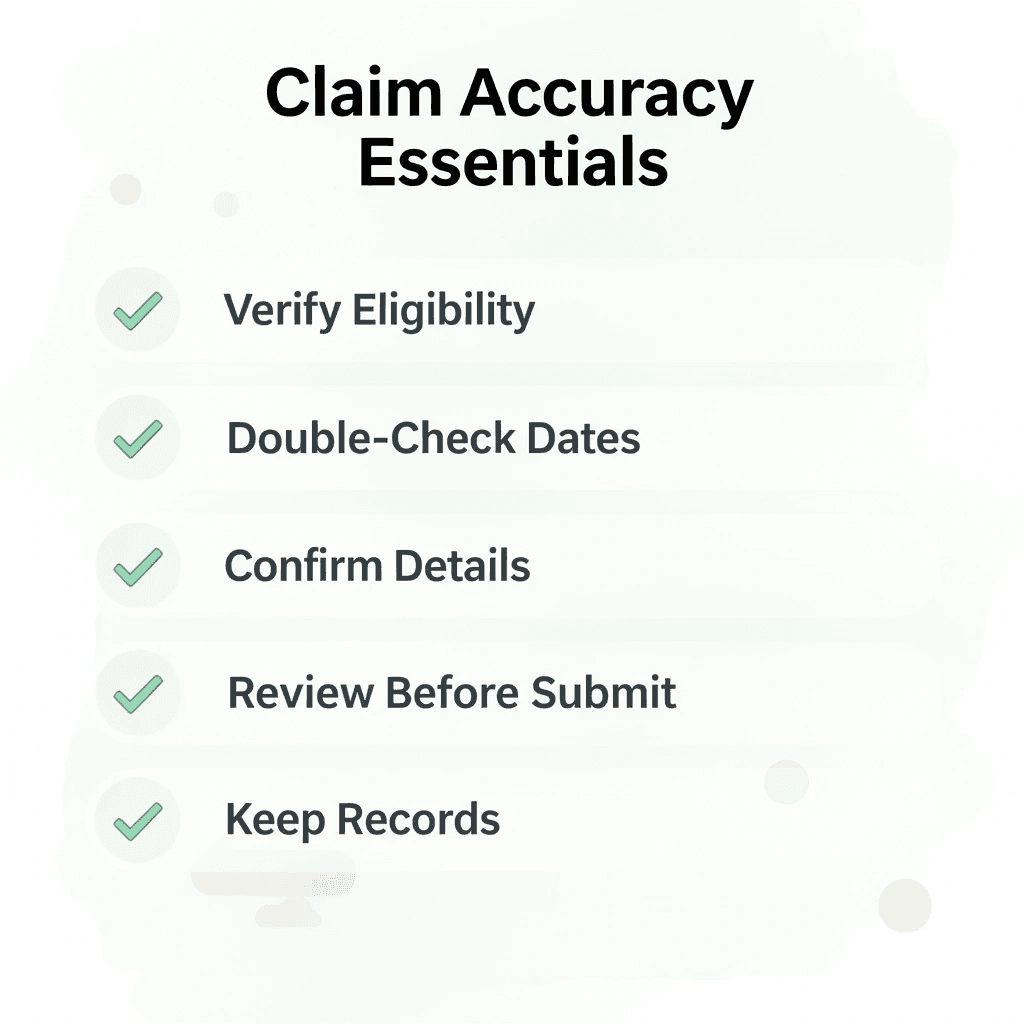
Once you’ve confirmed that you qualify, carefully submitting your claim is the critical next step — accuracy is everything. Being precise and thorough matters to avoid unnecessary delays during review.
“Inaccurate or incomplete claim submissions are one of the leading reasons claimants experience delays or disqualification during the review process.” — Class Action Filing Best Practices
| Step | Action Required | Why It Matters |
|---|---|---|
| 1. Confirm Eligibility | Verify you meet all qualifying criteria | Prevents wasted effort on invalid claims |
| 2. Gather Documentation | Collect proof of purchase, device records | Supports the validity of your claim |
| 3. Complete the Form | Fill out every required field accurately | Avoids processing delays |
| 4. Double-Check Details | Review all personal and device information | Reduces rejection risk |
| 5. Submit Before Deadline | File within the claim window | Missing it means forfeiting compensation |
| 6. Save Confirmation | Record your submission ID or receipt | Essential for tracking your claim |
| 7. Monitor Your Status | Check for updates or follow-up requests | Ensures timely resolution |
💡 Tip: Keep all supporting documents — including receipts, device serial numbers, and purchase records — organized before you begin filling out your claim form. This can significantly speed up the review process.
⚠️ Warning: Even small errors — like a mismatched name or incorrect device model — can trigger a review delay or outright rejection. Double-check every field before hitting submit.
Step 1: Confirm Your Basic Eligibility
Check your device history to confirm you owned or bought a Siri-enabled Apple product in the US or its territories between September 17, 2014, and December 31, 2024, with the assistant turned on. Compare this against any unintended activations during private conversations.
Step 2: Collect Supporting Details
Gather purchase records, serial numbers, account logs, and notes on specific unintended Siri triggers associated with confidential conversations across up to 5 devices. Strong documentation supports sworn statements and helps the claims administrator process your file efficiently.
Step 3: Visit the Dedicated Settlement Site
Go to lopezvoiceassistantsettlement.com using a secure browser. Look for the claim submission section and any pre-filled options from your notification postcard or email codes.
Step 4: Fill Out the Claim Form Accurately
Enter your personal contact information, device details, and confirm under oath the key facts about ownership, Siri enablement, and unintended activations during private moments. Submit details for each qualifying device separately within the five-device limit. Accuracy helps avoid claim rejection.
Step 5: Submit Before the Deadline
Submit the form online by July 2, 2025. Double-check all fields for typos or missing information, then save your confirmation page or email. Filing on time secures your position and prevents last-minute technical problems.
Step 6: Monitor for Approval and Updates
Watch your email and the settlement website for status updates. The process includes a final court approval hearing on August 1, 2025, followed by distribution once appeals are resolved. Staying informed helps you respond quickly to verification requests.
Step 7: Receive and Cash Your Payment
Once approved, you’ll receive payment by check or electronic transfer. Amounts vary based on total claims, but valid submissions receive their pro rata share. Deposit the funds promptly and retain records for tax purposes.
How Sparrow Helps You Find and Claim Class Action Settlements
The harder part is the logistics. Knowing you’re eligible for a settlement like the Siri privacy case is one thing. Finding it, filing correctly, and hitting the deadline before it closes is where most people lose.
“Knowing you’re eligible is one thing — finding the settlement, filing correctly, and hitting the deadline before it closes is where most people lose.”
💡 Tip: Don’t let missed deadlines cost you money you’re already owed. The biggest barrier to claiming settlements isn’t eligibility; it’s execution.
🎯 Key Point: Sparrow is built to solve this problem: handling discovery, filing logistics, and deadline tracking so you never miss a valid claim.
Why do most people miss Apple class action lawsuit deadlines?
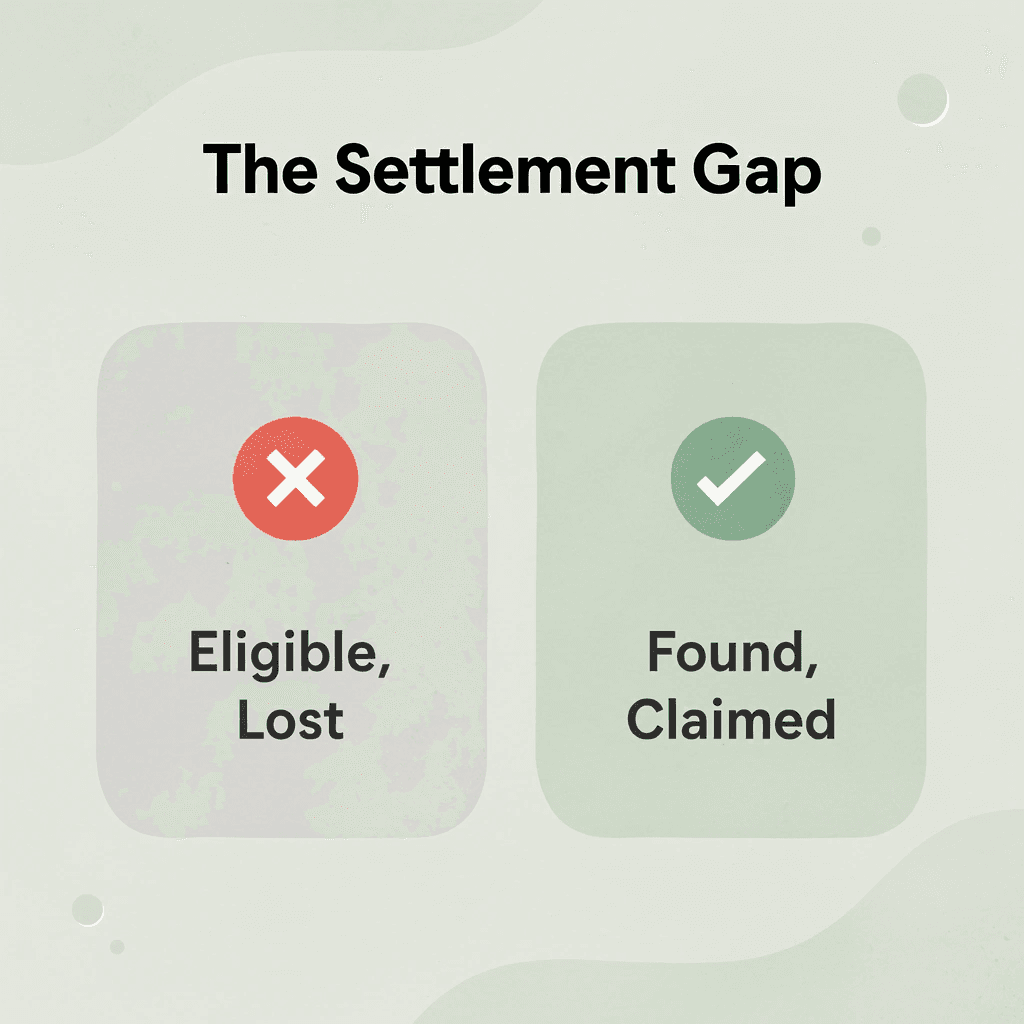
The failure point is almost always the same: settlement notices arrive as postcards resembling junk mail or emails filtered before recipients see them. By the time someone realizes a case applies to them, the filing window has closed. This structural problem repeats across thousands of settlements annually.
Most people handle this by occasionally searching “class action settlements” on Google after hearing about one from a friend, then manually checking eligibility on case-specific websites. But this leaves entire categories of qualifying claims undiscovered, particularly privacy-related cases, product-defect settlements, and subscription-overcharge claims tied to everyday device use. A single error on a claim form—such as misreporting device count or answering an oath question incorrectly—can invalidate an otherwise legitimate filing.
How does Sparrow remove the barriers to filing and recovering settlements?
Sparrow removes both barriers at once. Our platform scans active settlements, matches them to your device history and usage patterns, and guides you through each filing step to eliminate common errors. According to the Sparrow Blog, the average Sparrow user claims over $345 per year across settlements. This changes how you should think about it: it’s not about claiming a single $9 cheque, but building a reliable process for recovering money across multiple cases over time.
What does automated discovery actually mean in practice?
Sparrow doesn’t show a generic list of open cases. It cross-references active settlements against your account history to flag cases where you personally qualify, including the App Store – Sparrow AI Refund Helper, which detects across 5 categories: class action payouts, unclaimed money, price-match refunds, airline compensation, and subscription overcharges. For the Apple Siri settlement, this means identifying whether your devices fall within the qualifying window and whether your usage history reflects the unintended activations the case was built around.
How does deadline tracking protect your Apple class action lawsuit claim?
Deadline tracking prevents money from disappearing due to missed cutoff dates, such as the July 2, 2025, Apple Siri filing deadline. Without proper reminders and processes, eligible claims go unclaimed, transforming the question from “is this worth my time?” to something more pressing.
Related Reading
- Settlemate
- Poppi Lawsuit
- At&t Lawsuit
- Claim App
- Fortnite Lawsuit
- Rocket Money
- Catch
- Truebill
- Is Settlemate Legit
- Is Claimmoney.com Legit
- Celsius Lawsuit
Start Finding Money You May Be Owed with Sparrow
The hard part isn’t getting approved for settlements—it’s knowing they exist, filing before the deadline, and tracking the next one. The Apple Siri settlement is a perfect example: most people never filed because they didn’t know about it.
“The biggest reason people miss out on settlement money isn’t ineligibility—it’s unawareness and missed deadlines.”
⚠️ Warning: Even if you’re fully eligible for a class action settlement, missing the filing deadline means walking away with $0. Deadlines are non-negotiable.
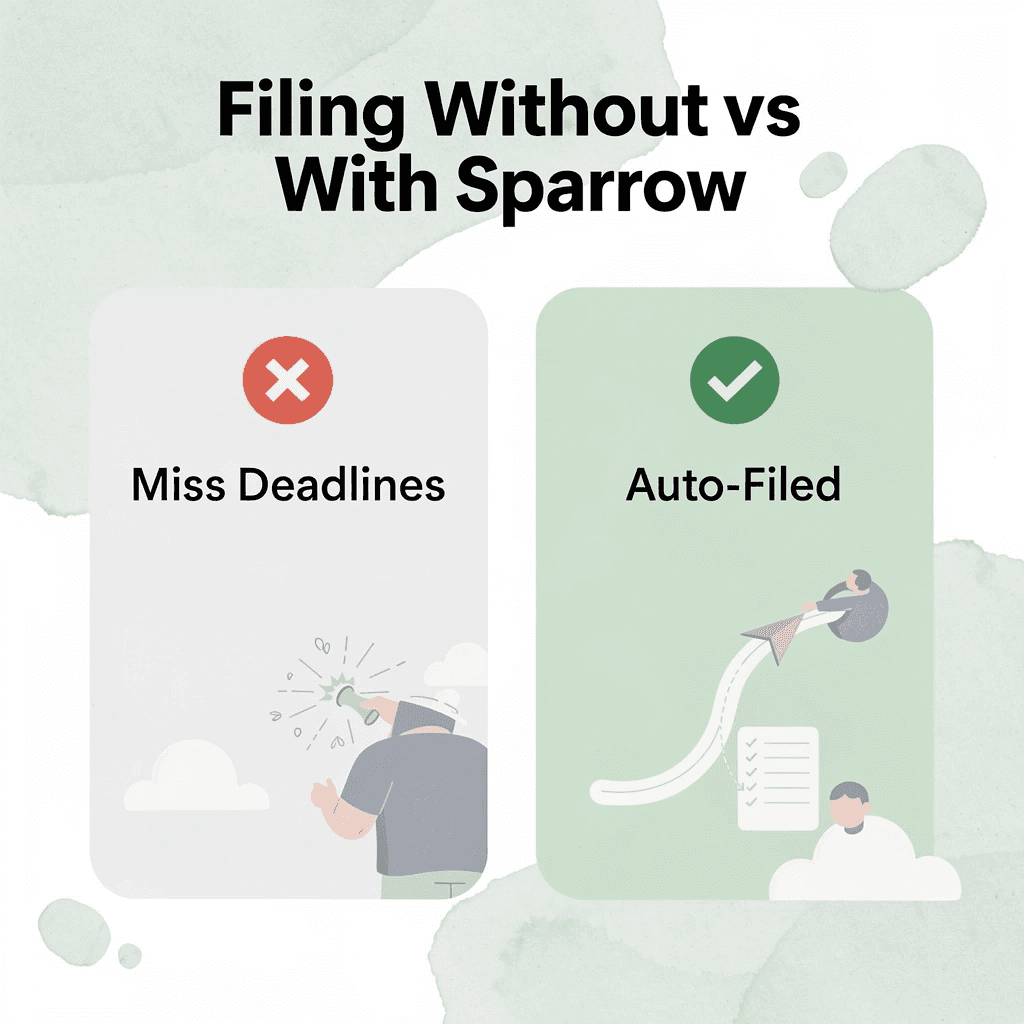
Sparrow automates this entirely. Our platform monitors active class actions across the entire United States, matches your profile to eligible settlements, and pre-fills claim forms so filing takes minutes. For settlements requiring mailed forms, Sparrow prints and sends them with postage included. The average member recovers over $345 per year across multiple claims—not from working harder, but from nothing slipping through unnoticed.
| What Sparrow Does | What That Means for You |
|---|---|
| Monitors active class actions nationwide | You never miss an eligible settlement |
| Matches your profile to settlements | No manual searching required |
| Pre-fills claim forms | Filing takes minutes, not hours |
| Prints & mails forms with postage | Zero effort for paper submissions |
| Tracks deadlines automatically | Nothing ever slips through |
💡 Tip: The average Sparrow member recovers $345+ per year—not by doing more, but by finally capturing money they were already owed.
🎯 Key Point: Sparrow turns a complicated, easy-to-miss process into a fully automated system that works in the background—so you get paid without lifting a finger.

Leave a Reply