


Millions of Americans trusted TurboTax to file their taxes for free, only to be quietly pushed toward paid services they never needed. Intuit, the company behind TurboTax, reached a settlement with the FTC over these deceptive practices, and eligible users may be owed real money. Understanding what a class action lawsuit is and whether this one applies to you is the first step toward claiming your share.
Sorting through settlement fine print, eligibility rules, and claim forms can feel overwhelming without a legal background. Sparrow simplifies the entire process by checking eligibility and guiding users through every step, so nothing gets missed. Those who were misled by TurboTax’s free filing promises can join class action lawsuits through Sparrow and get the compensation they may be owed.
Table of Contents
- What Is the TurboTax Lawsuit About?
- Who Is Eligible for the TurboTax Lawsuit?
- What Is the Current Status of the TurboTax Lawsuit?
- How to Check Your Eligibility and File a Claim
- Tips for Avoiding Missed Settlement Payments
- How Sparrow Helps You Find and Claim Eligible Settlements
- Start Finding Money You May Be Owed with Sparrow
Summary
- Intuit’s $141 million settlement with 4.4 million TurboTax customers revealed how large-scale deceptive advertising can operate quietly within a trusted consumer product. The harm was not a billing error or technical glitch. It was a deliberate sequence in which users were guided toward a “free” product, then confronted with a paywall only after they had already entered personal data and completed most of their return.
- The Federal Trade Commission found that roughly two-thirds of all tax filers in 2020 could not use TurboTax Free Edition at all, yet the advertising gave no indication of that limitation. The word “free” was prominent while the disqualifying conditions, including 1099 income, freelance earnings, and certain tax credits, were buried or absent from the main claims. That structure made the deception systemic rather than incidental.
- Eligibility for the settlement followed a specific chain of events, not just a general sense of being overcharged. Filers had to have started in Free Edition, received an upgrade prompt, paid to complete their return, and had no prior history using Intuit’s IRS Free File product. California alone accounted for roughly 370,000 affected filers, and attorneys general from all 50 states joined the settlement, confirming the harm was documented across every jurisdiction.
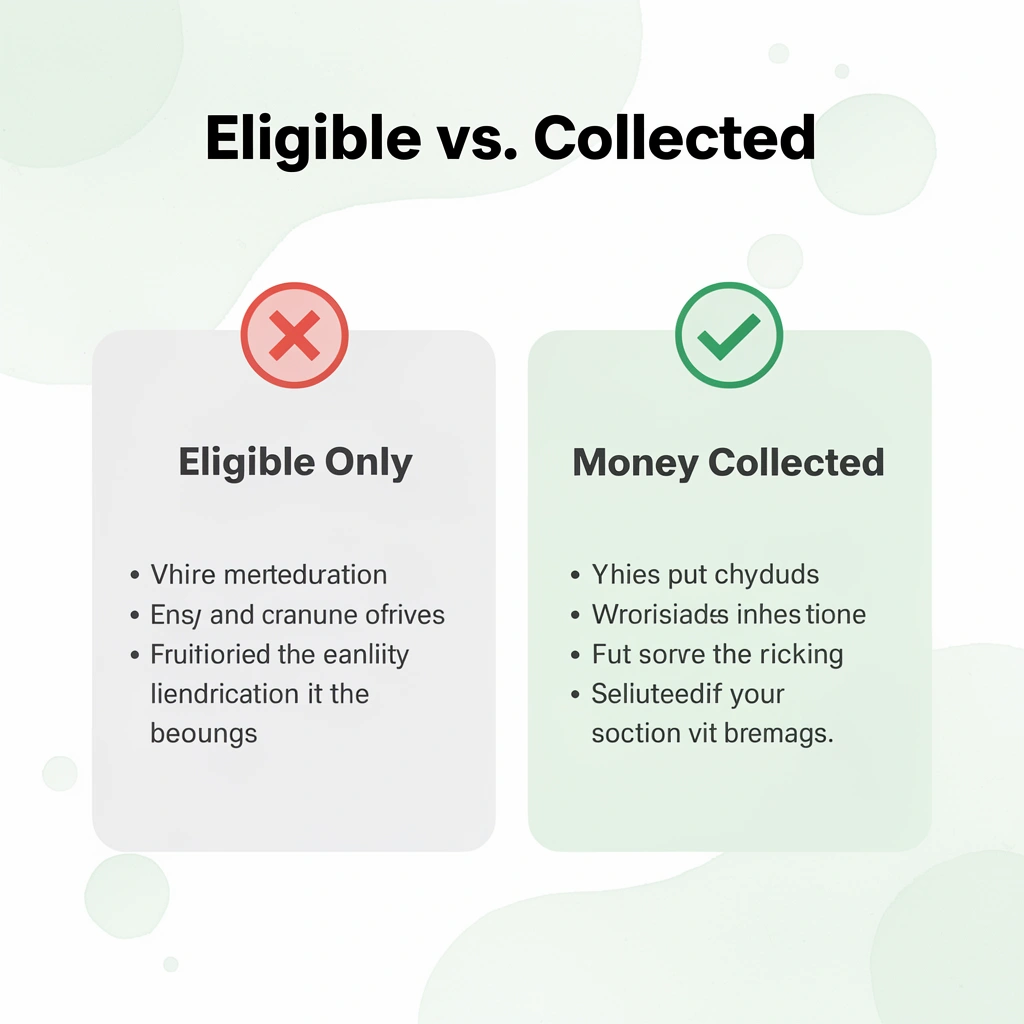
- The gap between eligibility and actual claims filed is where most settlement money quietly disappears. Millions of consumers qualified for a share of the $141 million distribution, yet a significant portion never collected, not because they were ineligible, but because finding the claim, understanding the requirements, and completing the paperwork created enough friction to stop most people before they started.
- On March 20, 2026, the U.S. Court of Appeals for the Fifth Circuit vacated the FTC’s cease-and-desist order against Intuit in a unanimous decision, ruling that routing deceptive-advertising claims through an agency’s internal tribunal violated the constitutional separation of powers. The court did not rule on whether TurboTax’s advertising was actually deceptive. It ruled that the wrong institution decided the question, a distinction that resets the federal track entirely and leaves the FTC to refile in a proper Article III court if it chooses to continue.
- Unclaimed settlement money does not return to consumers by default. When eligible people fail to file, funds typically revert to state attorneys general or get redistributed through cy-pres awards to consumer advocacy organizations, meaning the individuals who were owed the money never see it.
- Sparrow addresses this by continuously scanning active settlements, matching them to user profiles, pre-filling claim forms, and tracking every deadline and submission status in one place, reducing the research and paperwork burden that causes most people to miss payouts entirely.
What Is the TurboTax Lawsuit About?
The TurboTax lawsuit centers on a broken promise at scale. Intuit, the company behind TurboTax, advertised free filing for years, then moved most users to paid products after they had invested time and personal data into the process.
“Intuit’s conduct was a deliberate gap between what the ads promised and what the software actually delivered.” — Lieff Cabraser
💡 Key Term: The TurboTax lawsuit is not a minor billing dispute; it represents a systematic pattern of misleading advertising that affected millions of everyday taxpayers.
[IMAGE:

According to Lieff Cabraser, Intuit’s settlement totaled $141 million, covering roughly 4.4 million deceived customers. This reflects a deliberate gap between what the ads promised and what the software actually delivered.
⚠️ Warning: If you used TurboTax’s “free” filing option between 2016 and 2022, you may have been directly affected by these deceptive practices — and could be entitled to settlement compensation.
| Key Detail | Figure |
|---|---|
| Total Settlement Amount | $141 million |
| Customers Affected | ~4.4 million |
| Company Responsible | Intuit (TurboTax) |
| Core Allegation | Deceptive “free” filing advertising |
What made the advertising deceptive?
The Federal Trade Commission found that Intuit’s campaigns centered on the word “free” while hiding disqualifying conditions. Anyone with freelance income, a 1099 form, farm earnings, or certain tax credits was automatically excluded from the free product, yet ads gave no indication of this. The FTC documented that roughly two-thirds of all tax filers in 2020 could not use TurboTax Free Edition. The fine print existed but was positioned to be ignored rather than read.
How did the TurboTax lawsuit expose the paywall timing strategy?
The software did not disclose the upgrade requirement upfront. It waited until filers had entered personal information, uploaded documents, and reached the final steps before displaying the paywall. At that point, most people paid rather than start over. That sequence was not accidental; it was the mechanism.
What did most filers believe when they hit the TurboTax paywall?
Most people assumed they had done something wrong or their tax situation was too complicated for a free product. They paid the fee, unaware that the FTC considered this moment a direct result of deceptive advertising. Platforms like Sparrow fill this gap, helping consumers who experienced that bait-and-switch check their eligibility and file a claim without decoding legal filings or settlement agreements.
What did the FTC actually require Intuit to change?
The FTC order says that Intuit cannot call any product “free” unless it is free for every user, or the company must clearly display the exact percentage of people who qualify and every important condition next to the word “free”. This targets how the deception works by forcing honesty at the moment the claim is made, rather than hiding it three screens later.
Consumers affected can claim the money owed to them.
Who Is Eligible for the TurboTax Lawsuit?
Taxpayers who paid to complete a TurboTax return they should have finished for free qualify for this settlement. Millions of people meet the eligibility criteria, with the harm reaching across nearly every state.
“Millions of taxpayers were steered away from free filing options they were legally entitled to — and paid for a service they should never have been charged for.” — FTC Settlement Finding
🎯 Key Point: If you paid for TurboTax but qualified for free federal filing, you may be entitled to compensation under this settlement.
⚠️ Warning: Many eligible taxpayers don’t realize they qualify — missing the claim deadline means forfeiting your settlement payment entirely.
| Eligibility Factor | Details |
|---|---|
| Who qualifies | Taxpayers who paid for TurboTax but were eligible for free filing |
| Geographic reach | Harm spans nearly every state in the U.S. |
| Number affected | Millions of filers across multiple tax years |
| How to check | Review the eligibility criteria to confirm your status |
[IMAGE:

The income and status thresholds that defined coverage
The covered group includes people who filed taxes with adjusted gross income within Intuit’s IRS Free File limits during 2016, 2017, and 2018. Active-duty military members qualified under a separate, higher income limit. These markers—income level and military status—formed the baseline that state attorneys general used to identify people eligible for free filing versus those steered toward paid products.
What exact sequence of events triggered eligibility in the TurboTax lawsuit?
To be eligible, you had to follow a specific chain of events: start in TurboTax’s Free Edition, receive a prompt stating you couldn’t use that free path, pay for a commercial TurboTax product to finish and submit your return, and have no prior history with Intuit’s IRS Free File product. Each step was essential. Missing one disqualified you from these claims. This meant that how you filed your taxes became a legal boundary.
Why did millions of eligible TurboTax lawsuit claimants never collect their money?
4.4 million consumers across the country were eligible for payments from the $141 million settlement. Most never filed a claim—not because they were ineligible, but because finding the claim, understanding requirements, and completing paperwork created enough friction that the money went uncollected. Platforms like Sparrow address this by combining no-proof claims, prefilling forms, and handling filing logistics so the barrier becomes minutes of effort rather than hours of research.
Why do California numbers tell a larger story about the TurboTax lawsuit?
California’s 370,000 affected filers demonstrate how harm concentrated in high-population states where lower-income households live near Free File income limits. Attorneys general from all 50 states joined the settlement agreement, confirming deceptive practices occurred in every state and eliminating regional questions about coverage.
Why did the timing of these charges make the TurboTax lawsuit matter more?
The charges often came right after tax season when budgets were stretched thin, and the promise of a free return had shaped financial planning. A $60 or $90 software fee represented a significant setback for households operating near Free File eligibility thresholds—a day meant to deliver relief, not an unexpected bill.
What happened after the TurboTax lawsuit settlement was finalized?
What happened after the settlement was finalized tells a different story than most people expect.
Related Reading
- What Is A Class Action Lawsuit
- What Is A Class Action Settlement
- How Do Class Action Settlements Work
- How To Find Unclaimed Money
- Are Class Action Settlements Taxable
- Doge Transparency FOIA Lawsuit
- Google Android Cellular Data Lawsuit
- Pima County Sheriff Lawsuit
- Ozempic Lawsuit
- General Motors V8 Engine Lawsuit
What Is the Current Status of the TurboTax Lawsuit?
The main legal actions against Intuit have reached concrete endpoints. The multistate settlement has paid out and closed, and the federal advertising order no longer stands, marking a significant conclusion to years of regulatory and legal pressure against the company.
“The federal advertising order no longer stands, and the multistate settlement has paid out and closed, bringing the primary legal actions against Intuit to a definitive end.” — FTC & NAAG Records
🎯 Key Point: Both the multistate settlement and the federal advertising order have reached their final legal conclusions. No ongoing primary actions are currently pending.

According to the California Attorney General’s Office, 4.4 million consumers nationwide received checks as part of the $141 million multistate settlement, with payments distributed in May 2023. That window has closed, and the administrator is no longer processing late claims or reissue requests.
| Settlement Detail | Key Facts |
|---|---|
| Total Settlement Amount | $141 million |
| Consumers Paid | 4.4 million nationwide |
| Payment Distribution Date | May 2023 |
| Claim Window Status | Closed — no late claims accepted |
| Reissue Requests | No longer being processed |
⚠️ Warning: The claims window is permanently closed. If you missed the May 2023 distribution, the administrator will not reopen or process any late or reissue requests — no exceptions.
💡 Tip: If you believe you were an eligible consumer, contact the California Attorney General’s Office directly for official guidance on your specific situation.
What the Fifth Circuit ruling actually changed
On 20 March 2026, the U.S. Court of Appeals for the Fifth Circuit unanimously canceled the Federal Trade Commission’s cease-and-desist order against Intuit. The court found that routing deceptive-advertising claims through an agency’s internal tribunal rather than an independent federal court violated the constitutional separation of powers. Circuit Judge Edith Jones wrote that such claims carry the character of common-law fraud and deceit, disputes the Constitution assigns to Article III courts, not in-house agency judges. The FTC can still refile in federal district court, but the original order restricting Intuit’s free-filing claims is void.
The ruling followed the Supreme Court’s logic in SEC v. Jarkesy, which established that private-rights disputes cannot be resolved exclusively inside agency adjudications. The court did not rule on whether TurboTax’s advertising was deceptive; it ruled that the wrong institution decided the question.
Where does the TurboTax lawsuit stand for consumers right now?
Most people searching for the current status of the TurboTax free-file lawsuit rely on outdated information, believing the advertising restrictions remain in place. However, the settlement administrator has closed, and the cease-and-desist order was canceled. Platforms like Sparrow track active and closed class action settlements across hundreds of cases, pre-filling claim forms and showing consumers which ones they qualify for. This removes the research burden that prevents most people from claiming payouts.
The TurboTax case is now being sent back to the federal level, meaning the FTC must decide whether to refile its deceptive-advertising claims in a proper Article III court. No active claim window exists under either the state or federal track. The $141 million distribution was the resolution consumers could act on, and that chapter is closed.
Related Reading
- Costco Sonoma County Lawsuit
- Apple Class Action Lawsuit
- At&t Class Action Lawsuit
- Temu Lawsuit
- Hexclad Lawsuit
- Nightfall Group Lawsuit
- Capital One Class Action Lawsuit
- Life360 Lawsuit
- Dapper Development Lawsuit
- Amazon Fire TV Stick Lawsuit
- Minnesota Ice Lawsuit
- Amazon Prime FTC Settlement Lawsuit
- Isotonix Lawsuit
How to Check Your Eligibility and File a Claim
⚠️ Warning: Not every lawsuit allows individuals to file a claim — skipping the eligibility check is the most common and costly mistake claimants make.
Not every lawsuit allows individuals to file a claim. Follow these steps to determine whether you’re eligible for compensation and avoid wasting time on a claim that won’t qualify.
“Knowing your eligibility before you file is the single most important step in the claims process — it separates successful claimants from those who walk away empty-handed.” — Legal Claims Best Practices
| Step | Action | Why It Matters |
|---|---|---|
| 1 | Identify the lawsuit or settlement | Confirms the case applies to you |
| 2 | Verify your personal eligibility criteria | Ensures you meet required conditions |
| 3 | Gather supporting documentation | Strengthens your claim submission |
| 4 | Submit your eligible for compensation claim before the deadline | Late filings are almost always rejected |
💡 Tip: Act quickly — most settlements have a strict filing deadline, and missing it means forfeiting your right to compensation entirely.
🎯 Key Point: Eligibility requirements vary by case, so always confirm the specific criteria tied to your lawsuit before investing time in the claims process.

Start with the official class definition
Every approved settlement includes a clear class definition in the settlement notice, claim form, and administrator’s website under headings like “Who Is Included?” Typical definitions specify a company or product, date range (class period), geographic limits, and the type of transaction or harm required. If your purchase, account, employment, or data exposure falls within those boundaries, you meet eligibility. Courts craft these definitions carefully so membership depends on objective facts rather than individual perceptions of injury. Reading the definition first prevents you from filing claims that administrators will later reject.
Examine any notice you receive and locate the official website
Settlement administrators mail or email formal notices to people whose records appear in the defendant’s files. The notice is strong evidence that you may qualify, but it is not required for eligibility. Search online for the case name or the company plus “class action settlement” and open the site hosted by the claims administrator (often Epiq, Kroll, or a similar firm). Official sites display the full class definition, claim deadline, proof requirements, and a claim form. Legitimate claim filing is free. Cross-check the case caption against federal or state court records if doubt remains.
Match your personal facts against the class period and other limits
Once you have the definition, compare your timeline and location. Did you buy the product or hold the account within the listed start and end dates? Does the settlement cover only certain states or the entire United States? Some cases restrict eligibility to people who experienced a particular problem: a specific defect, a data breach notice, or unpaid overtime. Self-certification suffices for many consumer and data-breach settlements; others require receipts, account statements, or brokerage records. Platforms such as Sparrow scan active settlements weekly and display those matching a user’s profile, eliminating the need to search through dozens of separate notices.
Confirm proof requirements and the hard filing deadline
Being eligible does not automatically mean you get a check. You must submit a claim on time that follows the settlement’s rules for required documentation. Many settlements accept a signed statement in which you attest, under penalty of perjury, that your claim is true. Others require itemized proof and will reject incomplete forms. Deadlines are absolute: claims filed after the cutoff receive nothing, even if you are clearly eligible. Write down the exact deadline as soon as you identify a potential match, then gather the necessary records before that date. Missing the deadline is the most common reason eligible people receive zero compensation.
Use systematic matching tools to surface settlements you might otherwise miss
Manual searches only find cases that make the news or reach your mailbox. Specialized services examine open settlements in the consumer, employment, data breach, and product categories and cross-reference them with your information. Sparrow, for example, matches profiles to claims that require no proof and to claims with minimal documentation, pre-fills forms, and tracks deadlines so you can check eligibility continuously rather than once. After the tool finds a match, verify the class definition on the official administrator site and submit the claim yourself. This combination of automated discovery and official verification ensures accuracy and protects against outdated information.
Verify the settlement is genuine and take the next step
Before submitting personal details, confirm the site belongs to the court-appointed claims administrator and that the case appears in public court records or reputable news coverage. Legitimate settlements never charge a fee to file a claim. Complete the claim form with your current legal name and address, keep your confirmation number, and monitor the administrator’s status portal or email updates. Payments typically arrive only after the court grants final approval and any appeals conclude, a process that can extend months beyond the claim deadline.
Tips for Avoiding Missed Settlement Payments
Missing a settlement payment usually happens because of forgotten deadlines, outdated contact information, or simply not knowing you qualify. Taking action ahead of time helps you stay informed and reduces money that goes unclaimed.
“The most common reasons claimants miss settlement payments are preventable — forgotten deadlines, old addresses, and lack of awareness account for the vast majority of unclaimed funds.” — Settlement Administration Best Practices
| Common Cause | Prevention Strategy |
|---|---|
| Forgotten deadlines | Set calendar reminders well in advance |
| Outdated contact info | Keep your address and email current with administrators |
| Unaware of eligibility | Regularly check settlement databases and claim portals |
💡 Tip: Proactive steps — like updating your contact details and monitoring claim deadlines — are the single most effective way to ensure you never miss a payment you’re owed.
⚠️ Warning: Even one missed deadline can mean permanently forfeiting your settlement funds. It’s essential to act early rather than waiting for a reminder that may never arrive.

Set Up Reliable Deadline Tracking Systems
Create a dedicated digital folder or spreadsheet for all possible settlements. Record key dates including claim deadlines, fairness hearings, and payment distribution windows. Update entries immediately when you find new information, set calendar reminders two weeks before deadlines, and follow up with alerts. This prevents notices from getting lost in daily emails and mail, enabling you to act on time even months after becoming eligible.
Maintain Comprehensive Purchase Records
Keep digital scans or photos of receipts, order confirmations, and credit card statements in a centralized, searchable location organized by product category, including purchase dates, amounts, and seller details. Administrators need this verification for claims. Regular reviews of bank statements catch overlooked transactions and turn potential misses into successful filings.
Monitor Multiple Communication Channels
Check your physical mailbox, email spam folders, and online accounts weekly for administrator notices. Opt into alerts from consumer rights organizations or reliable platforms when available. Notifications can arrive through multiple channels and get lost in routine correspondence, causing valid claims to expire unnoticed.
Leverage Specialized Tools Like Sparrow for Streamlined Management
Sparrow scans new lawsuits and identifies class action cases that don’t require proof of eligibility. Based on your profile, it determines which cases you likely qualify for. Our service completes the forms, handles printing and mailing with postage included, and backs results with a money-back guarantee if your recovery doesn’t exceed the subscription cost.
Review and Follow Up on Submitted Claims Regularly
After filing, save the confirmation numbers and check the status portals or contact the administrators every 30 days during the distribution phases. Respond promptly to requests for additional information to avoid processing delays. This follow-through ensures approved claims convert to actual payments, as pro-rata distributions depend on validated submissions reaching completion without administrative holds.
How Sparrow Helps You Find and Claim Eligible Settlements
When settlement money is not claimed, it usually goes back to state attorneys general or gets given to consumer advocacy organizations through cy-pres awards. The people who were supposed to get the money never receive it — and that’s exactly the problem Sparrow is built to solve.
“When settlement money goes unclaimed, it is redirected away from the consumers it was meant to protect — through cy-pres awards to third-party organizations instead.”
💡 Tip: Don’t let your share of a settlement slip away. Sparrow scans for eligible settlements on your behalf, so you get what you’re owed — not a third-party organization.
🔑 Takeaway: Unclaimed settlement funds don’t disappear — they get redirected. The only way to ensure you receive your compensation is to actively find and file your claim before the deadline.
| What Happens to Unclaimed Funds | Who Benefits |
|---|---|
| Returned to state attorneys general | Government agencies |
| Distributed via cy-pres awards | Consumer advocacy organizations |
| Claimed through Sparrow | You — the eligible consumer |

Why do so many TurboTax lawsuit claimants miss their settlement payouts?
The failure point is almost never eligibility. The gap between who qualifies and who actually files stems from three factors: people never hear about the case, the deadline passes before they act, or the paperwork feels overwhelming. The TurboTax settlement demonstrates this pattern: millions qualified, a fraction claimed, and the rest didn’t know where to start.
Most consumers discover settlements through postcards, search online, and land on claims administrator sites with dense legal language and no clear path forward. This friction compounds across every settlement a person might qualify for in a given year. According to the App Store listing for Sparrow AI Refund Helper, the platform covers 5 categories of eligible claims: class action payouts, unclaimed money, price-match refunds, airline compensation, and subscription credits.
How does Sparrow close the gap between qualifying and actually getting paid?
Sparrow closes that gap systematically. The platform continuously scans active settlements, matches them against your profile and purchase history, pre-fills claim forms, and tracks deadlines in a single dashboard. When a settlement requires a physical mailed form, Sparrow prints and mails it with postage included. The App Store listing for Sparrow AI Refund Helper describes a 3-step claim process: Link, Detect, and Claim in seconds, compressing hours of research into minutes of review.
The critical difference between Sparrow and simply bookmarking a claims website is what happens after you file. Most people submit a form and forget about it, unsure whether the claim went through or when to expect payment. Sparrow monitors each submission and sends updates as payout status changes, turning a one-time action into a reliable recovery process that surfaces new opportunities each week.
Start Finding Money You May Be Owed with Sparrow
Information alone never creates recovery — action does. The TurboTax settlement exposed a painful truth: being eligible means nothing without an easy filing path. Most qualified people never collected a single dollar because the process demanded too much effort, time, and friction. Sparrow closes that gap — the critical distance between deserving money and receiving it.
“Most qualified people never collected because the process demanded too much — eligibility without accessibility is a missed opportunity.”
💡 Tip: Don’t let a complicated claims process stand between you and money you’re already owed. Sparrow was built to solve this problem.
⚠️ Warning: Knowing you qualify for a settlement is not enough. Without taking action, your eligible share expires unclaimed — and that money goes back into the pot.
Create your Sparrow account to get instantly matched to active settlements, have claims pre-filled on your behalf, and track every submission automatically — no spreadsheets, no guesswork, no missed deadlines. New class action settlements open every single week, and your rightful share is waiting to be claimed.
🎯 Key Point: It takes only minutes to start — then Sparrow works continuously on your behalf, so you never miss an eligible payout again.
| Without Sparrow | With Sparrow |
|---|---|
| Manually search for settlements | Automatically matched to active claims |
| Fill out complex forms yourself | Claims pre-filled for you |
| Track deadlines on your own | Automatic submission tracking |
| Miss eligible payouts | Never miss a qualifying settlement |
🔑 Takeaway: Sparrow transforms a frustrating, time-consuming process into a seamless, automated experience — so the money you’re owed actually finds its way back to you.
Related Reading
- Celsius Lawsuit
- Fortnite Lawsuit
- Settlemate
- At&t Lawsuit
- Truebill
- Claim App
- Rocket Money
- Catch
- Is Claimmoney.com Legit
- Is Settlemate Legit
- Poppi Lawsuit

Leave a Reply