
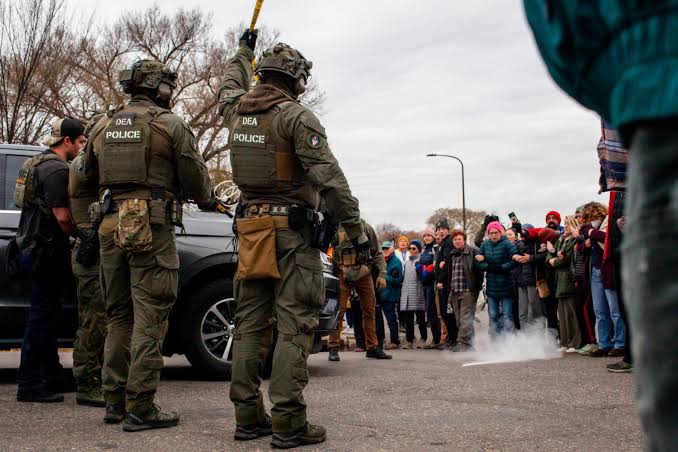

When ICE enforcement actions shake a community, the legal response often takes the form of a class action lawsuit, where people with shared grievances pursue collective accountability. That is precisely what unfolded in Minnesota, where residents and advocacy groups challenged ICE detention practices they argue violated civil rights. Understanding what a class action lawsuit is, and how it applies here, matters for anyone directly affected by these enforcement actions.
Navigating immigration-related legal action alone is difficult, but affected individuals do not have to start from scratch. Existing lawsuits are already fighting for people in similar circumstances, offering a real path to accountability and potential relief. Those impacted by ICE enforcement in Minnesota can connect with ongoing legal efforts through Sparrow and join class action lawsuits that may apply to their situation.
Table of Contents
- What Is the Minnesota ICE Lawsuit?
- Who Could Be Affected by the Minnesota ICE Lawsuit?
- What Is the Current Status of the Minnesota ICE Lawsuit?
- How to Find Out Whether You’re Eligible for a Lawsuit Payment
- Tips for Avoiding Missed Settlement Payments
- How Sparrow Helps You Track Class Action Settlements and Unclaimed Funds
- Start Finding Money You May Be Owed with Sparrow
Summary
- Class action lawsuits tied to immigration enforcement operations are rarely isolated legal events. The Minnesota ICE lawsuit, filed by the State of Minnesota alongside Minneapolis and Saint Paul, challenges Operation Metro Surge on constitutional grounds including the Tenth Amendment, First Amendment, and Administrative Procedure Act. The 80-page complaint filed on January 12, 2026, seeks to declare the operation unconstitutional and halt the deployment of thousands of armed federal agents to the Twin Cities.
- The documented economic damage from Operation Metro Surge reached staggering scale. Minneapolis officials measured nearly $700 million in total economic damage from December through April, including $445 million in lost business revenue and $152 million in forfeited wages. Statewide, hospitality employment dropped by 5,700 jobs and construction by 4,400 jobs between December and February, losses that did not self-correct once federal agents departed the region.
- The human toll extended well beyond those who were directly stopped or detained. Human Rights Watch documented approximately 4,000 detentions during the surge, with 64 percent of those arrested carrying no U.S. criminal history. National Lawyers Guild records show 524 documented cases of U.S. citizen detentions connected to observation or protest activity, and Hmong-American and Somali-American residents reported being detained despite presenting valid identification.
- Children and schools absorbed consequences that stretched well beyond the enforcement period itself. Minneapolis Public Schools served 441,000 fewer meals and snacks from January through March, school-based clinic visits fell 47 percent, and 8,713 school-age children required additional mental health services directly tied to the surge. Student departures rose 70 percent year-over-year, and some districts saw attendance fall by nearly one-third.
- The case remains active and procedurally complex. The amended 178-page complaint filed April 20, 2026, asserts nineteen counts; the federal government has responded with a motion to dismiss on mootness and standing grounds, and a federal court quashed DOJ subpoenas issued to Attorney General Keith Ellison in June 2026 after finding the dominant motive was retaliation. The evidence record continues to grow, including body-camera footage and statements tied to three shootings by federal officers.
- Most people affected by enforcement actions like Operation Metro Surge never connect their personal losses to available legal remedies, not because they are ineligible, but because the gap between a court ruling and an individual claim is difficult to navigate without guidance. Sparrow’s join class action lawsuits address this by scanning active and emerging settlements weekly, matching them to individual profiles, and handling the filing process so that qualifying people do not miss recovery windows simply because the system is hard to follow.
What Is the Minnesota ICE Lawsuit?
The Minnesota ICE lawsuit is a legal challenge filed by the State of Minnesota, Minneapolis, and Saint Paul against the U.S. Department of Homeland Security over Operation Metro Surge, a large-scale immigration enforcement operation. Attorney General Keith Ellison filed the 80-page complaint on January 12, 2026, arguing that the operation violated the Tenth Amendment, the First Amendment, and the Administrative Procedure Act. The lawsuit asks a federal court to declare that the operation is unconstitutional and to stop the deployment of thousands of armed agents into the Twin Cities.
“Attorney General Keith Ellison filed an 80-page complaint on January 12, 2026, challenging Operation Metro Surge as a violation of the Tenth Amendment, the First Amendment, and the Administrative Procedure Act.” — State of Minnesota v. U.S. Department of Homeland Security
🎯 Key Point: The Minnesota ICE lawsuit is not a routine legal dispute — it is a direct constitutional challenge by a state government against a federal immigration enforcement operation targeting the Twin Cities.
💡 What’s at Stake: The lawsuit seeks a federal court declaration that Operation Metro Surge is unconstitutional, which could halt the deployment of thousands of armed agents and set a significant legal precedent for state vs. federal immigration authority.
| Element | Detail |
|---|---|
| Filed By | State of Minnesota, Minneapolis, Saint Paul |
| Filed Against | U.S. Department of Homeland Security |
| Operation Challenged | Operation Metro Surge |
| Filing Date | January 12, 2026 |
| Complaint Length | 80 pages |
| Legal Grounds | Tenth Amendment, First Amendment, Administrative Procedure Act |
| Relief Sought | Court declaration of unconstitutionality + halt of armed deployment |

What made Operation Metro Surge different from routine enforcement?
Operation Metro Surge differed from standard enforcement in scale and scope, targeting sensitive locations—schools, hospitals, daycares, and places of worship—where enforcement is typically restricted. The complaint documents widespread racial profiling of Somali and Latino residents, suspicionless stops, warrantless arrests of U.S. citizens, and use of force against bystanders. The January 7, 2026 fatal shooting of Renee Nicole Good, a Minneapolis mother of three and U.S. citizen, became a defining moment in the case.
How large was the economic damage from the Minnesota ICE lawsuit?
According to the Minnesota Attorney General’s Office press release, over $240 million in wages were lost in Minneapolis and Saint Paul during Operation Metro Surge, based on surveys of nearly 1,400 residents and almost 900 businesses. FOX 9 Minneapolis-St. Paul reports that Minnesota’s updated lawsuit claims $600 million in economic damage during the ICE surge. Entire neighborhoods contracted economically, not from business failures, but from fear that kept workers home and customers off sidewalks.
How can affected individuals access legal help without hiring a private attorney?
Most people view the legal system as something that happens to others, not a tool they can use. This misconception prevents affected people from recovering what they are owed. Platforms like Sparrow connect people to legal efforts matching their situation without requiring them to understand court filings or hire a private attorney.
Why does the constitutional argument matter to everyday residents?
The Tenth Amendment claim argues that the federal government applied enforcement pressure more aggressively in Minnesota than in states with higher numbers of noncitizen residents. This selective application, the complaint contends, made the operation retaliatory rather than a neutral exercise of law enforcement. For residents who lost wages, missed medical appointments, or kept their children home from school, this distinction matters because it shapes what remedies the court can order and who qualifies for relief.
How does the Minnesota ICE lawsuit address shootings by federal officers?
The lawsuit names three shootings by federal officers that were investigated, including the killings of Renee Good and Alex Pretti, as reported by PBS NewsHour. These incidents, named in the legal record, carry weight in how the court evaluates the pattern of conduct alleged against federal agencies.
Who Could Be Affected by the Minnesota ICE Lawsuit?
The legal record names specific victims, but the circle of affected parties extends far beyond those individuals. Anyone who lived, worked, studied, or ran a business in Minnesota during Operation Metro Surge has a stake in how this case resolves—the court’s ruling will determine whether these tactics were lawful enough to repeat.
“The court’s ruling will determine whether these tactics were lawful enough to repeat—a question with consequences for every community touched by Operation Metro Surge.” — Minnesota ICE Lawsuit Legal Record
🚨 Warning: The impact of this lawsuit is not limited to those directly named in the filing. If you lived, worked, or operated a business in Minnesota during this operation, the outcome directly affects your community’s legal protections.
🔑 Takeaway: This case sets a legal precedent—a ruling in favor of the plaintiffs could permanently restrict these enforcement tactics, while a ruling against them could make Operation Metro Surge-style actions the new normal.
| Who Is Affected | Why They Have a Stake |
|---|---|
| Residents | Lived under enforcement tactics during the operation |
| Workers | Subject to workplace raids and identity checks |
| Students | Attended schools within the operation’s jurisdiction |
| Business Owners | Operated in areas targeted by Metro Surge activity |
Who was actually targeted in the Minnesota ICE lawsuit enforcement surge?
According to an ACLU press release, CBP claims authority to conduct stops without suspicion within 100 miles of any U.S. border or coastline. This zone covers about two-thirds of the U.S. population. Since Minnesota falls within that boundary, agents could stop nearly every state resident without individualized suspicion. U.S. citizens, documented immigrants, and undocumented residents were caught inside that enforcement perimeter. The lawsuit challenges whether that authority was applied lawfully or used as a pretext for racial profiling.
What do the detention numbers reveal about the Minnesota ICE lawsuit?
Human Rights Watch documented approximately 4,000 detentions during the surge, with 64 percent of those arrested carrying no U.S. criminal history. This reveals who was targeted: not people with criminal records, but people who looked a certain way or lived in certain neighborhoods. Hmong-American and Somali-American residents reported being detained despite having valid identification. National Lawyers Guild records show 524 documented cases of U.S. citizen detentions connected to surveillance or protest participation. These patterns form the basis of the lawsuit.
How did the Minnesota ICE lawsuit affect workers, business owners, and entire local economies?
Minneapolis officials measured nearly $700 million in total economic damage from December through April, comprising $445 million in lost business revenue and $152 million in wages workers lost due to fear. Restaurant owners reported sales falling 60 percent or more, with some closing permanently. Statewide, hospitality employment dropped by 5,700 jobs and construction by 4,400 jobs between December and February.
Can affected residents recover losses through the Minnesota ICE lawsuit?
Most affected workers and business owners have no clear way to recover those losses. The lawsuit is a civil enforcement action, not a class action settlement with an attached claims process. When settlements or court-ordered remedies are reached, eligible people often miss filing deadlines or abandon their claims due to complicated paperwork. Platforms like Sparrow bridge this gap by surfacing eligible claims and handling filings so residents don’t lose recovery opportunities.
Schools, students, and families still absorbing the fallout
Minneapolis Public Schools served 441,000 fewer meals and snacks from January through March. School-based clinic visits fell 47 percent. City data show 8,713 school-age children needed additional mental-health services directly tied to the surge. Student departures rose 70 percent year-over-year, and districts like Fridley reported attendance plunging nearly one-third. These numbers represent real children who missed instruction, skipped counseling appointments, and carried fear into classrooms long after the agents were gone.
Why did the Minnesota ICE lawsuit expand to include school districts?
Two school districts and the statewide educators’ union filed separate lawsuits over the atmosphere that kept parents from sending children to school. Multiple legal cases create a broader and more detailed court record than any single filing could produce, making the current status of this case worth watching closely.
Related Reading
- What Is A Class Action Lawsuit
- What Is A Class Action Settlement
- How Do Class Action Settlements Work
- How To Find Unclaimed Money
- Are Class Action Settlements Taxable
- Doge Transparency FOIA Lawsuit
- Google Android Cellular Data Lawsuit
- Pima County Sheriff Lawsuit
- Ozempic Lawsuit
- General Motors V8 Engine Lawsuit
What Is the Current Status of the Minnesota ICE Lawsuit?
The case is still active. The State of Minnesota, Minneapolis, and St. Paul filed a 178-page amended complaint on April 20, 2026 — two months after Operation Metro Surge ended — claiming nineteen counts and asking for declaratory and injunctive relief. The federal government responded with a motion to dismiss, arguing that the case was moot and that the plaintiffs lacked standing, before U.S. District Judge Katherine Menendez in the District of Minnesota under case number 0:26-cv-00190.
“The State of Minnesota, Minneapolis, and St. Paul filed a 178-page amended complaint claiming nineteen counts and seeking declaratory and injunctive relief.” — Amended Complaint, April 20, 2026
🚨 Case Status: This lawsuit is actively ongoing. The federal government’s motion to dismiss has been filed, but no final ruling has been issued — meaning the legal battle over Operation Metro Surge is far from over.
💡 Key Detail: The plaintiffs filed their amended complaint on April 20, 2026, exactly two months after Operation Metro Surge concluded — a critical timeline that may influence arguments around whether the case is moot.
| Case Element | Detail |
|---|---|
| Plaintiffs | State of Minnesota, Minneapolis, St. Paul |
| Filing Date | April 20, 2026 |
| Complaint Length | 178 pages |
| Counts Claimed | Nineteen (19) |
| Relief Sought | Declaratory and injunctive relief |
| Presiding Judge | U.S. District Judge Katherine Menendez |
| Court | District of Minnesota |
| Case Number | 0:26-cv-00190 |
| Federal Response | Motion to dismiss (mootness + standing) |

Why does the mootness argument matter in the Minnesota ICE lawsuit?
The mootness argument is important. Federal courts recognize a capable-of-repetition exception when government conduct is deliberately short-lived but likely to recur before courts can fully review it. Plaintiffs frame Metro Surge as exactly that: a time-limited deployment built on policies about roving patrols, warrantless stops, and sensitive-location enforcement that remain on the books. The amended complaint targets the underlying policies, not just the agents who executed them, because a ruling on policy creates a barrier the next administration cannot sidestep by relabelling the operation.
What economic harm is Minnesota claiming from the ICE surge?
FOX 9 Minneapolis-St. Paul reports that Minnesota says the federal government caused $600 million in economic damage during the surge, including lost wages, shuttered businesses, and residents avoiding public spaces from fear. The harm does not end when agents leave; it compounds quietly. This is why the amended complaint describes the injury as ongoing rather than past.
What parallel proceedings are shaping the Minnesota ICE lawsuit?
Things are moving forward on multiple legal fronts. In June 2026, a federal court canceled Department of Justice subpoenas sent to Attorney General Keith Ellison eight days after the original lawsuit was filed, ruling the stated investigation rationale was baseless, and the true purpose was punitive. In mid-July 2026, the federal government released previously secret evidence, including body-camera footage and statements connected to the shootings of Renee Good, Alex Pretti, and Julio Sosa Solis. These developments strengthen the case and undermine any argument for dismissal on grounds of mootness.
How can people affected by Metro Surge benefit from the lawsuit’s outcome?
Most people caught inside Metro Surge—stopped without cause, detained without criminal history, or kept from sending their children to school—are watching this case closely. They know something happened to them, but often do not know whether a legal outcome will translate into anything tangible. Platforms like join class action lawsuits close that gap by surfacing active and emerging settlements and handling filing so affected people do not miss out.
The State Court Report documented a preliminary injunction that a federal judge declined in the Minnesota ICE lawsuit, a reminder that early procedural losses do not determine final outcomes. The school-district lawsuit remains open, with defendants ordered to respond by September 14, 2026, and disclosure of evidence in the three shootings continues to generate new material for the broader record. A case’s value to affected individuals depends on what happens after the ruling, not during it.
Related Reading
- Costco Sonoma County Lawsuit
- Apple Class Action Lawsuit
- At&t Class Action Lawsuit
- Temu Lawsuit
- Hexclad Lawsuit
- Nightfall Group Lawsuit
- Turbotax Lawsuit
- Amazon Prime FTC Settlement Lawsuit
- Isotonix Lawsuit
- Capital One Class Action Lawsuit
- Life360 Lawsuit
- Dapper Development Lawsuit
- Amazon Fire TV Stick Lawsuit
How to Find Out Whether You’re Eligible for a Lawsuit Payment
Not every lawsuit pays consumers, and not all cases allow individual claims. Follow these steps to figure out if you’re eligible for a settlement payment.
“Not every lawsuit pays consumers — knowing exactly where you stand before filing can be the difference between a payout and a wasted claim.” — Settlement Eligibility Guidance
💡 Tip: Start by checking the official case website or court records — most legitimate settlements list eligibility criteria clearly so you can verify your status in minutes.
⚠️ Warning: Missing a claims deadline is one of the most common — and most costly — mistakes consumers make. Always confirm cutoff dates before assuming you qualify.
| Step | What to Do | Why It Matters |
|---|---|---|
| 1. Identify the lawsuit | Search the case name or company involved | Confirms the settlement exists and is active |
| 2. Check eligibility criteria | Review who qualifies (dates, purchases, location) | Ensures you meet the minimum requirements |
| 3. Gather documentation | Collect receipts, account records, or proof of purchase | Strengthens your claim and speeds approval |
| 4. Submit your claim | File via the official settlement website before the deadline | Missing this step means no payment |
🎯 Key Point: Eligibility varies widely by case — factors like when you made a purchase, where you lived, or whether you were a direct customer can all determine whether you qualify for a settlement payment.

Start with the official class definition
Every approved settlement includes a clear description of class membership in the settlement notice, the claim form, and the administrator’s website, under headings such as “Who Is Included?” Typical definitions specify a company or product, a date range (the class period), geographic limits, and the type of transaction or harm required. If your purchase, account, employment, or data exposure falls within those boundaries, you meet the eligibility threshold. Courts write these definitions carefully so that membership turns on objective facts rather than individual feelings of injury. Reading the definition first eliminates guesswork and prevents filing claims that administrators will later reject.
Examine any notice you receive and locate the official website
Settlement administrators mail or email formal notices to people whose records appear in the defendant’s files. The notice is strong evidence you may qualify, though it’s not required for eligibility. Search online for the case name or company plus “class action settlement” and open the site hosted by the claims administrator (often Epiq, Kroll, or similar firms). Official sites display the full class definition, claim deadline, proof requirements, and claim form. Legitimate claim filing is free. Cross-check the case caption against federal or state court records if doubt remains.
Match your personal facts against the class period and other limits
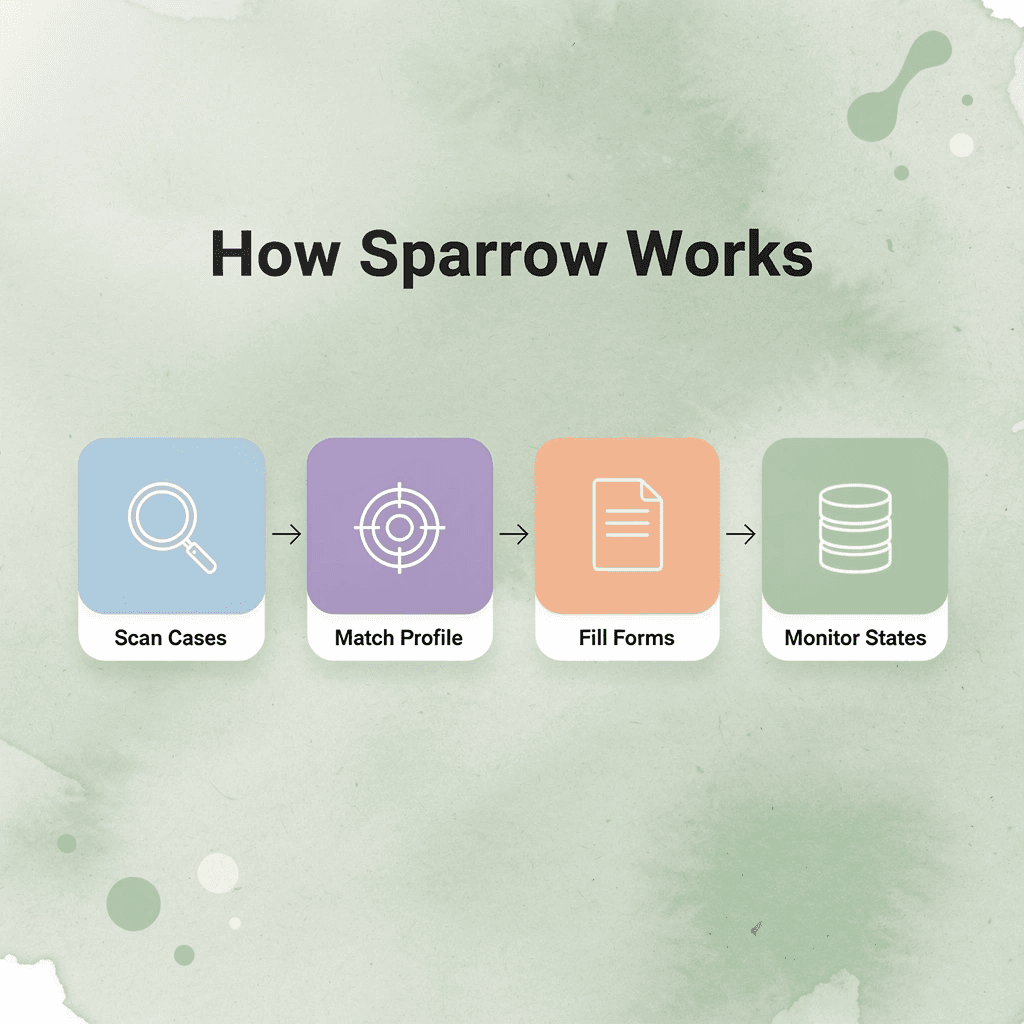
Once you have the definition, compare your own timeline and location. Did you buy the product or hold the account within the listed start and end dates? Does the settlement cover only certain states or the entire United States? Some cases restrict eligibility to people who experienced a particular problem: a specific defect, a data breach notice, or an unpaid overtime period. Self-certification suffices for many consumer and data breach settlements; others require receipts, account statements, or brokerage records. Platforms such as Sparrow scan active settlements weekly and surface those that align with a user’s profile, reducing the need to hunt through dozens of separate notices.
Confirm proof requirements and the hard filing deadline
Being eligible does not automatically mean you get a check. You must submit a claim on time that follows the settlement’s rules for paperwork. Many settlements that don’t require proof accept a signed statement made under penalty of perjury. Others require itemized proof and will reject incomplete forms. Deadlines are absolute: claims filed after the cutoff receive nothing, even for clearly eligible people. Write down the exact deadline as soon as you find a potential match, then gather the records you need before that date. Missing the deadline is the single most common reason eligible people receive zero compensation.
Use systematic matching tools to surface settlements you might otherwise miss
Manual searches only find cases that make the news or reach your mailbox. Specialized services examine open settlements across consumer, employment, data breach, and product categories and compare them with your information. Sparrow, for example, matches profiles to claims requiring no proof and claims with minimal documentation, prefills forms, and tracks deadlines so you can check eligibility continuously. After the tool finds a match, verify the class definition on the official administrator site and submit the claim yourself. This combination of automated discovery and official verification keeps the process accurate and protects against outdated information.
Verify the settlement is genuine and take the next step
Before submitting personal details, confirm the site belongs to the court-appointed claims administrator and that the case appears in public court records or reputable news coverage. Legitimate settlements never charge a fee to file a claim. Complete the claim form with your current legal name and address, keep your confirmation number, and monitor the administrator’s status portal or email updates. Payments typically arrive only after the court grants final approval and any appeals conclude, a process that can extend months beyond the claim deadline.
Tips for Avoiding Missed Settlement Payments
Missing a settlement payment usually happens because of preventable causes — missed deadlines, outdated contact information, or simply not knowing you qualify in the first place. Taking proactive action ahead of time helps you stay informed and significantly reduce your risk of leaving unclaimed money on the table.
“Millions of dollars in settlement funds go unclaimed every year — often because eligible recipients never knew they qualified or failed to act before the deadline passed.” — Consumer Advocacy Research
| Common Cause of Missed Payments | Proactive Fix |
|---|---|
| Missed deadlines | Set calendar reminders well in advance |
| Outdated contact info | Update your address with relevant agencies |
| Unaware of eligibility | Regularly check unclaimed money databases |
💡 Tip: Even if you think you don’t qualify, it’s always worth checking — eligibility rules can be broader than most people expect.
⚠️ Warning: Failing to update your contact information is one of the most common — and most avoidable — reasons people miss out on settlement payments they’re legally owed.

Set Up Reliable Deadline Tracking Systems
Create a dedicated digital folder or spreadsheet for all potential settlements, noting key dates such as claim deadlines, fairness hearings, and payment distribution windows. Update entries when you find new information and set calendar reminders two weeks before deadlines, plus follow-up alerts. This prevents notices from getting lost in daily emails and mail, ensuring you take action on time even months after becoming eligible.
Maintain Comprehensive Purchase Records
Keep digital scans or photos of receipts, order confirmations, and credit card statements in one central, searchable location organized by product category. Include purchase dates, amounts, and seller details; administrators need this verification for claims. Regular reviews of bank statements catch missed transactions and turn potential misses into successful filings.
Monitor Multiple Communication Channels
Check your physical mailbox, email spam folders, and online accounts weekly for notices from administrators. Sign up for alerts from consumer rights organizations or trusted platforms. Notifications arrive through multiple channels and can get lost in regular mail, causing valid claims to expire unnoticed.
Leverage Specialized Tools Like Sparrow for Streamlined Management
Sparrow scans new lawsuits and identifies class-action cases that users are likely to qualify for based on their profiles. The service completes forms in advance, handles printing and mailing with postage included, and guarantees your money back if you don’t recover at least the cost of your subscription.
Review and Follow Up on Submitted Claims Regularly
After filing, save the confirmation numbers and check the status portals or contact the administrators every 30 days during the distribution phases. Respond promptly to requests for additional information to prevent processing delays. This follow-through ensures approved claims convert to actual payments, as pro-rata distributions depend on validated submissions reaching completion without administrative holds.
How Sparrow Helps You Track Class Action Settlements and Unclaimed Funds
Sparrow tracks class action settlements and unclaimed funds by continuously scanning active cases every week, matching them to your profile, filling in claim forms ahead of time, and monitoring all fifty state databases for dormant property. What once required hours of manual searching across government websites now runs seamlessly in the background.
“What once required hours of manual searching across government websites now runs continuously in the background — automatically, and on your behalf.”
💡 Tip: The moment Sparrow matches a settlement to your profile, your claim is already being prepared — no action required on your end.
🔑 Takeaway: Sparrow replaces a fragmented, time-consuming process with a single automated system that covers all 50 states and works around the clock.
| Task | Manual Process | With Sparrow |
|---|---|---|
| Scanning active settlements | Hours of searching per week | Automated weekly scans |
| Matching cases to your profile | Entirely on you | AI-powered profile matching |
| Filling out claim forms | Manual, error-prone | Pre-filled automatically |
| Monitoring unclaimed property | Check each state individually | All 50 state databases covered |
The gap between knowing and getting paid
The problem is almost never about who qualifies. People who should receive settlement money miss out because the process is fragmented, has tight deadlines, and is built around how lawyers work instead of how regular people behave. A settlement administrator posts a notice, a claim window opens, and most eligible people never see either one. When the window closes, unclaimed money reverts to the defendant or a cy pres fund, not to those the lawsuit was meant to help. This outcome need not happen. It is a logistics problem requiring a logistics solution.
Why do so many qualifying consumers miss settlements like the Minnesota ICE Lawsuit?
According to the Sparrow AI Refund Helper App Store description, the platform tracks five categories of refunds: class action payouts, unclaimed money, price-match refunds, airline compensation, and subscription overcharges. This breadth matters because most people who qualify for one type of claim often qualify for others they’ve never considered pursuing.
How does ongoing database scanning close the gap for missed claims?
Most people search unclaimed property in their current state’s database, find nothing, and assume there is nothing to find. A name change from a previous marriage, a balance under a former address, or an insurance payout in a state you left a decade ago will not appear in a single-state search. Sparrow AI Refund Helper scans multiple databases, including state and federal unclaimed money sources on an ongoing basis, catching assets that surface months after an initial search. Our platform extends that same continuous monitoring to class action settlements, pre-fills required paperwork, and tracks payout status after submission, compressing the entire process into a single, managed workflow.
What ongoing monitoring actually changes
Continuous monitoring differs from a one-time search the way daily mail delivery differs from checking once. A case like Operation Metro Surge, involving thousands of people across multiple cities, generates legal proceedings, settlements, and civil claims over months or years. Someone who searches for related settlements today will miss filings that emerge six months later. Sparrow’s weekly scanning automatically identifies new settlements tied to immigration enforcement, civil rights violations, or related federal conduct, rather than requiring affected people to know where to look.
How does the Minnesota ICE lawsuit affect claim tracking over time?
Status tracking after submission closes the final gap. Most consumers file a claim and wait without hearing anything, unsure whether the administrator received their form or when distribution will occur. That uncertainty causes disengagement, and disengaged claimants sometimes miss follow-up documentation requests that void their claim. Sparrow monitors submitted claims and surfaces status updates in the same dashboard where the original filing happened, keeping claims active in members’ awareness rather than buried in old confirmation emails. The money you are owed does not expire when you stop looking for it, but the window to claim it does.
Start Finding Money You May Be Owed with Sparrow
The window to act is shorter than it feels. The Minnesota ICE lawsuit is a government enforcement challenge, not a settlement with a claims portal—a distinction that matters because it frees you to focus where payouts are available. Sorting through which cases offer real compensation costs people significant money in lost opportunities.
“The money won’t find you on its own—but with the right tool, you stop leaving it behind.” — Sparrow
⚠️ Warning: Confusing a government enforcement action with a consumer settlement is one of the most common mistakes claimants make—and it can cost you money by sending you down the wrong path.

Sparrow eliminates this friction entirely. Instead of manually searching court databases, cross-referencing eligibility requirements, and tracking deadlines across dozens of sources, our platform surfaces active settlements you qualify for and handles filing in one place. The money won’t find you on its own, but with the right tool, you stop leaving it behind.
💡 Tip: Don’t wait—settlement deadlines are firm, and missing them means walking away from money that is rightfully yours.
🎯 Key Point: Sparrow turns a time-consuming, multi-step process into a single streamlined experience—so you can claim what you’re owed without the guesswork.
| The Old Way | With Sparrow |
|---|---|
| Manually search court databases | Automated settlement discovery |
| Cross-reference eligibility requirements | Instant eligibility matching |
| Track deadlines across dozens of sources | Deadline tracking in one place |
| File paperwork on your own | Guided filing handled for you |
Related Reading
- Claim App
- At&t Lawsuit
- Is Claimmoney.com Legit
- Celsius Lawsuit
- Is Settlemate Legit
- Catch
- Settlemate
- Rocket Money
- Poppi Lawsuit
- Truebill
- Fortnite Lawsuit

Leave a Reply