

Rocket Money is useful for tracking subscriptions and spotting wasteful spending, but it stops short of putting money back in your pocket. Many consumers are owed real compensation through active legal settlements without ever knowing it. Understanding what is a class action lawsuit, and whether you qualify for one can have a far greater impact on your finances than canceling a streaming service.
Sparrow fills that gap by scanning your profile against active settlements and helping you file claims for money you are already owed. It works directly on your behalf, connecting you with compensation from companies that may have already wronged you. For anyone looking to recover that money with minimal effort, Sparrow makes it straightforward to join class action lawsuits.
Table of Contents
- What Is Rocket Money, and What Does It Offer?
- Why Do People Look for Rocket Money Alternatives?
- What Should You Look for in Rocket Money Alternatives?
- 12 Rocket Money Alternatives That Help You Recover Money
- Tips for Choosing the Best Rocket Money Alternative
- How Sparrow Makes Recovering Unclaimed Money Simple
- Start Finding Money You May Be Owed with Sparrow
Summary
- Subscription tracking apps reveal a striking gap between what people think they’re paying and what they’re actually charged. Rocket Money has helped members cancel over $245 million in unwanted subscriptions, reflecting how much money was quietly draining from linked accounts through forgotten trials and uncanceled services. The scale of that number suggests the problem isn’t occasional oversight but a systemic failure in how recurring charges are disclosed and managed.
- Fee structures in personal finance tools often cancel out the savings they promise. Rocket Money’s bill negotiation service charges 35 to 60 percent of the first year’s verified savings, which means a modest reduction on a cable or internet bill can cost more in commissions than it returns to the user. When a platform profits more as your claimed savings grow, its financial incentives and yours stop pointing in the same direction.
- Discovery, not eligibility, is the primary reason most people never collect money from class action settlements. Settlement administrators file legal notices, post to obscure websites, and move on without direct outreach to affected consumers. According to GlobeNewswire, 1 in 10 Americans has unclaimed property waiting to be recovered, and a significant portion of that gap comes down to awareness rather than any failure to qualify.
- No-proof settlements represent a much broader category of recovery than most consumers realize. Cases like Fidelity Investments (up to $150) or Cosequin Dog Supplement (up to $150) require only a name and address, removing the documentation barrier that stops most people from starting. GlobeNewswire reports that $58 billion in unclaimed property is currently held by U.S. states, a figure that reflects a shortage of accessible pathways to file, not a shortage of eligible claimants.
- Privacy risk is a real and underexamined cost of comprehensive account linking. The most common approach to financial tracking requires granting broad access through third-party aggregators, which trades data completeness for meaningful exposure. As more aggregators face scrutiny over data handling and sharing practices, the convenience of full account connectivity carries a cost that never appears on any dashboard.
- Sporadic manual searching for class action settlements produces sporadic results, and the opportunity cost compounds quietly. Users who rely on occasional Google searches or Reddit threads often miss filing windows, as deadlines for cases like Comcast Xfinity or Flo Period Tracker close without direct notification to eligible consumers. Join class action lawsuits addresses this by automating the discovery and filing process, scanning active settlements weekly, and pre-filling claim forms so eligible consumers can file in minutes rather than hours.
What Is Rocket Money, and What Does It Offer?
Rocket Money is a personal finance app that shows you exactly where your money goes — and helps you stop wasting it. It connects to your bank accounts and credit cards, surfaces recurring charges you may have forgotten about, and delivers budgeting, savings, and credit monitoring tools — all from a single, unified dashboard.
“The average American wastes $32.84 per month on unused subscriptions — Rocket Money is built to find and eliminate exactly that kind of financial leak.” — Rocket Money Internal Data
💡 What It Does: Think of Rocket Money as your always-on financial watchdog — it scans your connected accounts, flags hidden or forgotten charges, and gives you the tools to take back control of your spending in one place.
🎯 Key Point: Rocket Money isn’t just a budgeting app — it’s a full-spectrum personal finance platform designed to give you complete visibility over your financial life from a single dashboard.
⚠️ Watch Out: Many users connect their accounts and are immediately surprised by how many forgotten subscriptions are quietly draining their budget every month — awareness is the first step to fixing it.

Subscription Tracking That Actually Works
Most budgeting apps show what happened last month but don’t flag what’s draining your money now. Rocket Money actively scans linked accounts for recurring charges, including forgotten free trials that converted to paid plans. Premium users can hand off cancellations to a concierge team that typically resolves requests within days. The platform has helped members cancel over $245 million in unwanted subscriptions—a clear measure of how much money was sitting unclaimed.
How does Rocket Money handle bill negotiation on your behalf?
Most people know their internet bill went up, but rarely call to negotiate. Rocket Money contacts providers on your behalf for cable, phone, and internet plans. You pay nothing upfront, only a percentage of the first year’s verified savings if successful.
How does Rocket Money’s spending visibility compare to the recovery of settlement money?
Most people who join class action lawsuits through Sparrow discover that money was already owed to them. You can’t recover what you can’t see—the same blind spot Rocket Money targets with spending visibility. While Rocket Money helps you cut existing costs, our platform surfaces settlement funds from corporate violations, such as data breaches or false advertising, that belong to you, regardless of your budget habits.
Budgeting, Savings, and Credit in One Place
Custom budgeting tools let you build spending categories that match your actual life, not a generic template. Premium unlocks unlimited custom categories, auto-tagging rules, transaction splits, and Smart Savings, which analyzes your cash flow and moves small amounts into an FDIC-insured savings account at optimal times. Users save an average of $720 per year. Credit monitoring and net worth tracking combine assets, debts, and account balances into one evolving view that shows financial progress over time.
But here’s what no budgeting tool, no matter how well-designed, can tell you: whether you’re already owed money you never knew to claim.
Related Reading
- What Is A Class Action Lawsuit
- What Is A Class Action Settlement
- How Do Class Action Settlements Work
- How To Find Unclaimed Money
- Are Class Action Settlements Taxable
- Doge Transparency FOIA Lawsuit
- General Motors V8 Engine Lawsuit
- Shannon Sharpe Lawsuit
- Google Android Cellular Data Lawsuit
- Pima County Sheriff Lawsuit
- Ozempic Lawsuit
Why Do People Look for Rocket Money Alternatives?
Rocket Money’s fee structure becomes problematic fast. The app takes 35 to 60 percent of first-year savings on negotiated bills, which often exceeds the actual savings. According to the SenticMoney Blog, a modest cable bill reduction could cost more in commissions than you save, especially when rates revert within six months.
“The app takes 35 to 60 percent of first-year savings on negotiated bills — which often exceeds the actual savings entirely.” — SenticMoney Blog
🔑 Takeaway: A fee of 35–60% on savings isn’t a discount — it’s a revenue model built against the user. If your bill drops by $20/month, Rocket Money could pocket $84–$144 of that first year’s savings before you see a dime.
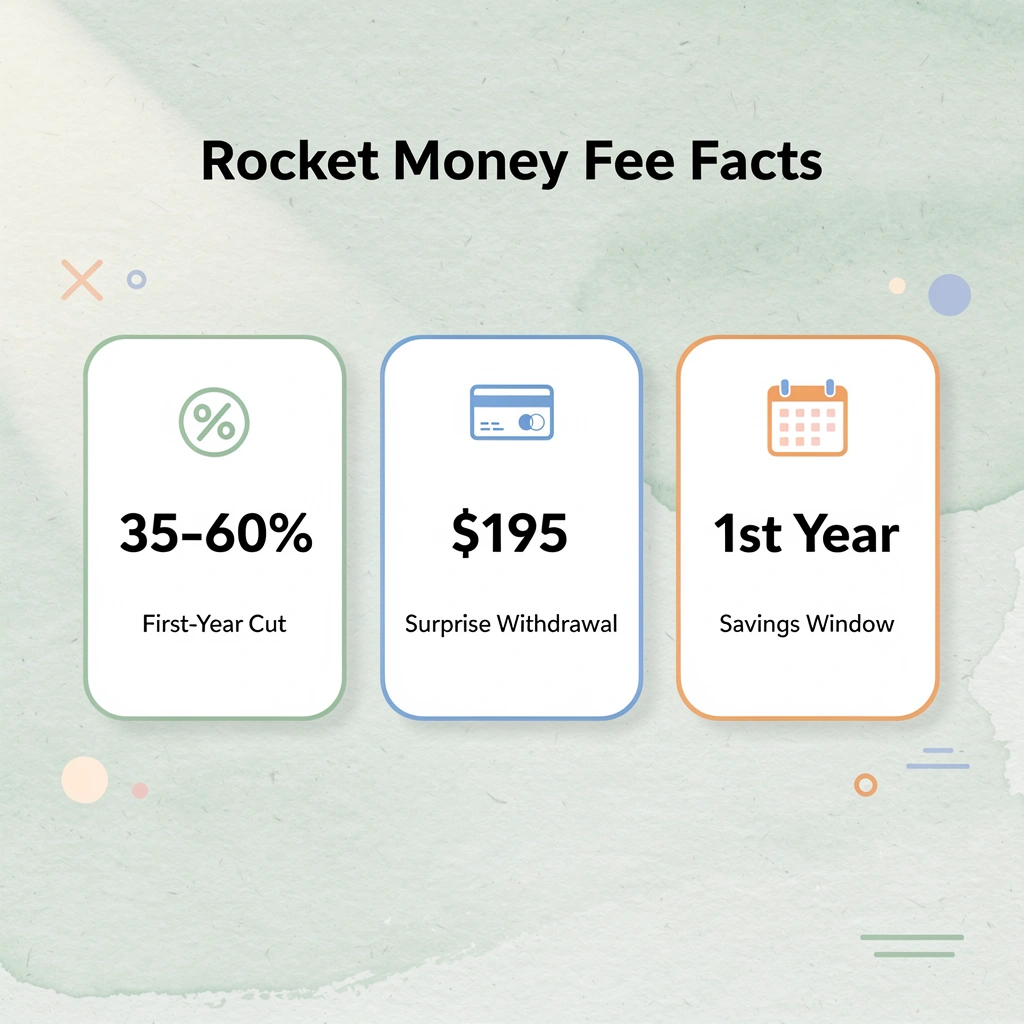
Users report feeling exploited by the tool itself rather than the companies they negotiated against. One single mother faced an unexpected $195 withdrawal after a bill negotiation she hadn’t fully authorized, leaving her unable to cover groceries that week. This cash flow crisis was caused directly by the app.
⚠️ Warning: Unexpected withdrawals are not a rare edge case. They represent a structural risk of any app with direct access to your payment information and authority to act on your behalf.
💡 Tip: Before authorizing any bill negotiation app, read the fine print on commission structures and understand exactly when and how funds will be withdrawn from your account.
When the free version creates more work than it solves
The free tier limits users to two custom budget categories, forcing those with substantial spending needs to pay for premium or use manual workarounds. This creates an incomplete financial picture, with uncategorized transactions accumulating and overspending persisting in the gaps the app was meant to address.
Does Rocket Money’s cancellation service actually reduce friction?
Rocket Money’s advertised cancellation service creates problems instead of fixing them. Active subscriptions are mislabeled as inactive, cancellations fail silently, and users have to chase refunds that the app promised to handle. A tool designed to prevent money from disappearing becomes the very reason it disappears.
Most people fix these problems by manually tracking expenses in spreadsheets and checking their accounts regularly. But that approach misses the money companies already owe you for data breaches, false advertising, or broken products. Platforms like Sparrow show you class action settlements you qualify for without requiring proof and file claims in minutes, recovering money outside of spending management entirely.
How does Rocket Money’s account syncing reliability affect financial decisions?
Rocket Money struggles with the reliability of account syncing. Delayed updates and miscategorized transactions require constant manual corrections, eroding trust in the dashboard and creating missed overdraft warnings. With over 5 million members, this reliability gap affects millions of users making financial decisions based on data that may be hours or days out of date.
What Should You Look for in Rocket Money Alternatives?
The right Rocket Money alternative should offer clear pricing, reliable data, and features that match your financial goals—not what makes money for the platform.
“The best personal finance tools are built around your goals—not the platform’s revenue model.” — Financial Planning Best Practices
🎯 Key Point: When evaluating alternatives, always prioritize transparency—look for tools with no hidden fees, honest data practices, and features that are genuinely aligned with your needs.
💡 Tip: Before committing to any alternative, read the pricing page carefully and check whether the platform earns money by recommending financial products—this can create a conflict of interest with your best outcomes.

Pricing that doesn’t punish success
The failure point is usually the fee structure. Rocket Money Premium costs $6 to $12 per month, plus a 35 to 60% success fee on negotiated savings, easily turning modest bill reductions into net losses. A trustworthy alternative charges a flat, predictable amount. When a platform profits from your claimed savings, its incentives diverge from yours.
Users often describe paying for savings that were temporary or could have been secured with a single phone call. That’s not a feature—it’s a fee model dressed up as a service.
Visibility without vulnerability
Strong alternatives give you full visibility into recurring charges without exposing your entire financial life. View-only bank access, manual entry options, and transparent data policies protect your information better than broad account linking. The best tools treat your financial data as something to protect, not a resource to monetize.
Most people grant broad account access for convenience, but as aggregators face scrutiny over data handling, that trade-off carries hidden costs. Platforms like Sparrow take a different approach: they surface money owed to you from class action settlements without requiring ongoing access to your account.
Can Rocket Money’s savings claims actually be verified?
Rocket Money claims to save users an average of $720 per year, but that figure comes from the company itself and is based on averages across millions of accounts with varying financial situations. Individual results shown in BBB complaints and CFPB filings often reveal a much smaller difference between fees paid and benefits received.
Before you choose any alternative, check reviews from other sources, look for documented cancellation confirmations, and verify whether the platform’s savings claims have been checked by independent sources. A tool that can’t show proof beyond its own marketing copy is asking you to trust it without evidence.
And here’s what most people don’t ask: what happens when the money owed has nothing to do with subscriptions?
Related Reading
- Nightfall Group Lawsuit
- Gmail Class Action Lawsuit
- Temu Lawsuit
- Dapper Development Lawsuit
- Capital One Class Action Lawsuit
- Amazon Fire TV Stick Lawsuit
- Isotonix Lawsuit
- Minnesota Ice Lawsuit
- Hexclad Lawsuit
- AT&T Class Action Lawsuit
- Amazon Prime FTC Settlement Lawsuit
- Turbotax Lawsuit
- Apple Class Action Lawsuit
- Costco Sonoma County Lawsuit
- Life360 Lawsuit
12 Rocket Money Alternatives That Help You Recover Money
Rocket Money helps users make budgets, watch subscriptions, negotiate bills, and track spending. Some alternatives go far further by helping you recover unclaimed funds, locate forgotten assets, maximize savings, or automate other parts of your financial life. The right choice depends on whether your priority is finding missing money, building a budget, improving your credit, or tracking your overall financial health.
“The best personal finance tool isn’t the most popular one — it’s the one specifically built for your financial priority, whether that’s recovering lost assets, cutting subscriptions, or building long-term wealth.”
💡 Tip: If recovering unclaimed funds or locating forgotten assets is your primary goal, a dedicated recovery-focused alternative will almost always outperform a general budgeting app like Rocket Money.
⚠️ Warning: Don’t settle for a one-size-fits-all budgeting tool when your real need is specialized — whether that’s credit improvement, bill negotiation, or missing money recovery.

1. Sparrow
Sparrow is a targeted recovery solution that helps users find class action settlements and related funds they often miss. Our service delivers an average of more than $345 per year in potential recoveries without percentage-based success fees or bank account linking requirements.
Key Features
- Scans and delivers new class action settlements with no proof required every week, helping you find hidden opportunities that basic subscription trackers miss.
- Automatically prints and mails physical claim forms with postage, eliminating manual paperwork.
- A money-back guarantee that ensures you earn more than the cost of the subscription or receive a refund. This provides stronger protection than variable negotiation fees.
- Pre-fill claim forms with your information for quick submission and time savings.
- Matches you to high-value settlements such as Comcast Xfinity (up to $10,000) or Flo Period Tracker (up to $700).
- Tracks claim status and deadlines (for example, 63 days left for Disney/YouTube TV settlement), giving you visibility into multiple active claims simultaneously, often 9 or more.
- Focuses on claims that don’t require proof, so no receipts or documentation are needed.
- Weekly emailed updates on new lawsuits from consumer protection violations such as data breaches or false advertising.
Pros
Simplifies complex filing into minutes, has a low annual cost with an earnings guarantee, uncovers passive settlement money most consumers never pursue, and offers a convenient mobile-friendly process.
Cons
Recoveries depend on settlement administrators and timelines, not on instant payouts. It addresses class actions specifically, not daily budgeting or negotiations.
Accessibility
Web-based platform accessible via browser on phones and computers with straightforward sign-up and claim management. The annual plan costs $7 per month ($84 billed annually).
2. Monarch Money
Monarch Money is a comprehensive personal finance dashboard that tracks spending and enables collaborative budgeting. It addresses key limitations in Rocket Money by providing deeper insights without relying heavily on negotiation fees.
Key Features
- You can customize your budget and share it with your household, going beyond Rocket Money’s basic categories.
- Net worth and investment tracking work together smoothly.
- Transactions are automatically sorted into the correct categories. The tool also identifies recurring expenses. You can adjust categorizations manually for greater privacy.
- You can set goals and plan for long-term savings.
- You get strong reporting and insights without performance-based charges.
- Your bank information syncs securely with strong security protections.
- You can work together with others, which works well for couples or families.
Pros
Modern interface with excellent ongoing control and visibility; often praised for accuracy over Rocket Money.
Cons
Requires bank linking; annual costs can accumulate without the same cancellation help service.
Accessibility
Web and mobile apps; subscription model around $99/year or similar monthly options.
3. YNAB (You Need A Budget)
YNAB focuses on proactive zero-based budgeting to stop overspending and take back control of your money. Unlike Rocket Money’s reactive subscription focus, YNAB teaches users to give every dollar a job before spending it.
Key Features
Zero-based envelope system for intentional spending; detailed educational resources and workshops; real-time tracking with age-of-money metrics; goal-oriented planning that reduces reliance on cancellations; comprehensive spending habit reporting; cross-device synchronization; community support for behavior change.
Pros
Builds lasting financial habits; demonstrates high user success in debt reduction and savings.
Cons
Steeper learning curve; primarily budgeting, with no built-in negotiation.
Accessibility
Web, iOS, Android; $14.99/month or an annual discount available.
4. Quicken Simplifi
Quicken Simplifi offers clean bill tracking and projected cash flow with more reliable automation and clearer forecasts than Rocket Money, without percentage-based fees.
Key Features
- Automated spending plan based on income and bills.
- Custom savings goals and watchlists.
- Accurate bill reminders and tracking.
- Simplified reports and visualizations.
- Household sharing options.
- Strong mobile experience.
- Integration for recurring expense management.
Pros
Easy to use for daily oversight; good value for bill-focused users.
Cons
Less emphasis on subscription auto-cancellation.
Accessibility
Web and mobile: affordable monthly or annual plans with frequent discounts.
5. PocketGuard
PocketGuard competes with Rocket Money by offering straightforward subscription tracking, bill negotiation, and an “In My Pocket” feature that calculates daily spendable cash at a competitive price.
Key Features
- Subscription detection and cancellation assistance.
- Bill negotiation tools with potentially lower fees.
- “In My Pocket” feature for daily available funds.
- Basic budgeting and tracking.
- Expense categorization.
- Alerts for unusual charges.
- Mobile-first design.
Pros
Affordable and focused on simplicity for overwhelmed users.
Cons
May lack depth in advanced budgeting or investments.
Accessibility
Free tier available with premium upgrades on iOS and Android.
6. Copilot Money
Copilot Money offers AI-enhanced finance tracking with smarter insights and cleaner interfaces than Rocket Money. It focuses on proactive spending analysis and subscription management, surfacing patterns that basic dashboards might miss.
Key Features
- AI-powered categorization and predictive insights for better forecasting.
- Elegant subscription detection with visual trends.
- Net worth monitoring alongside daily expenses.
- Custom tags and advanced search for deep analysis.
- Privacy-focused syncing options.
- Beautiful reporting and visualizations.
- Goal tracking with progress alerts.
Pros
Modern, easy-to-use design; strong for users seeking smart features over basic automation.
Cons
Takes time to learn AI suggestions and requires a subscription fee.
Accessibility
Works on iOS and Android with monthly or yearly plan options.
7. EveryDollar
EveryDollar, backed by Dave Ramsey principles, uses zero-based budgeting to stop spending leaks before they grow. Unlike Rocket Money’s subscription-heavy approach, it emphasizes financial discipline and debt recovery.
Key Features
- Simple zero-based budgeting interface.
- Debt snowball integration for recovery focus.
- Manual or linked transaction entry.
- Baby Steps progress tracking.
- Reports tied to financial peace principles.
- Free core version availability.
Pros
Strong free version with a motivational framework for long-term savings.
Cons
Less automated than Rocket Money for tracking cancellations.
Accessibility
Web and mobile apps with premium upgrades available.
8. Goodbudget
Goodbudget uses a shared envelope system for collaborative budgeting, helping families recover from overspending by allocating money into specific categories visible to all members. Unlike Rocket Money’s individual-focused tracking, this approach suits households better.
Key Features
- Digital envelope allocation for every dollar.
- Real-time shared access for couples or families.
- Transaction assignment to envelopes.
- Historical reporting on envelope usage.
- Subscription categorization tools.
- Sync across devices.
- Educational budgeting guidance.
Pros
Excellent for transparency in shared finances and prevents hidden spending.
Cons
More manual effort is required at the start.
Accessibility
Web, iOS, Android; free with premium options for additional envelopes.
9. Empower (formerly Personal Capital)
Empower combines free net worth tracking with investment insights, offering deeper wealth oversight than Rocket Money, especially for users with assets beyond checking accounts.
Key Features
- Comprehensive net worth dashboard.
- Investment portfolio analysis.
- Retirement planning tools.
- Cash flow and spending tracking.
- Free basic access with advisor options.
- Bill and subscription visibility.
- Secure bank and investment linking.
Pros
Robust for higher-net-worth users; core tools are free.
Cons
Less focused on everyday subscription management.
Accessibility
Web and mobile; free tier available with premium services.
10. Trim
Trim specializes in bill negotiation and subscription management, offering targeted recovery and potentially competitive fee structures to lower recurring costs.
Key Features
- Automated bill negotiation for cable, insurance, and other services.
- Subscription cancellation assistance.
- Savings tracking with clear reporting.
- Expense reduction recommendations.
- Account monitoring alerts.
Pros
Strong focus on direct savings actions.
Cons
Uses success fees; requires account access.
Accessibility
Web and app; fee based on savings or subscription.
11. ReSubs
ReSubs prioritizes privacy by reducing the need to link your bank account, directly addressing the data privacy concerns associated with Rocket Money while providing accurate tracking and cancellation support. This approach benefits users hesitant to share comprehensive financial information.
Key Features
- Manual or limited-sync subscription detection for better control.
- Deep recurring charge identification without heavy data sharing.
- Cancellation guidance and templates.
- Clean dashboard for expense overview.
- No or low bank credentials needed.
- Affordable one-time or low recurring options.
- Focus on user-owned data.
Pros
Better privacy; ideal for users managing multiple subscriptions who want to avoid aggregators.
Cons
Requires more initial setup than fully automated options.
Accessibility
Mobile apps; low-cost plans.
12. BillShark
BillShark specializes in expert bill negotiation, helping users secure ongoing savings on utilities and insurance through a dedicated negotiation team. This addresses Rocket Money’s inconsistent success rates and high fee percentages.
Key Features
- Human-backed bill reduction services.
- Negotiation for multiple bill types.
- Savings guarantee or clear tracking.
- Subscription audit alongside bills.
- Detailed before-and-after reports.
- Lower or competitive success fees.
- Ongoing monitoring support.
Pros
Proven expertise for larger recurring savings.
Cons
Focus is narrower than full budgeting suites.
Accessibility
Web-based service; fee on achieved savings.
Tips for Choosing the Best Rocket Money Alternative
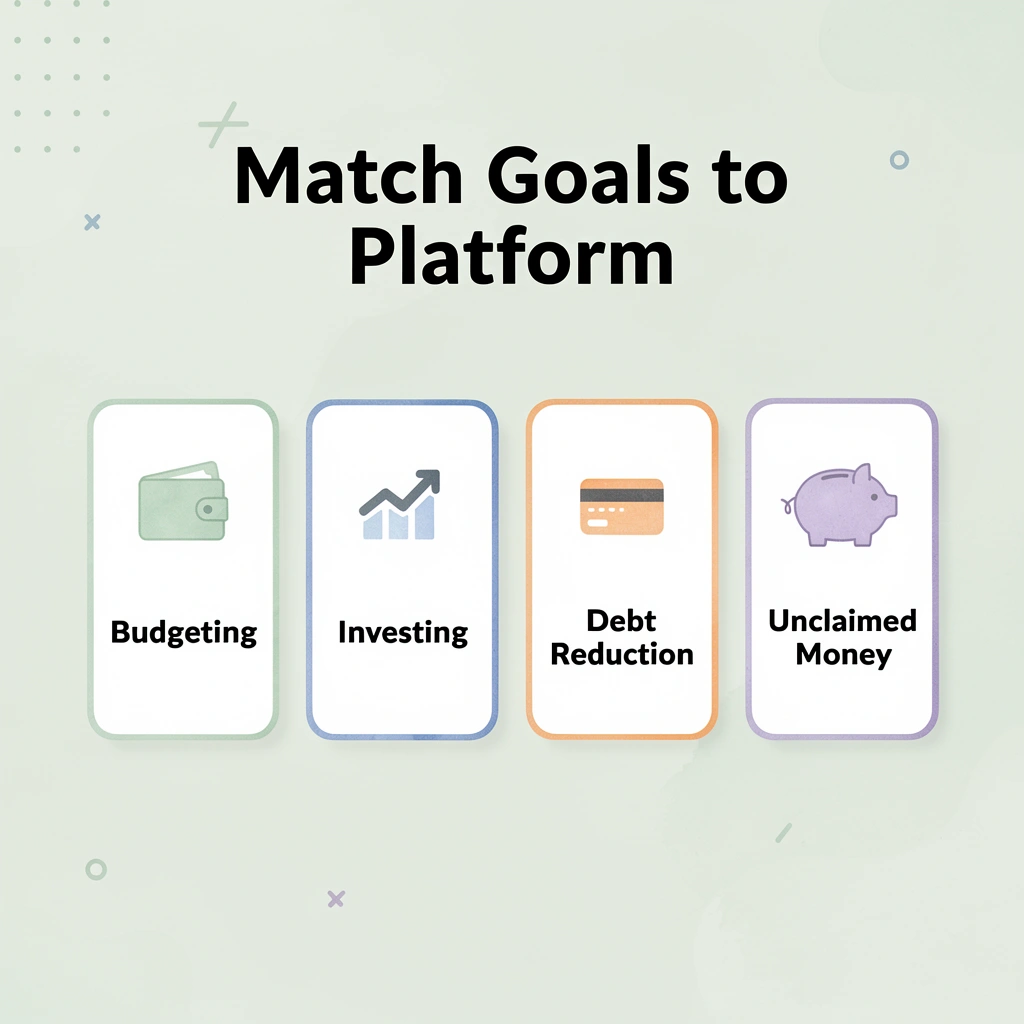
The best Rocket Money alternative solves your specific financial problem. Some platforms are great at budgeting, others focus on investments or debt reduction, while a few help you get money you didn’t know you were owed. Match your goals against what each platform delivers to choose a tool that creates measurable financial value.
“The real value of any financial tool comes down to one thing: does it solve your specific problem? Match your goals to the platform — not the other way around.”
💡 Tip: Before switching from Rocket Money, write down your top 1–2 financial priorities — this single step will immediately narrow your choices to the platforms that deliver real, measurable results.
⚠️ Warning: Choosing a platform based on popularity rather than personal financial fit is one of the most common — and costly — mistakes users make. A tool that’s perfect for investing may be useless if your priority is monthly budget control.
Prioritize Transparent and Predictable Pricing
Look at the full cost structure, including hidden fees for premium features or negotiations. Rocket Money’s Premium costs between $7 and $14 monthly, plus 35–60% success fees on bill savings. These fees can quickly offset benefits if savings don’t persist. Reviews indicate such models can lead to disagreements over claimed savings. Choose alternatives with flat yearly fees or robust free versions that clearly explain what is included.
Evaluate Subscription Detection Accuracy and Cancellation Ease
Test how well the app finds recurring charges and helps you cancel them across different merchants. Good tools provide reliable syncing, duplicate detection, and direct cancellation support. With the average American spending $219 per month on subscriptions—often exceeding personal estimates by more than double—this capability delivers measurable savings without manual effort, overcoming the inertia and dark patterns that keep unwanted services active.
Assess Data Privacy and Security Standards
Look at how the platform handles data, how it protects information with encryption, and whether it requires linking your full bank account. Many users worry about data aggregators and sharing policies, as evidenced by consumer complaints. Strong alternatives let you enter information manually or offer better privacy controls, reducing your risk of exposure while providing the insights you need.
Check Budgeting Depth and Reporting Capabilities
Look for customizable budgets, spending categories, and helpful reports to support smart financial decisions. The best options offer net worth tracking, goal setting, and household sharing, helping users address broader cash flow issues rather than isolated cancellations.
Verify Bill Negotiation or Lowering Effectiveness
Look into success rates, fee structures, and user outcomes for any bill reduction services. Avoid services that promise high percentage cuts on savings. Instead, favor transparent or limited-fee approaches backed by verifiable performance. Independent verification through reviews and reports is essential before committing, as real-world results vary.
Consider Customer Support and Ease of Use
Choose apps with good customer support, clear designs, and easy setup. Reliable tools reduce frustration during setup and troubleshooting, which matters when handling sensitive financial information. User ratings on major app stores and other websites reveal what real people think about these apps.
Test for Long-Term Value and Exit Flexibility
Make sure the service offers trial periods, easy cancellation, and features that scale with your needs, such as investment tracking or advanced analytics. This prevents lock-in and lets you adapt as your financial situation evolves.
How Sparrow Makes Recovering Unclaimed Money Simple
Subscription tools help you stop money from leaking away. But there’s a separate category of money that never left your wallet through a recurring charge—it was taken through a data breach you didn’t authorize, a false product claim, or an illegal pricing scheme. That money sits in settlement funds, waiting. Most people never collect it because nobody told them it existed.
“Money taken through data breaches, false product claims, and illegal pricing schemes sits in settlement funds—uncollected by the vast majority of people who are owed it.” — Sparrow
💡 Tip: If you’ve been part of a data breach, purchased a product with false claims, or been subject to illegal pricing, there’s a real chance settlement money exists in your name right now.
🔑 Takeaway: Unclaimed settlement funds aren’t a myth—they’re a massive, largely untouched pool of money that belongs to everyday consumers who were never told to claim it.

Where the real recovery gap lives
The failure point is usually discovery, not eligibility. Consumers assume they’d hear about a class action settlement affecting them—they won’t. Settlement administrators file legal notices and post to obscure websites. According to GlobeNewswire, 1 in 10 Americans has unclaimed property waiting to be recovered, with a significant portion of that gap stemming from a lack of awareness rather than ineligibility. The money exists. The path to it is invisible without the right infrastructure.
Why does sporadic searching fail where tools like Rocket Money succeed?
The familiar approach of occasionally searching Google, catching Reddit threads, and filing one or two claims yearly fails when you miss the Comcast Xfinity window, the Flo Period Tracker deadline, or don’t know that the Disney/YouTube TV antitrust case is open. Sporadic searching yields sporadic results. The opportunity cost accumulates silently.
What does a structural solution to the recovery gap actually look like?
Sparrow was built for this gap. It scans active class actions weekly, surfaces no-proof-required settlements you qualify for based on services you use, pre-fills claim forms, prints them, and mails them with postage included. Users report filing seven claims in roughly five minutes, compared to hours of manual research and form completion. That’s a structural change in how recovery works.
What makes no-proof settlements different
The critical difference between settlements people file and those they skip is documentation. Proving you bought a specific supplement three years ago or used a particular streaming service during a specific billing window stops most people before they start. No-proof settlements remove that barrier entirely. Basic personal information—a name and address—suffices. Settlements like Fidelity Investments (up to $150) or Cosequin Dog Supplement (up to $150) don’t require receipts. According to GlobeNewswire, $58 billion in unclaimed property is currently held by U.S. states—a figure reflecting not a shortage of eligible claimants but a shortage of accessible filing methods. Sparrow’s focus on no-proof opportunities directly addresses that access problem, converting theoretical eligibility into actual payouts.
How does Rocket Money compare to a money-back guarantee model?
At $7 per month, Sparrow’s subscription comes with a money-back guarantee if your recoveries don’t exceed the fee. The average user recovers over $345 per year. Our platform succeeds when you do: incentive alignment that subscription-based financial tools rarely offer.
The real surprise isn’t how much money waits in class action settlements, but how straightforward the path becomes once someone removes the friction between you and what’s already yours.
Related Reading
- Fortnite Lawsuit
- Is Settlemate Legit
- Poppi Lawsuit
- Claim App
- At&t Lawsuit
- Catch
- Is Claimmoney.com Legit
- Celsius Lawsuit
- Truebill
- Settlemate
Start Finding Money You May Be Owed with Sparrow
Budgeting tools track money you can already see. Sparrow surfaces money you didn’t know to look for: funds in active class action settlements tied to services you already used — from data breaches to false advertising to defective products. Our platform shortens the path from “I might qualify” to “I got paid.” Join class action lawsuits
“Most people never claim settlement money they’re legally owed — not because they don’t qualify, but because they never knew to look.” — Sparrow
🎯 Key Point: Sparrow doesn’t just help you budget — it helps you recover money you’re already owed from settlements tied to products and services you’ve actually used.

Visit Sparrow, create your free account, and let our platform scan for settlements you’re eligible to claim. You don’t need proof of purchase, legal knowledge, or a spreadsheet: just start, because the money won’t move toward you on its own.
💡 Tip: The single biggest reason people miss out on class action payouts is inaction. Sparrow takes care of the hard part, so all you have to do is show up.
⚠️ Warning: Settlement deadlines are real. Waiting too long means permanently losing your claim: unclaimed funds don’t roll over to you later.

Leave a Reply