
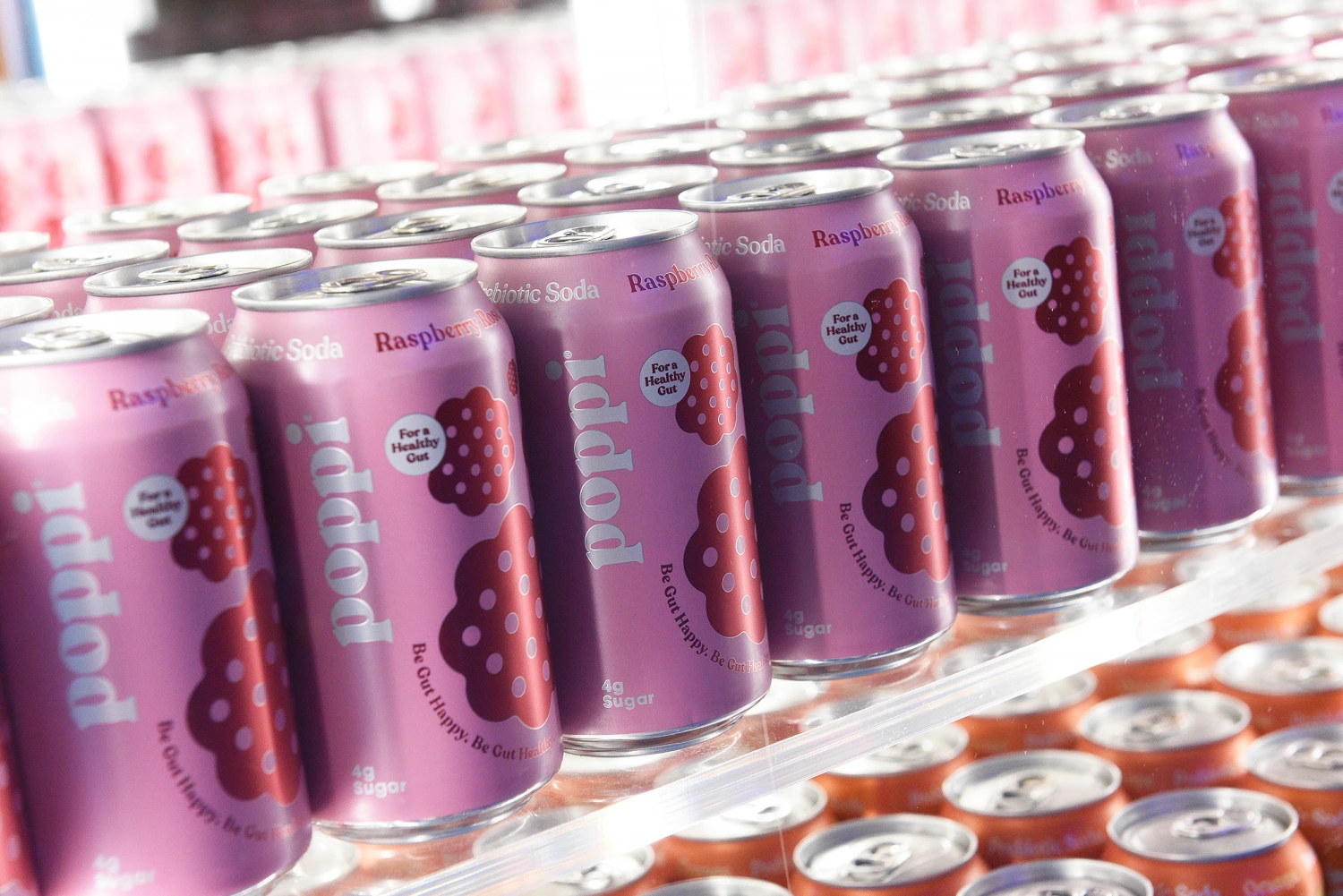

Consumers who purchased Poppi prebiotic soda may have a legitimate financial claim after a class action lawsuit alleged the brand misled buyers about the actual prebiotic fiber content in its drinks. The lawsuit argues that Poppi’s gut health marketing overstated the digestive benefits its beverages deliver, leaving customers with a product that did not live up to its promises.
Many people who qualify for settlements like this never collect simply because they do not know where to start. Sparrow removes that barrier by making it straightforward for everyday consumers to join class action lawsuits without paperwork headaches or legal fees.
Table of Contents
- What Is the Poppi Lawsuit About?
- Who Is Eligible for the Poppi Lawsuit Settlement?
- What Is the Current Status of the Poppi Lawsuit Settlement?
- How to Check Eligibility for a Lawsuit and File a Claim
- Tips for Avoiding Missed Settlement Payments
- How Sparrow Helps You Find and Claim Unclaimed Settlement Money
- Start Finding Money You May Be Owed with Sparrow
Summary
- Poppi’s $8.9 million class action settlement centers on a straightforward scientific gap. Each can contains roughly 2 grams of prebiotic inulin fiber, but published clinical research indicates that meaningful gut microbiota changes require at least 5 to 7.5 grams daily, sustained over three weeks. To reach that threshold from Poppi alone, a consumer would need to drink more than four cans per day, at which point the sugar intake would work against the digestive outcomes the label promises.
- Marketing language placement was central to the legal argument. Phrases like “Be Gut Happy. Be Gut Healthy” and “For a Healthy Gut” appeared directly on the cans, which courts treat differently than vague lifestyle messaging. California’s False Advertising Law, Consumers Legal Remedies Act, and Unfair Competition Law all prohibit advertising that induces purchases consumers would not otherwise make, and that is the core of what plaintiff Kristin Cobb alleged when she filed the original complaint in May 2024.
- Eligibility is broader than most consumers assume. Anyone who purchased any Poppi beverage in the United States for personal use between January 23, 2020, and July 18, 2025, qualifies under the class definition. Critically, claims could be submitted without proof of purchase up to a defined unit limit, meaning the absence of a receipt does not disqualify a buyer. The primary barrier to participation was awareness, not documentation.
- Class action settlement timelines are consistently longer than consumers expect. The Poppi case followed a standard path: filed May 2024, settlement agreement reached in early 2025, preliminary approval in May 2025, claims closed September 26, 2025, final approval in April 2026, and distribution expected within 90 days after the appeal window closes. Two to three years from filing to final payout is the norm across federal class actions, not an anomaly.
- Unclaimed settlement money does not remain in a neutral fund indefinitely. When eligible consumers fail to file, those dollars revert to the defendant or get redirected to third-party organizations through cy pres awards. Estimates consistently show that the majority of class action settlement funds go unclaimed, not because people are ineligible, but because the discovery and filing process creates enough friction that qualified claimants never complete a submission.
- Sparrow helps consumers close that gap by continuously monitoring active class actions, matching settlements to individual purchase histories, and pre-filling claim forms so that eligible buyers can file without spending hours navigating legal language or tracking down documentation on their own.
What Is the Poppi Lawsuit About?
Poppi built its brand on a simple promise: drink this soda, support your gut. The lawsuit argues that promise lacked scientific grounding. Poppi agreed to an $8.9 million settlement to resolve false advertising claims tied to those gut health representations.
“Poppi agreed to an $8.9 million settlement to resolve false advertising claims tied to gut health representations.” — Class Action Lawsuit Filing
🚨 Warning: A health claim on a product label isn’t the same as a scientifically proven benefit — and this case is a prime example of why that distinction matters legally.
💡 Key Point: The core issue here isn’t just marketing language — it’s whether consumers were misled into paying a premium price for a product whose gut health benefits were never substantively backed by science.
| Element | Detail |
|---|---|
| Brand Promise | Drink Poppi, support your gut |
| Legal Claim | False advertising/lack of scientific grounding |
| Settlement Amount | $8.9 million |
| Claim Type | False advertising claims |

What the science actually says about the fiber dose
The main problem comes down to numbers. Each can contains about 2 grams of prebiotic fiber, mostly inulin from agave. Plaintiffs argue this is insufficient for gut health benefits. Published clinical research shows that meaningful changes in gut microbiota require at least 5 to 7.5 grams daily, sustained over three weeks. One can falls far short of that threshold. To reach it, you would need to drink more than four cans daily, at which point the total sugar intake would undermine the label’s promised benefits.
Why did the marketing language make this a legal problem in the Poppi lawsuit?
Slogans like “Be Gut Happy. Be Gut Healthy” and “For a Healthy Gut” on the cans signal functional health claims, not lifestyle aspirations. Plaintiff Kristin Cobbs filed the original complaint on 29 May 2024 in the U.S. District Court for the Northern District of California, arguing that buyers paid a premium price based on those representations. California’s False Advertising Law, Consumers Legal Remedies Act, and Unfair Competition Law all prohibit advertising that misleads consumers into purchases they would not otherwise make. Poppi’s marketing did exactly that.
How can affected buyers act on a claim without the usual barriers?
Most consumers believe fighting unfair practices requires a lawyer, paperwork, and months of work—a barrier that prevents claims from being filed. Platforms like Sparrow remove that friction, helping buyers check eligibility and file claims in minutes.
What Poppi’s defense position means for buyers
Poppi has publicly said the lawsuit is baseless and stands behind its products. Settlements like this often resolve without an admission of liability. What matters for consumers is that a fund now exists, and qualifying buyers have a window to claim from it. The question most readers arrive at next is deceptively simple, though the answer holds more nuance than expected.
Related Reading
- What Is A Class Action Lawsuit
- What Is A Class Action Settlement
- How Do Class Action Settlements Work
- How To Find Unclaimed Money
- Are Class Action Settlements Taxable
- Doge Transparency FOIA Lawsuit
- Google Android Cellular Data Lawsuit
- Pima County Sheriff Lawsuit
- Ozempic Lawsuit
- General Motors V8 Engine Lawsuit
Who Is Eligible for the Poppi Lawsuit Settlement?
If you bought any Poppi beverage in the United States for personal use between January 23, 2020, and July 18, 2025, you are part of the settlement class. Every flavor, every pack size, every retailer counts. The class is defined broadly because the claimed misleading statements appeared on all Poppi packaging across the entire product line during that time period.
“Every flavor, every pack size, every retailer counts — the settlement class is defined broadly because the claimed misleading statements appeared across the entire Poppi product line from January 23, 2020, to July 18, 2025.”
🎯 Key Point: You don’t need a receipt to be part of the class — if you purchased any Poppi product in the U.S. during the 5+ year window, you are automatically included in the settlement class.
⚠️ Warning: The eligibility window is strict — purchases made before January 23, 2020, or after July 18, 2025, do not qualify, so confirming your purchase timeline is essential.
| Eligibility Factor | Details |
|---|---|
| Who Qualifies | Any U.S. consumer who purchased Poppi |
| Purchase Window | January 23, 2020 – July 18, 2025 |
| Flavors Covered | All flavors included |
| Pack Sizes Covered | All pack sizes included |
| Retailers Covered | All retailers included |
| Purchase Type | Personal use purchases only |
Does the purchase date window actually matter?
The five-year span is exact. Purchases made before January 23, 2020, do not qualify. The settlement period ends July 18, 2025, when formal settlement notice began. If you bought the product at any retailer between those dates, your purchase qualifies.
Can you file a Poppi lawsuit claim without a receipt?
What most people get wrong is assuming the absence of a receipt disqualifies them entirely. According to NBC 5 Dallas-Fort Worth, the settlement is structured around an $8.9 million fund, and claims can be submitted without proof of purchase up to a defined unit limit. This detail changes the math for millions of buyers who paid cash, lost receipts, or never kept grocery records.
What stops most consumers from completing a Poppi lawsuit claim?
Most consumers abandon settlement claims before submitting anything because the process is too difficult. Platforms like Sparrow solve this by identifying matching settlements and handling the filing for you, reducing what might take an afternoon to just a few minutes.
Who sits outside the settlement class?
Resellers, distributors, and commercial purchasers do not qualify, nor do employees of the defendant and their immediate family members. The Statesman Journal reported the $8.9 million settlement applies to all qualifying U.S. consumers, with geographic and commercial-use boundaries as the primary filters. The settlement is a structured recovery mechanism for people who paid for health claims that science did not support. Knowing where the process stands determines whether there is still time to act.
What Is the Current Status of the Poppi Lawsuit Settlement?
The claim deadline closed on September 26, 2025. According to Scripps News, people who bought Poppi between January 23, 2020 and July 18, 2025 may get up to $16 without needing to show proof of purchase. However, the payout depends on the court approving it rather than happening automatically.
“People who bought Poppi between January 23, 2020 and July 18, 2025 may get up to $16 without needing to show proof of purchase.” — Scripps News
| Settlement Detail | Key Information |
|---|---|
| Claim Deadline | September 26, 2025 |
| Eligible Purchase Window | January 23, 2020 – July 18, 2025 |
| Maximum Payout | Up to $16 |
| Proof of Purchase Required? | No |
| Payout Guaranteed? | No — requires court approval |
🎯 Key Point: The $16 payout is not automatic — it is entirely contingent on court approval, meaning eligible claimants should monitor the case for a final ruling.
⚠️ Warning: The claim deadline has already passed as of September 26, 2025. If you did not submit your claim before this date, you are no longer eligible to receive a settlement payout.
What happened after the deadline passed?
A California federal judge gave final approval to the settlement on or around April 14, 2026, nearly seven months after the claim window closed. Federal courts require a formal fairness hearing, a review period for objections, and a written finding that the settlement protects the class before funds are distributed. The process is deliberately slow because rushing approval allows bad settlements to be rubber-stamped at the expense of the people they were meant to help.
When will the Poppi lawsuit actually pay out claimants?
After final approval, the settlement enters an appeal window. Distribution is scheduled within 90 days after the deal is no longer subject to further review, placing actual payouts well into 2026 for most claimants. The settlement announcement marks the beginning of the legal process, not its conclusion.
Why did PepsiCo’s acquisition not change the Poppi lawsuit timeline?
PepsiCo completed its $1.95 billion purchase of Poppi in May 2025 while the settlement awaited final court approval. Ownership changes do not accelerate pending legal cases; the purchase transferred the brand, but the previous owner’s settlement obligations and court review process remained on their original schedule. Consumers had to wait through the complete court timeline regardless of who owned the product.
What should you do if you haven’t received claim confirmation?
Consumers who filed valid claims often report receiving no official confirmation, creating uncertainty about whether their submission was properly recorded. Settlement administrators handle hundreds of thousands of claims, and communication gaps are common. If you filed before the September 26 deadline and haven’t received confirmation, check directly through poppisettlement.com. Platforms like Sparrow address this friction point, helping consumers track claim status and surface other active settlements they may qualify for without parsing dense legal language.
What the timeline actually tells you
The Poppi false advertising settlement followed the standard class-action timeline: filed in May 2024, agreement reached in early 2025, preliminary approval in May 2025, claims closed in September 2025, final approval in April 2026, and distribution expected roughly 90 days after the appeal window closes. Two to three years from filing to final payout is typical. Understanding this timeline matters because “settlement approved” doesn’t mean immediate payment.
What does “settlement approved” actually mean for the Poppi lawsuit?
The money is already set aside. It exists. The court confirmed the deal is fair. Only procedural time stands between claimants and their payout, and that clock is running.
Related Reading
- Costco Sonoma County Lawsuit
- Apple Class Action Lawsuit
- At&t Class Action Lawsuit
- Temu Lawsuit
- Hexclad Lawsuit
- Nightfall Group Lawsuit
- Capital One Class Action Lawsuit
- Life360 Lawsuit
- Dapper Development Lawsuit
- Amazon Fire TV Stick Lawsuit
- Minnesota Ice Lawsuit
How to Check Eligibility for a Lawsuit and File a Claim
To figure out if you qualify for compensation, start by checking the facts of your case and following official procedures instead of just reading summaries online — the details of your specific situation matter enormously to your eligibility. Use a qualify for compensation tool as your first step, then cross-reference with official sources to confirm your standing before taking any further action.
“The difference between a successful claim and a missed opportunity often comes down to one thing: checking the right sources and verifying the exact facts of your case before filing.” — Legal Claims Best Practice
💡 Tip: Always start with an official eligibility checker or compensation calculator before consulting summaries — generic overviews can cause you to miss critical qualifying details unique to your case.
⚠️ Warning: Relying solely on informal summaries or third-party blogs is one of the most common mistakes claimants make. Always verify through official procedures to ensure you don’t forfeit your right to compensation.
| Step | Action | Why It Matters |
|---|---|---|
| 1 | Check your case facts | Determines basic eligibility |
| 2 | Use an official calculator | Gives a fast eligibility estimate |
| 3 | Follow official procedures | Ensures your claim is legally valid |
| 4 | File your claim | Secures your right to compensation |

Confirm the Lawsuit or Settlement Exists Through Official Records
You can search federal court records using PACER (Public Access to Court Electronic Records) at pacer.uscourts.gov. Create a free account and use the Case Locator to search across the country by party name, case number, or court. The system updates daily and shows whether a case is active, settled, or dismissed. For state cases, check the state court or clerk’s office website. Official dockets are the only reliable way to confirm that a claims process exists; third-party blogs may mention cases that never received class certification or public settlement approval.
Review the Official Class Notice or Settlement Website for Eligibility Criteria
When a court approves a class and settlement, the settlement administrator or lead counsel sends a formal notice by mail or email. This notice explains who is covered, when purchases or injuries occurred, what proof you need, and your claim deadline. Visit the official settlement website listed in the notice—never a similar-looking website—to read the complete eligibility rules. Requirements typically include proof of purchase, ownership during a specified period, or documented harm. Compare your situation to these court-approved definitions to confirm eligibility.
Gather and Organize Supporting Documents Before Submitting
Collect receipts, bank or credit card statements, product packaging, medical records, correspondence with the company, and photographs or repair invoices that support your claims. Organize them by date and type for the claim form. Incomplete submissions often lead to rejection or delays. Keep digital copies and note the exact claim-filing deadline from the official notice, as late claims are routinely denied.
Contact Class Counsel or the Settlement Administrator for Clarification
If the notice or website leaves you with questions about whether you qualify, contact the class counsel or claims administrator using the information provided. These groups work under court supervision and can answer your questions about required documents, claim status, and payment timing. Avoid firms that contact you aggressively without an official court-approved role.
Complete and Submit the Official Claim Form by the Deadline
Download the claim form from the settlement website or online portal. Fill in accurate personal and purchase information, attach required proof, and submit before the cutoff date. Some settlements allow electronic filing; others require mail. Keep your confirmation number or tracking receipt. The administrator may request additional documents during review. Approved payments typically arrive months after the final deadline and after any appeals conclude.
Consider Individual Legal Action When No Class Settlement Exists
If court records show no certified class or approved settlement, you can still file an individual lawsuit for personal injury, consumer fraud, or contract claims. Consult a licensed attorney specializing in the relevant practice area and bring organized evidence of your claim. Statutes of limitation restrict how long you have to file, so prompt review protects your rights. State bar association referral services or your state attorney general’s consumer protection division can help you find qualified counsel.
File a Consumer Complaint with Government Agencies as an Additional Step
When a company has done something deceptive but you cannot file a private lawsuit, you can submit a complaint to the Federal Trade Commission through ReportFraud.ftc.gov or to your state attorney general’s consumer-protection office. These agencies track patterns of harm and may launch investigations or pursue broader solutions. While they do not compensate individuals, complaints create an official record that can support future regulatory or private actions.
Tips for Avoiding Missed Settlement Payments
Missing a settlement payment usually happens because of forgotten deadlines, old contact information, or not knowing you qualify. Taking action ahead of time helps you stay informed and reduces money that goes unclaimed.
“The most common reasons claimants miss settlement payments are missed deadlines, outdated contact details, and a simple lack of awareness that they qualify at all.” — Settlement Administration Best Practices
💡 Tip: Update your contact information with settlement administrators immediately after any address or email change — even a single outdated detail can cause a missed payment.
| Common Cause | Prevention Strategy |
|---|---|
| Forgotten deadlines | Set calendar reminders well in advance |
| Old contact information | Update details with administrators promptly |
| Not knowing you qualify | Monitor class action databases regularly |
⚠️ Warning: Failing to act proactively is the #1 reason eligible claimants lose out — unclaimed settlement funds are often redistributed or returned to defendants if deadlines pass.

Set Up Reliable Deadline Tracking Systems
Create a dedicated digital folder or spreadsheet for all possible settlements, noting key dates such as claim deadlines, fairness hearings, and payment distribution windows. Update entries immediately when you find new information, set calendar reminders two weeks before deadlines, and follow up with alerts. This prevents notices from getting lost in daily emails and mail, ensuring you take action on time even months after becoming eligible.
Maintain Comprehensive Purchase Records
Keep digital scans or photos of receipts, order confirmations, and credit card statements in a centralized, searchable location organized by product category. Include purchase dates, amounts, and seller details: administrators need this verification for claims. Regular reviews of bank statements catch overlooked transactions and enable successful filings.
Monitor Multiple Communication Channels
Check your physical mailbox, email spam folders, and online accounts weekly for administrator notices. Opt into alerts from consumer rights organizations or reliable platforms when available. Notifications can arrive through multiple channels and get lost in routine correspondence, causing valid claims to expire unnoticed.
Leverage Specialized Tools Like Sparrow for Streamlined Management
Sparrow scans new lawsuits and identifies class action cases you likely qualify for based on your profile. You don’t need to prove anything to join. Our service completes the forms, handles printing and mailing with postage included, and guarantees your money back if you don’t recover at least your subscription cost.
Review and Follow Up on Submitted Claims Regularly
After filing, record confirmation numbers and check status portals or contact administrators every 30 days during distribution phases. Respond promptly to requests for additional information to avoid processing delays. This follow-through ensures approved claims convert to actual payments, as pro-rata distributions depend on validated submissions reaching completion without administrative holds.
How Sparrow Helps You Find and Claim Unclaimed Settlement Money
The money exists. The gap lies between eligibility and action: wider than most expect.
“The money exists. The gap lies between eligibility and action—wider than most expect.”
💡 Tip: If you think you might qualify for unclaimed settlement money, don’t wait. Every day of inaction is a day your funds sit unclaimed.
🎯 Key Point: Sparrow is designed to close this gap, turning eligible-but-inactive claimants into paid recipients through a fast, guided process.

Why do so many people miss out on Poppi lawsuit settlements?
The failure point is discovery. Companies set aside millions in class action funds annually, but most remain unclaimed because eligible people never learn about the settlements. Settlement notices end up in spam folders, obscure legal databases, or disappear from the news cycle within 48 hours. The Poppi prebiotic soda settlement exemplifies this: millions of consumers qualified for compensation but never filed a claim because no one connected their purchase to the claim.
The traditional approach of watching for news stories, manually searching legal sites, and hoping deadlines don’t close falls apart quickly. Claim windows are short, eligibility rules reference specific purchase dates and product categories, and paperwork creates enough friction that motivated claimants give up halfway through. According to Sparrow, our platform helps users find money from forgotten accounts and uncashed checks, reflecting the same structural problem: the money is real, but the barrier is awareness and effort.
How does Sparrow match you to active settlements like the Poppi lawsuit?
Sparrow addresses both sides directly. It continuously monitors active class actions and matches them to your profile, surfacing no-proof-required cases weekly, including everyday purchase settlements like the Poppi false advertising case. When you qualify, Sparrow pre-fills claim forms and handles printing and postage, compressing the process from hours of research and a post office trip to minutes online.
Tracking matters too. Court approval timelines and distribution windows stretch across months, leaving claimants without reliable visibility into their claim’s status. Sparrow keeps every active claim visible in one dashboard and updates claimants as the process advances. Members typically have access to 10 or more active settlements at any time, with average annual claims exceeding $345.
What happens to unclaimed settlement money if you never file?
Unclaimed settlement money does not disappear. It goes back to the defendant or gets redirected through cy pres awards, meaning every unfiled claim is money the company keeps. The Poppi settlement fund exists because a court decided consumers were misled. That decision does not automatically put money in anyone’s account. Filing the claim does. The question most people never ask: how many other settlements are already waiting for them?
Related Reading
- Celsius Lawsuit
- Settlemate
- At&t Lawsuit
- Is Claimmoney.com Legit
- Rocket Money
- Truebill
- Catch
- Claim App
- Is Settlemate Legit
- Fortnite Lawsuit
Start Finding Money you may be Owed with Sparrow
If you bought Poppi during the settlement period, you have a real claim. The only barrier is filing before the deadline—most people don’t because the process requires effort that never gets prioritized.
“Most eligible claimants never file — not because they don’t qualify, but because deadlines pass before the process ever gets started.” — Settlement Recovery Research
🎯 Key Point: If you purchased Poppi during the settlement period, you are likely eligible — the deadline is the only thing standing between you and money you’re owed.
Sparrow removes that friction by surfacing settlements you qualify for, pre-filling claim information, and tracking deadlines so nothing slips through the cracks. Sparrow members recover more than $345 per year on average, with a money-back guarantee if recoveries fall short of membership cost. The Poppi settlement is just one opportunity among the many Sparrow finds on your behalf.
💡 Tip: Don’t leave unclaimed money on the table — Sparrow’s money-back guarantee means there’s zero risk in letting it work for you.
| What Sparrow Does | What That Means for You |
|---|---|
| Surfaces eligible settlements | No manual searching required |
| Pre-fills claim information | Faster, friction-free filing |
| Tracks deadlines automatically | Never miss a payout window |
| Averages $345+ recovered per year | Real money back in your pocket |
| Money-back guarantee | Zero risk if recoveries fall short |

Leave a Reply