

When Costco faced allegations of overcharging customers and misleading shoppers on product pricing in Sonoma County, it raised a straightforward question: What recourse do affected consumers actually have? This case is a clear example of a class action lawsuit in practice, in which a group of shoppers joins together to hold a large retailer accountable for alleged pricing violations and unfair business practices. Understanding the complaint, who filed it, and what it means for everyday shoppers is the first step toward knowing whether compensation is on the table.
Consumers who believe they were affected by the pricing or consumer protection violations alleged in this case do not need a legal background to take action. Sparrow simplifies the process for people looking to join class action lawsuits, connecting them to active claims quickly and without the paperwork that typically slows things down.
Table of Contents
- What Is the Costco Sonoma County Lawsuit About?
- What Are the Main Allegations in the Lawsuit?
- Who Could Be Eligible for Compensation?
- How to Check Whether You’re Eligible for Settlement Money
- How Sparrow Helps You Find and Claim Uncollected Funds
- Start Finding Money You May Be Owed with Sparrow
Summary
- Retail injury cases hinge on what a business knew or should have known before a customer got hurt. In the Costco Sonoma County lawsuit, Sadie Novotny alleges that a heavy liquor cabinet with thin legs sat on a defective wooden pallet with no floor anchoring, a configuration her legal team argues was predictably dangerous rather than accidentally unstable. The lawsuit combines negligence, premises liability, and display liability claims to argue that the fall resulted from choices Costco made and failed to correct.
- The damages figure in this case, $14,110,000, reflects California legal strategy as much as it reflects the severity of the alleged harm. Under California law, attorneys set damages seriously before a defendant can be held liable for a default judgment, so the number serves as an opening position that accounts for lifetime medical costs. For Novotny, a psychotherapist whose work depends on verbal precision and cognitive clarity, a brain injury that disrupts word retrieval and focus is also a direct threat to her professional livelihood.
- The gap between who qualifies for legal compensation and who actually files is wide and well-documented. Roughly 62 million Americans seek medical attention for preventable injuries every year, according to Clio’s 2026 Legal Trends Report, yet only a fraction ever file a claim. That gap is not explained by a lack of valid cases. It is explained by the belief that the process is too complicated or simply not designed for ordinary people.
- Eligibility for compensation is often broader than people assume. California treats every shopper as an invitee, the legal status that carries the highest duty of care the law recognizes, which means a store’s negligence toward one customer is constructive negligence toward all customers exposed to the same condition. A second shopper injured by a comparable display on a different day, or a family member harmed in the same incident, may hold an independent claim under the same legal framework.
- Time is the one factor that genuinely eliminates otherwise valid claims. California’s two-year statute of limitations on personal injury cases is fixed, and once it passes, even a well-supported case cannot proceed. Comparative negligence, the concern most people raise first, does not disqualify a claim in California. It reduces the recovery by the percentage of shared responsibility, meaning a partially at-fault shopper may still recover the majority of what they are owed.
- Filing rates for class action settlements remain remarkably low even among people who were directly notified. FTC data cited by Payout found that fewer than 9% of eligible people file a claim after receiving notice, meaning the unclaimed money in any given settlement is not a marginal amount. It reflects a structural failure in how the process reaches the people it was designed to help.
- Sparrow addresses this by scanning for active claims, automatically confirming eligibility, and handling the filing process so that consumers who qualify do not lose their recovery to organizational friction or missed deadlines.
What Is the Costco Sonoma County Lawsuit About?
The Costco Sonoma County lawsuit stems from a March 2025 incident at a Santa Rosa, California, Costco store, where shopper Sadie Novotny was struck by a falling liquor cabinet display. She suffered a traumatic brain injury and filed suit seeking compensation for permanent, life-altering harm — making this one of the most serious retail premises liability cases to emerge from a Costco location in recent memory.
“A shopper suffered a traumatic brain injury after a falling liquor cabinet display struck her inside a Costco store — resulting in a lawsuit seeking compensation for permanent, life-altering harm.” — Case Filing, 2025
🚨 Warning: This case is not a minor slip-and-fall. The alleged injuries are permanent and life-altering, raising serious questions about retail display safety standards and store liability.
💡 Key Definition: A premises liability lawsuit holds a property owner — in this case, Costco — legally responsible for injuries caused by unsafe conditions on their property, such as an unsecured liquor cabinet display.
| Case Detail | Information |
|---|---|
| Plaintiff | Sadie Novotny |
| Defendant | Costco (Sonoma County location) |
| Incident Date | March 2025 |
| Location | Santa Rosa, California |
| Cause of Injury | Falling liquor cabinet display |
| Injury Type | Traumatic brain injury |
| Legal Action | Personal injury lawsuit seeking compensation |

Why did this case move to federal court instead of staying local?
According to NBC News, the lawsuit was filed in April in Alameda County Superior Court before being moved to the U.S. District Court for the Northern District of California. The move to federal court indicates Costco is treating this as a serious legal matter. Federal courts operate under different discovery timelines and procedural rules that affect how quickly Novotny’s legal team can obtain the surveillance footage of the incident.
How does a brain injury threaten a psychotherapist’s entire career?
Novotny works as a psychotherapist, a profession that depends on careful word choice and clear thinking. She continues to struggle with word retrieval, vision problems, and persistent headaches. A brain injury that disrupts language directly threatens her ability to earn a living.
Why does the damage figure draw so much attention?
NBC News reports that Novotny is seeking $14,110,000 in damages. Under California law, a person filing a lawsuit must submit a statement of damages before a defendant can be found liable by default; lawyers routinely set the amount high enough to cover a lifetime of potential medical care. It is an opening position, not a guaranteed result, but it indicates that Novotny’s legal team believes the long-term costs are substantial.
Why does the Costco Sonoma County lawsuit matter for everyday shoppers?
Retail product liability cases involving display fixtures affect any shopper who has reached around an unsecured floor model or squeezed past a top-heavy display. Platforms like Sparrow exist because consumers often qualify for legal claims tied to corporate negligence without realizing it, and the process of finding and filing those claims has historically been complicated enough that most people forgo money they are owed.
What details will decide whether the Costco Sonoma County lawsuit sets a precedent?
The way the cabinet fell, what Costco knew about the display’s stability, and what the surveillance footage shows will determine whether this case settles quietly or becomes an important moment for retail safety standards. What Novotny’s legal team is formally alleging against Costco extends beyond a single unstable display.
Related Reading
- What Is A Class Action Lawsuit
- What Is A Class Action Settlement
- How Do Class Action Settlements Work
- How To Find Unclaimed Money
- Are Class Action Settlements Taxable
- Doge Transparency FOIA Lawsuit
- Google Android Cellular Data Lawsuit
- Pima County Sheriff Lawsuit
- Ozempic Lawsuit
- General Motors V8 Engine Lawsuit
What Are the Main Allegations in the Lawsuit?
Novotny’s lawsuit against Costco is based on three core legal theories: negligence, premises liability, and product display liability. Together, they argue that the cabinet’s fall was a predictable outcome of Costco’s choices — not a freak accident.
| Legal Theory | Core Argument |
|---|---|
| Negligence | Costco failed to exercise reasonable care in its store operations |
| Premises Liability | Costco is legally responsible for dangerous conditions on its property |
| Product Display Liability | The display setup itself created a foreseeable risk of injury |
“The cabinet’s fall was a predictable outcome of Costco’s choices — not a freak accident.” — Novotny Lawsuit Allegations
🚨 Warning: These three legal theories work together to build a case that this was not an isolated incident — but rather the result of systemic negligence in how Costco manages its store displays.
🔑 Takeaway: By combining negligence, premises liability, and product display liability, Novotny’s legal team is arguing that Costco had both the knowledge and the responsibility to prevent this injury — making the outcome entirely avoidable.

When the setup becomes a hazard
The negligence claim is the foundation. Costco’s attorneys argue that the retailer set up a heavy cabinet in an unstable configuration and left customers walking past it without warning. California law holds retailers to a reasonable-care standard: the question isn’t whether Costco intended harm, but whether a reasonable business would have caught the danger before someone got hurt. The CDC reported over 69,000 traumatic brain injury-related deaths in the United States in 2021, roughly 190 per day. A brain injury is not a recoverable inconvenience; it reorganizes a person’s life.
What did Costco’s own records show about the display area?
The premises liability claim focuses on the store’s specific physical condition. Novotny’s complaint argues that Costco either knew the display area was unsafe or should have known, and that it failed to act before she walked through. This matters because it shifts the burden toward what Costco’s inspection records, maintenance logs, and employee communications reveal. If internal documents show prior concerns about display stability in that warehouse section, the “should have known” argument becomes harder for Costco to dispute.
How does the Costco Sonoma County lawsuit describe the display configuration?
The display liability claim hinges on specific mechanics. Her complaint describes a large, heavy cabinet with thin legs on a defective wooden pallet, placing enormous weight on an unstable base with no floor anchoring. A documented California case handled by DeShaw Law illustrates this pattern of failure: an electric bicycle display collapsed onto a shopper after its heavy metal stand was supported only by product boxes on a small base plate atop a wood pallet, rather than being secured to the ground. The parallel to Novotny’s “defective wooden pallet” claim is direct.
Most people who walk through a Costco warehouse assume the floor-model appliances and furniture displays are set up by professionals who checked the load tolerances. That assumption is reasonable, yet it is precisely the trust that gets broken in cases like this one.
Why does a $14 million figure appear in the Costco Sonoma County lawsuit?
The damages figure, approximately $14 million, reflects the specific nature of Novotny’s work as a psychotherapist. A brain injury that impairs memory, focus, or emotional regulation dismantles the professional capacity she spent years building. California TBI attorneys at Novian and Novian note that severe brain injuries involving long-term care and lost professional income push settlement values well above those of mild cases. Platforms like Sparrow help consumers find and file claims without having to gather proof or navigate court paperwork themselves. What the surveillance footage from that Costco location captured may determine everything else.
Who Could Be Eligible for Compensation?
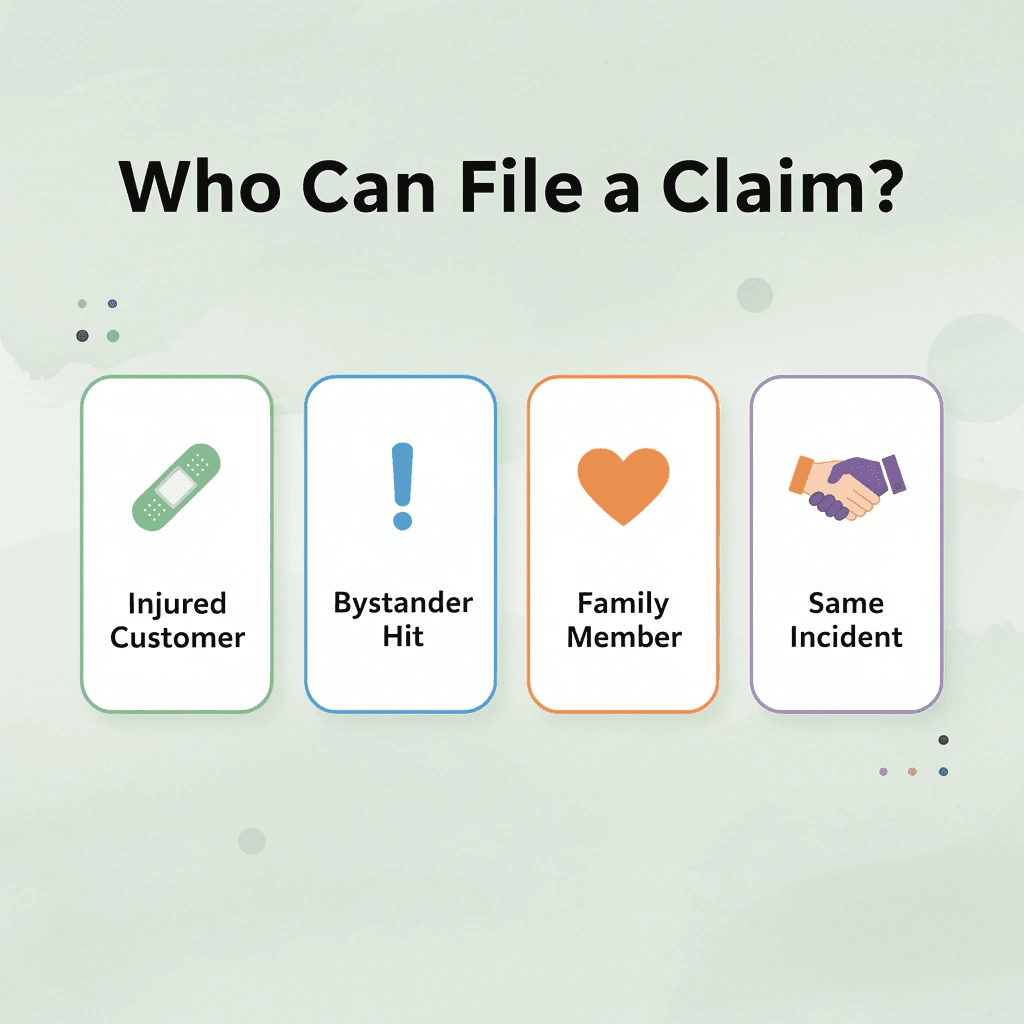
Eligibility is broader than most people expect. Any customer hurt by a similar hazard at a Costco location, any bystander hit by a falling display, or any family member harmed in the same incident has a possible claim under the same four-element premises liability framework. The named plaintiff opened the door for others.
“Eligibility extends beyond the original plaintiff — any customer, bystander, or family member injured by a similar hazard at a Costco location may have a viable premises liability claim.”
| Who May Be Eligible | Type of Harm | Legal Basis |
|---|---|---|
| Customers | Injured by a similar in-store hazard | Premises liability |
| Bystanders | Hit by a falling display or merchandise | Premises liability |
| Family Members | Harmed in the same incident | Same four-element framework |
🎯 Key Point: You do not have to be the named plaintiff to pursue a claim — eligibility is intentionally broad under premises liability law.
⚠️ Warning: Many victims assume they are not eligible simply because someone else filed first. This is a critical misconception — the named plaintiff’s case can actually strengthen your own claim.
Why the duty of care matters more than the headline
The same pattern repeatedly shows up in retail injury law: people assume a lawsuit belongs only to the person whose name appears in the news. But California treats every shopper as an invitee, someone the store actively invited for business purposes, and that status carries the highest duty of care the law recognizes. That duty applies to each customer fully every time they walk through the door. When a display cabinet sits on a defective pallet in a public aisle, the negligence isn’t aimed at one person; it’s a condition that every customer near that display was equally exposed to.
Why do so few people act even when they qualify?
The failure point is almost never eligibility itself. It’s the distance between knowing you were hurt and believing the legal system has anything to offer you. According to Clio’s 2026 Legal Trends Report, roughly 62 million Americans receive medical attention for preventable injuries annually, yet only a fraction file a claim. That gap isn’t explained by a lack of valid cases; it’s driven by the belief that the process is too complicated, too expensive, or simply not meant for them.
How does the Costco Sonoma County Lawsuit show what representation changes?
OnTheMap’s analysis of Nolo survey data found that roughly 91% of people who hired an experienced attorney received a settlement, compared with about 51% of those who represented themselves. Platforms like Sparrow help close this gap by enabling consumers to find qualifying claims and file them in minutes without gathering proof or handling court paperwork.
What actually disqualifies someone
Two things narrow eligibility, and neither is the one people usually worry about. California’s pure comparative negligence rule means that if you share responsibility for your own injury, your recovery shrinks by that percentage but doesn’t disappear entirely. A shopper who was texting and walked into a clearly marked hazard might recover 70 cents on the dollar rather than the full amount. The real disqualifier is time. California’s two-year statute of limitations on personal injury claims is fixed, and once it passes, even a textbook-perfect case disappears.
Who the law actually reaches
Eligibility extends to anyone whom the store’s carelessness harmed. A second shopper injured by an identical display setup in a different aisle has a separate claim. A spouse present at the scene who suffered emotional distress or physical injury may qualify independently. Even someone injured at a different Costco location by a structurally similar hazard could have standing if the facts satisfy the four-element test. The law follows the harm, not the headline. Many people who qualify never think to check.
Related Reading
- Nightfall Group Lawsuit
- Gmail Class Action Lawsuit
- Turbotax Lawsuit
- Amazon Prime FTC Settlement Lawsuit
- Isotonix Lawsuit
- Hexclad Lawsuit
- At&t Class Action Lawsuit
- Minnesota Ice Lawsuit
- Capital One Class Action Lawsuit
- Temu Lawsuit
- Life360 Lawsuit
- Apple Class Action Lawsuit
- Amazon Fire TV Stick Lawsuit
- Dapper Development Lawsuit
How to Check Whether You’re Eligible for Settlement Money
If you shopped at the Santa Rosa Costco or want to confirm you’re not leaving settlement money unclaimed, follow these steps to verify your eligibility. Below is a step-by-step guide that starts with the specific Costco case and then widens to any settlement you might qualify for.
“Millions of dollars in settlement funds go unclaimed every year — simply because eligible consumers never took the steps to verify and file.” — Consumer Advocacy Research
💡 Tip: Even if you’re unsure whether you qualify, it costs nothing to check — and the potential payout makes every step below worth your time.
| Step | Action | What You’re Looking For |
|---|---|---|
| 1 | Identify the settlement name & case number | Confirms the specific claim you may qualify for |
| 2 | Check the qualifying purchase window | Verify your shopping dates fall within the eligible period |
| 3 | Gather proof of purchase or membership records | Receipts, Costco membership history, or bank statements |
| 4 | Visit the official settlement claims portal | Never use third-party sites — go to the official URL only |
| 5 | Submit your claim before the deadline | Missing the cutoff means forfeiting your money permanently |
⚠️ Warning: Many eligible shoppers miss out entirely because they assume someone will notify them — no one will. It is your responsibility to file your own claim before the submission deadline closes.

⚡ Pro Tip: If you shopped at Santa Rosa Costco during the qualifying window, your Costco membership account may already contain the purchase history you need — log in and download your records before starting your claim to make the process significantly faster.
🔑 Takeaway: The single most important action you can take right now is to check whether you have unclaimed settlement money — it takes minutes, it’s completely free, and you could be owed real cash that is already waiting for you.
Understand the Difference Between an Injury Lawsuit and a Class Action
Sadie Novotny’s case against Costco is an individual personal injury lawsuit: one named plaintiff seeking damages for her own injury, not a class representing thousands of shoppers. In an individual injury case, eligibility means you personally suffered harm from the same carelessness and would file your own claim. In a class action, a court certifies a group, and you join an existing settlement. If your interest is specifically the Costco injury case, your route is an individual claim, not a class settlement.
Read the Class Definition Word for Word
For any class action settlement, participation depends entirely on the “class definition”: the section explaining who qualifies based on dates, location, product, and type of harm. To receive payment, you must meet this definition. Miss the window by even a day or live outside the covered state, and you’re excluded. Read it carefully and literally. If it specifies purchases between two dates, your purchase must fall within them, regardless of how strongly you feel wronged.
Check for an Official Notice in Your Mail and Email
Courts require notification of potential class members, so check your inbox first. Notices arrive by direct mail, email, publication, or online announcement and describe who qualifies and how to file or opt out. Search your email, including spam and junk folders, for phrases like “class action,” “settlement,” or “you may be entitled.” These notices come from case-specific domains that email filters often flag. A mailed or emailed notice means a court has identified you as a potential member and includes a Claimant ID or Notice ID that expedites filing.
Verify the Settlement Is Real Before You Act
Settlement scams are common, so verify authenticity before sharing personal information. Real notices feature an official settlement website with the case name in the web address and verifiable court information. Don’t click links in the notice; instead, search for the case name plus “official settlement website” and enter the web address yourself. For federal cases, confirm case information through PACER at pacer.uscourts.gov. Real settlements specify exactly who can apply. Language stating “if you may have been affected” is a warning sign.
Gather Whatever Proof You Have
Even when a settlement advertises “no proof required,” records strengthen your claim. Old receipts, subscription confirmations, loyalty statements, or bank records confirm eligibility and ensure accurate filing. “No proof” means no documentation upfront—not that anything goes. You’re certifying under penalty of perjury that you were an eligible customer, and the administrator can still request proof to verify. File only for settlements you genuinely qualify for, and keep supporting records handy.
Watch the Deadline Like a Hawk
The single biggest reason eligible people get nothing is a missed deadline. Deadlines are firm, and late claims get rejected without exception. The moment you confirm you qualify, write down the claim deadline and file well before it.
Consider a Tool That Finds and Files Claims for You
Tracking settlements by hand is where most people give up. Automated services like Sparrow find and file class action claims for you by connecting your accounts, identifying eligible claims, and letting you choose which ones to file. Sparrow isn’t a law firm and doesn’t provide legal advice; review each claim’s eligibility and terms before filing. Weigh the convenience against the yearly cost and check current user reviews, as experiences vary.
For the Costco Injury Case Specifically, Talk to an Attorney
If you believe you were hurt by a hazard like the one in the Costco case, an individual injury claim requires legal evaluation. Talk to a personal injury lawyer experienced in these cases, especially if you want to file your own claim instead of joining a group. Most offer free consultations and work on contingency, so a qualifying assessment costs nothing upfront. Bring your medical records, incident report, photos, and witness information: these documents help a lawyer determine whether you have a valid claim and its strength.
How Sparrow Helps You Find and Claim Uncollected Funds
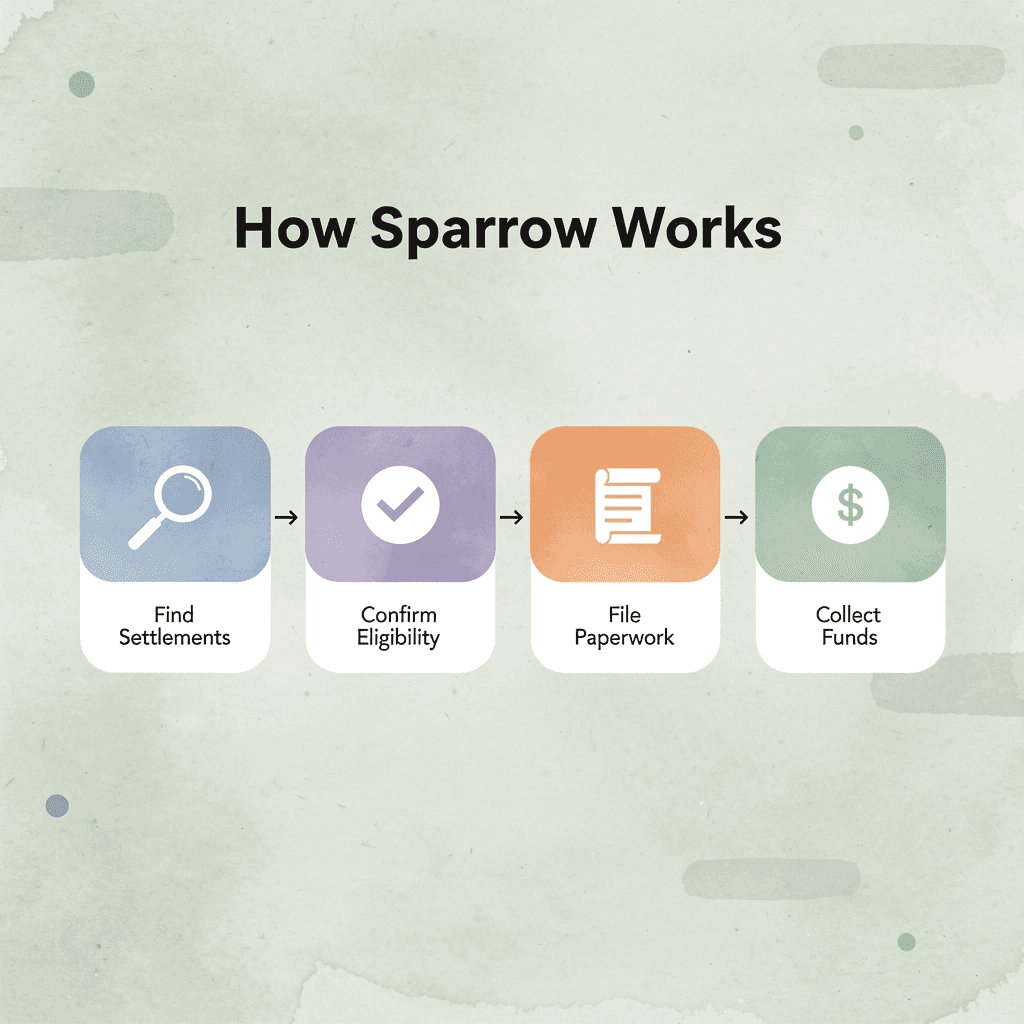
Sparrow removes every step that makes people want to quit. It finds settlements you qualify for, confirms eligibility automatically, and files the paperwork for you — no manual effort required.
💡 Tip: You don’t need to know which settlements exist or how to apply. Sparrow handles the entire discovery-to-filing process so nothing slips through the cracks.
🎯 Key Point: Three things Sparrow does that most people never finish on their own:
| Step | Traditional Approach | With Sparrow |
|---|---|---|
| Find Settlements | Manual searching across multiple databases | Automatic discovery based on your profile |
| Confirm Eligibility | Cross-referencing class definitions yourself | Verified automatically in seconds |
| File Paperwork | Downloading, filling, and submitting PDFs manually | Filed for you — start to finish |
The familiar approach of searching legal databases, cross-referencing class definitions, downloading PDFs, and tracking deadlines across browser tabs falls apart in practice. The window closes before you return to it. The form sits half-finished. A notice you flagged expires unnoticed. That’s not a personal failure; it’s what happens when the entire burden of recovery falls on someone already wronged.
“The window closes before you get back to it, and that’s not a personal failure. It’s what happens when the entire burden of recovery sits on the person who was already wronged.”
⚠️ Warning: Unclaimed funds don’t wait. Deadlines are fixed, and a half-finished form counts the same as no form at all. The cost of a broken process is real money left on the table permanently.
What kinds of uncollected funds does Sparrow actually search for?
Sparrow flips the model. Instead of hunting for claims, Sparrow scans for what belongs to you and surfaces it while the deadline remains open. According to the App Store listing for Sparrow AI Refund Helper, the platform identifies five categories of uncollected funds: class action payouts, unclaimed money, price-match refunds, airline compensation, and subscription overcharges. A single search replaces five separate processes.
How does Sparrow’s fee structure protect people who were already wronged?
Sparrow only charges a fee if it recovers money for you and guarantees you keep more than you paid, or it refunds the difference. This outcome-based model aligns Sparrow’s incentive with yours, from the initial search to the final payout. Sparrow uses bank-level encryption, limits data access to what’s needed for searching and filing, and is transparent about its capabilities and limitations, including that it is not a law firm. That honesty is structural, not cosmetic.
What do real users say about recovering money through Sparrow?
The App Store reviews for Sparrow AI Refund Helper show a 4.2-star rating from 122 reviews, suggesting users successfully recovered refunds. The question most people don’t ask until after using a tool like this is: what else have I been missing all along?
Related Reading
- Celsius Lawsuit
- Truebill
- Claim App
- Poppi Lawsuit
- Is Settlemate Legit
- Is Claimmoney.com Legit
- Rocket Money
- Fortnite Lawsuit
- Settlemate
- Catch
- At&t Lawsuit
Start Finding Money You May Be Owed with Sparrow
Most people have qualifying claims sitting uncollected right now because the system never made finding them easy. Settlements close, deadlines pass, and money legally owed gets returned to defendants simply because no one filed in time.
“Settlements close and deadlines pass — money legally owed gets returned to defendants simply because claimants never knew to file.” — A systemic gap in consumer claim recovery
💡 Tip: If you’ve purchased a product, used a service, or been affected by a data breach, you likely have an uncollected settlement claim waiting in your name.

Sparrow scans for active claims under your name, handles filing, and tracks deadlines automatically — so you never miss a payout window again. There are no upfront costs — if Sparrow finds nothing, you pay nothing. Start your search at usesparrow.com and see exactly what you are owed.
| Feature | Without Sparrow | With Sparrow |
|---|---|---|
| Claim Discovery | Manual research required | Automatic scan under your name |
| Filing Process | Complex, time-consuming | Handled for you |
| Deadline Tracking | Easy to miss | Tracked automatically |
| Upfront Cost | Varies | $0 — pay nothing if nothing is found |
🎯 Key Point: Sparrow removes every barrier between you and your uncollected money — no paperwork, no deadlines to chase, and no risk if nothing is found.
⚠️ Warning: Settlement claim windows close permanently — once a deadline passes, that money is gone for good. Don’t wait to start your search.

Leave a Reply