


About $1 billion in class action settlement money goes unclaimed every year, and not all of it is gone for good. Here is exactly where it goes, and how to find out if any of it is yours.
Unclaimed class action settlement funds are not hypothetical. The common assumption is that once you miss a settlement notice, that money is forfeited permanently and searching for it is a waste of time. In reality, these are court-approved dollars, pre-calculated and pre-allocated, sitting in a settlement fund with a specific group of eligible people in mind.
The confusion most recipients feel when a postcard arrives is understandable. The notice looks like junk mail, the legal language is dense, and the payout feels uncertain.
That confusion has a real financial cost.

Understanding what these funds actually are changes how you think about ignoring a notice. This is closer to a paycheck that was cut in your name and then set aside, waiting for you to pick it up.
This is not a lottery ticket you never bought. It is closer to a paycheck that was cut in your name and then set aside, waiting for you to pick it up.
When a class action lawsuit resolves, the company and the plaintiffs’ attorneys negotiate a total settlement amount. A judge reviews the terms and, if approved, the money moves into a formal settlement fund administered by a neutral third party called a settlement administrator. That fund is legally designated for eligible class members, people who fit the defined criteria, such as purchasing a specific product during a specific time window or being affected by a particular data breach.
According to the FTC’s Preliminary Report on Class Action Settlement Notices (October 2019), claim rates across consumer class action settlements are very low regardless of how notice is delivered. The same report found that less than half of recipients who received settlement email notices even understood what the notice was asking them to do. Confusion, distrust, and the sheer friction of figuring out whether the notice is legitimate drive most non-participation. As Talli reported in July 2025, millions of dollars go unclaimed in consumer class action settlements annually because eligible members either never learn the settlement exists or miss the filing deadline entirely.
Key takeaways
- Class action settlement funds are court-approved dollars pre-allocated to specific eligible people, not hypothetical money, not a lottery, and not contingent on you knowing about them.
- Missing a settlement notice doesn’t mean the money disappears quietly; it moves through a legal pipeline: redistribution to other claimants, escheatment to your state, or transfer to a charity via cy pres, often on a fixed schedule.
- State unclaimed property databases hold billions in escheated funds, and a meaningful share comes from expired settlement checks the original recipient never cashed.
- Most consumer class action settlements include a ‘no proof required’ attestation tier: you confirm you were a qualifying customer, and that’s enough to file a valid claim.
- The real obstacle to recovering settlement money isn’t paperwork; it’s knowing where to look across hundreds of independently run administrator sites, each with its own deadline and login.
- Searching one database at a time means you’re almost certainly leaving claims on the table; the fragmentation across state databases and settlement administrator sites is the primary reason eligible money goes uncollected.
- Sparrow’s Unclaimed Money Search at usesparrow.com closes that gap by searching all 50 states automatically for unclaimed money and lost property in your name, one search instead of fifty.
What Happens to Unclaimed Class Action Funds – Redistribution, Escheatment, and Cy Pres Explained
The postcard sat on the counter for three weeks. By the time most people think to act on a settlement notice, they assume the simplest possible thing: the money is still there, waiting in some holding account, patient and unclaimed. It is not. According to Talli’s 2025 class action statistics, approximately $1 billion in settlement funds goes unclaimed every year in the United States, and that money does not sit still. It moves through a legally mandated pipeline with three distinct exits, each operating on its own timeline and its own rules about whether you can still recover anything.
$1 billion in settlement funds unclaimed yearly
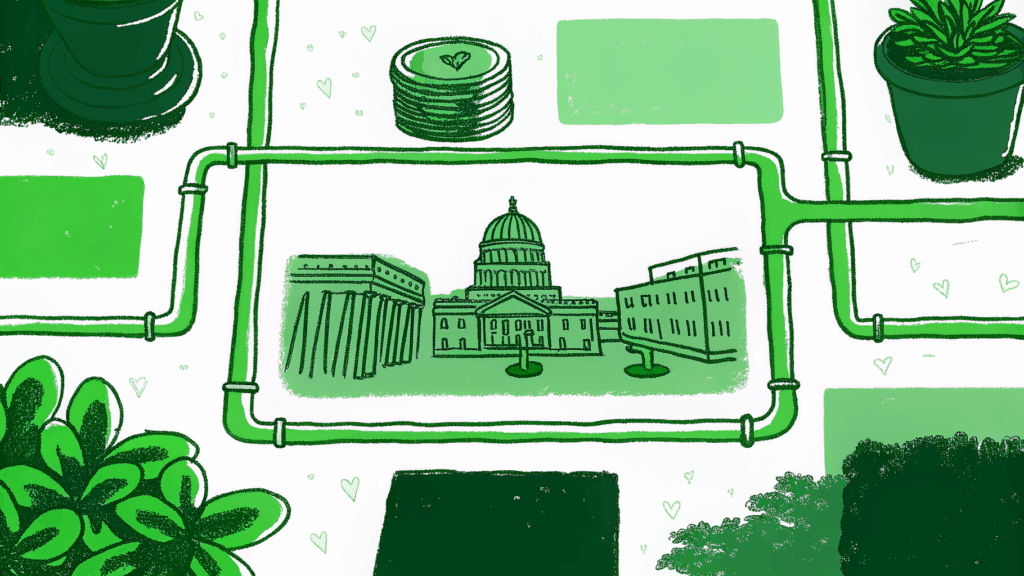
The Three-Exit Pipeline, Where Unclaimed Settlement Money Actually Goes
When a claims deadline closes and a portion of the settlement fund remains untouched, the settlement administrator does not simply hold the balance indefinitely. Courts require a plan for residual funds, and that plan is written into the settlement agreement before a single check is ever mailed. The three possible destinations are:
- Pro-rata redistribution to existing claimants
- Cy pres distribution to a designated charity
- Escheatment to a state government as unclaimed property
Which exit the money takes depends on the settlement terms, the size of the residual pool, and how much time has passed. Only one of those three exits leaves the door open for you.
Pro-Rata Redistribution, The First Claimants Get a Second Bite
If the residual fund is large enough to make a second distribution economically practical, courts sometimes authorize a pro-rata redistribution: the leftover money is divided among the class members who already filed valid claims. A class member who filed on time and received a $12 check might receive a second, unexpected check months later with no action required on their part. When the per-claimant math does not justify the administrative cost of a second distribution, courts move to exit two.
Cy Pres Awards, When Courts Hand Your Share to a Charity Instead
Cy pres is a legal doctrine that redirects unclaimed settlement funds to a third-party organization, typically a nonprofit whose mission relates to the harm at the center of the original case. In the Google Buzz settlement, residual funds were directed to privacy-focused organizations rather than returned to the users whose data was at issue. Once a court approves a cy pres distribution, the funds are permanently gone from the perspective of the original class member. No state database holds them. No search will surface them. This is the exit with no return.
How to Find Unclaimed Money From Old or Uncashed Class Action Settlement Checks
State unclaimed property databases hold billions of dollars in escheated funds, according to the National Association of Unclaimed Property Administrators (NAUPA), and a meaningful share comes from settlement checks that expired before the original recipient ever cashed them. This is more common than most people expect: millions of dollars in class action settlements go unclaimed every year because people don’t realize they were ever eligible, forget to file in time, or simply never hear about the case. The critical thing most people miss is that those funds don’t disappear when the check expires. The company that issued the check is legally required to report the balance to the state after a dormancy period, and once escheated, the funds sit in that state’s database with no secondary deadline. You can claim them for free, at any time.
A second, equally underappreciated problem compounds this: even when a check was issued, it may never have arrived. Addresses misspelled at enrollment, old mailing addresses on file from a move years prior, or a single transposed digit in a ZIP code are enough to mean a check was printed, mailed, and returned, all without you ever knowing a settlement existed. That’s why discovering forgotten money requires more than a single database search. It requires knowing where to look and under which name variations the property may have been reported.
The part that trips people up is which state to search. Escheated settlement funds normally go to the state of your last known address, but when the administrator’s address record is missing or bad, they revert to the state where the issuing company is incorporated. A class member who lived in Texas whose address was never captured correctly may find their funds in the California State Controller’s Office unclaimed property search, not a Texas portal. A single-state search can miss this.
Step 1: Start With MissingMoney.com
MissingMoney.com, managed by NAUPA, is a free multi-state database that searches participating state unclaimed property records simultaneously. Search under every name variation you’ve used: married name, maiden name, and common misspellings. An uncashed check from a settlement six years ago may appear under a name you haven’t used in a decade, or under a misspelling introduced when your address was first recorded by the settlement administrator.
Step 2: Search High-Priority States Directly
MissingMoney.com doesn’t capture every state, so a direct portal check matters. The New York State Comptroller’s Office unclaimed funds search and the California State Controller’s Office unclaimed property search are two of the highest-priority individual portals, given the volume of corporate headquarters concentrated in those states. Both searches are free and require only a last name to start. Sparrow’s Unclaimed Money Search surfaces these high-yield state portals and flags which ones are most relevant to your profile, so you aren’t guessing at priority.
1. Search Your State’s Unclaimed Property Database First
When a class action settlement check goes uncashed, the funds are often escheated to the state where the class member last resided. Searching your state’s official unclaimed property database, accessible for free through NAUPA’s unclaimed.org portal, is the fastest first step. The tradeoff: state databases only reflect funds that have already been transferred, so recently expired checks may not yet appear.
2. Use USA.gov’s Federal Unclaimed Money Directory to Locate Settlement Funds
USA.gov aggregates links to federal-level unclaimed money sources, including the IRS, FDIC, and pension databases, that can hold class action lawsuit unclaimed funds when federal agencies are involved in the settlement. This is the right tool when your case involved a federally regulated institution like a bank or insurer. The limitation is that it does not search state-level escheated settlement funds directly.
3. Contact the Settlement Administrator Directly Using the Case Name and Docket Number
Many class action settlement checks go uncashed simply because recipients moved or ignored the notice. Reaching out directly to the court-appointed settlement administrator, identifiable via the case docket on PACER, lets you verify whether your check was issued, whether it expired, and whether a reissuance process exists. The tradeoff is that administrators are often decommissioned years after settlement closes, making this time-sensitive.
4. Search the New York State Office of Unclaimed Funds for Escheated Settlement Checks
New York’s Office of Unclaimed Funds, run by the State Comptroller, maintains one of the largest and most searchable state databases for escheated class action lawsuit unclaimed funds. If you or the defendant company were based in New York, this is a high-priority search. The database allows name and address variations, which is critical since settlement checks are often issued under outdated addresses. Limitation: only covers NY-escheated property.
5. File a Claim Through the NYC Comptroller’s Settlement Payment Inquiry Portal
For class members expecting payment from lawsuits involving New York City agencies or municipal defendants, the NYC Comptroller’s Judgment and Claim Settlement Payment Inquiry portal allows you to track and claim outstanding settlement payments online. This is especially relevant for civil rights or consumer class actions against city entities. The key limitation is that it is scoped exclusively to NYC government-related settlements, not private defendants.
How to Find and File Claims for Active Class Action Settlements You May Still Qualify For
Finding an active class action settlement you may be eligible for is simpler than most people expect. The real obstacle is knowing where to look.
“I don’t know where to find settlement databases or how to discover active class action settlements I may qualify for, like, where do you even find the databases?”
What “No Proof Required” Actually Means
Most consumer class action settlements include a “no proof” attestation tier: you sign a statement confirming you were a qualifying customer during the covered period, and the settlement administrator processes your submission from there. No receipts. No attorney. No documentation chase.
The confusion is understandable. Many claimants we work with initially treat a Claim ID and PIN, included in the original settlement notice, as a proof requirement. Often it is not: in many settlements the PIN mainly pre-populates your information. If you never received the notice, or it ended up in your spam folder, most settlement websites let you file without it by entering your contact information directly. The line between “proof required” and “no proof required” trips up a lot of first-time filers, and that confusion alone stops valid claims from being submitted.
The Google Play Store $700 million antitrust settlement illustrated this clearly. Eligible Android users simply needed to confirm they made purchases through the Play Store during the covered period. Millions of users qualified. A fraction filed. The gap was a discovery failure. Sparrow proactively finds class action settlements users qualify for, so users do not need to already know about a settlement in order to file a claim.
1. Sparrow – Best All-in-One Platform for Finding Class Action Lawsuit Unclaimed Funds
Two free databases cover the majority of active consumer settlements. Claim Depot lists open settlements with direct links to claim forms, which removes the friction of hunting for the right page on your own, a step that can otherwise cost you fifteen minutes of searching before you even reach the filing form. ClassAction.org lets you search by company name or industry, which is useful if you remember a product but not the settlement name. Both are free to browse, and neither requires an account to search.
A practical starting point: search your email archive and spam folder for terms like “class action,” “settlement notice,” or “you may be eligible.” As Claim Depot (April 2024) notes, many valid settlement notices are filtered as junk mail, sitting unread while the deadline approaches.
One honest limitation worth naming: manually checking multiple databases is time-consuming, and deadlines are not synchronized across sources. A settlement listed on one platform may not appear on another until days before it closes. That fragmentation is where eligible claims quietly expire, because claimants never discovered the settlement existed.
The primary barrier to filing is discovery. This is a monitoring problem, not a paperwork problem.
That is precisely the gap Sparrow’s class action discovery platform is built to close. Rather than relying on you to catch a single email or stumble across the right database listing before a deadline passes, Sparrow searches active settlement databases automatically on your behalf. When a settlement matches your purchase history or eligible accounts, you find out before the window closes. From there, Sparrow’s automated filing tools handle submission, so you are not spending time deciding whether a claim is worth the effort or chasing down the correct form link. Because Sparrow also covers unclaimed money searches alongside class action discovery, it surfaces recovery opportunities that would otherwise go unnoticed across multiple fragmented sources.
Each of these tools covers a different slice of the settlement landscape, and that fragmentation is exactly the problem. Checking them one at a time is how eligible claims quietly expire while you are still searching the first database.
2. TopClassActions.com – Best Free Database for Browsing Open Settlement Claims
TopClassActions.com maintains a continuously updated directory of open class action settlements with clear filing deadlines, eligibility summaries, and direct links to claim forms, making it the go-to resource for consumers who want to self-research class action lawsuit unclaimed funds without signing up for any app. Best for detail-oriented filers who prefer reading full settlement terms. Tradeoff: no personalized matching means you must manually assess your own eligibility.
3. ClassAction.org Database – Best for Searching Lawsuits by Company or Industry
ClassAction.org’s searchable lawsuit database lets users filter active and pending cases by defendant company, industry, or claim type, making it uniquely powerful for consumers who suspect a specific brand owes them class action lawsuit unclaimed funds but don’t know if a settlement exists yet. Ideal for targeted searches rather than broad discovery. The limitation is that not all listed cases have reached the settlement stage, so some searches yield pending-only results.
4. ClaimDepot.com – Best for No-Proof-Required Settlement Claims
ClaimDepot.com specifically flags settlements that require no purchase proof, receipts, or documentation, a critical filter for consumers who want to recover class action lawsuit unclaimed funds but no longer have records from years-old purchases. Best suited for casual claimants filing multiple low-documentation claims quickly. The tradeoff is that no-proof settlements typically yield smaller per-claimant payouts, so high-value claims may require switching to a different resource.
5. Payout App – Best Mobile Tool for Never Missing a Settlement Deadline Again
The Payout app is purpose-built to solve the single biggest reason class action lawsuit unclaimed funds go uncollected: missed deadlines. It sends push notifications as filing windows approach and surfaces newly approved settlements relevant to the user’s profile. Best for mobile-first users who have previously missed claim deadlines. The key limitation is that the app’s settlement coverage, while growing, is not yet as comprehensive as desktop-based databases like TopClassActions.com.
Related Reading
- How Are Settlements Paid Out
- Unclaimed Tax Returns
- Settlement Payout Process
- Do You Have To Claim Settlement Money On Taxes
- Where Can I Cash A Settlement Check
- How Long Does It Take To Get Money After Settlement
- How Long Does It Take To Get Settlement Money
Why Searching One Database at a Time Costs You Claims You’d Actually Win
Why One-Database Searches Cost You Winnable Claims
Most people who search for class action settlements assume that checking a database or two is enough to know whether they qualify for anything. That assumption is wrong in a specific, structural way: eligible funds are simultaneously distributed across hundreds of independent administrator portals, state unclaimed property registries, and multistate attorney general settlements, and missing any one pipeline means missing real claims. Understanding why that fragmentation exists, and why low claim rates reflect a search problem rather than an awareness problem, is the starting point for doing this differently.

The Fragmentation Tax – How Many Administrator Sites Actually Exist
Every class action settlement appoints its own third-party administrator. That administrator runs its own standalone website, sets its own login requirements, and publishes its own claim deadline. At any given time, hundreds of these sites exist simultaneously across consumer categories: data breaches, product defects, subscription billing disputes, and more. A manual searcher who visits three or four of them and finds nothing has not completed a sweep. They have sampled a fraction of the ecosystem and drawn a conclusion the data does not support.
Stated plainly: doing settlement searches one database at a time is structurally guaranteed to produce incomplete results, because eligible funds are simultaneously distributed across state-level unclaimed property registries, active administrator portals, and multistate attorney general settlements spanning all 50 jurisdictions. A consumer who checks only one of these pipelines will systematically miss claims in the others.
Why Low Claim Rates Are a Search Problem, Not an Awareness Problem
The friction is structural, and the numbers confirm it. According to the FTC Report on Consumers and Class Actions (2019), most consumer class actions have average claim rates of 9 percent or less even when class members receive direct notice. The same report, which examined 149 cases across seven claims administrators, found that cases with multiple rounds of notice across multiple channels produced median claim rates more than double those from a single contact attempt. The barrier is that every additional step between awareness and a submitted claim loses a percentage of eligible members permanently.
Plain language mattered too. The FTC found that of all factors examined, clear claim form language had the highest relationship to high claim rates. Complexity is the filter. Most people are not lazy; they run out of patience.
The Compounding Miss – Data Breach, Consumer Product, and Subscription Renewal Claims
Claims do not arrive one at a time. A consumer who purchased a product under a defective-labeling settlement, had personal data exposed in a breach like AIS InfoSource, and paid for a subscription service that auto-renewed without adequate disclosure may be eligible for three separate claims simultaneously, each on a different administrator site, each with a different deadline. Missing one because you searched the wrong portal is a single loss.
Missing all three because the search was never systematic is a compounding one. The money set aside across those cases does not pool into a single convenient location. It sits in three separate places, waiting.
Next steps
If your settlement postcard got set aside and you are now wondering whether the window has closed for good, the path forward starts with recognizing that the redistribution pipeline, not the original deadline, determines what you can still recover.
Unclaimed settlement funds follow a legal sequence where escheatment deposits them into state databases with no secondary deadline, meaning valid claims sit claimable for free long after the original notice expired. At the same time, low claim rates across consumer settlements are a discovery and monitoring problem, not an eligibility problem, which means most of the $1 billion in annually unclaimed funds represents valid, uncontested claims that were simply never filed. Together, those two realities point to one logical next step: running a broader search before assuming the money is gone.
If you want to go deeper on how settlements are tracked and filed before deadlines close, sign up for class action lawsuits as a starting point for staying ahead of active windows rather than searching for funds after they have already moved downstream.
Frequently Asked Questions
Why do so few people actually file claims and collect their settlement money?
Low claim rates are primarily a search and discovery problem, not an awareness or paperwork problem. The FTC’s 2019 report found that less than half of recipients who received settlement email notices even understood what the notice was asking them to do, and the structural fragmentation of hundreds of separate administrator websites, state unclaimed property registries, and multistate portals means a manual search almost always misses eligible claims.
If I miss the claims deadline, does the settlement money just go back to the company that was sued?
Not necessarily, unclaimed settlement funds follow one of three legally mandated paths written into the settlement agreement before any checks are mailed: pro-rata redistribution to claimants who already filed, cy pres distribution to a designated charity, or escheatment to a state government as unclaimed property. Only escheatment leaves any door open for the original class member to recover funds later.
What is pro-rata redistribution, and could I get a second check without doing anything?
Pro-rata redistribution happens when the residual settlement fund is large enough to make a second distribution economically practical, courts authorize the leftover money to be divided among class members who already filed valid claims. If you filed on time and received, say, a $12 check, you might receive a second, larger check months later with no additional action required on your part.
Can an uncashed class action settlement check turn into unclaimed property I can still recover?
Yes, when a settlement check expires uncashed, the company that issued it is legally required to report the balance to the state after a dormancy period, and once escheated, the funds sit in that state’s unclaimed property database with no secondary deadline. The critical detail is that the funds usually go to the state of your last known address, or to the issuing company’s state of incorporation when no good address is on file, so a single-state search can miss them.
Do I need receipts or documentation to file a claim for an active class action settlement?
Most consumer class action settlements include a ‘no proof’ attestation tier where you simply sign a statement confirming you were a qualifying customer during the covered period, no receipts, no attorney, and no documentation chase required. The Google Play Store $700 million antitrust settlement is a clear example: eligible Android users only needed to confirm they made purchases through the Play Store during the covered period.

Leave a Reply