
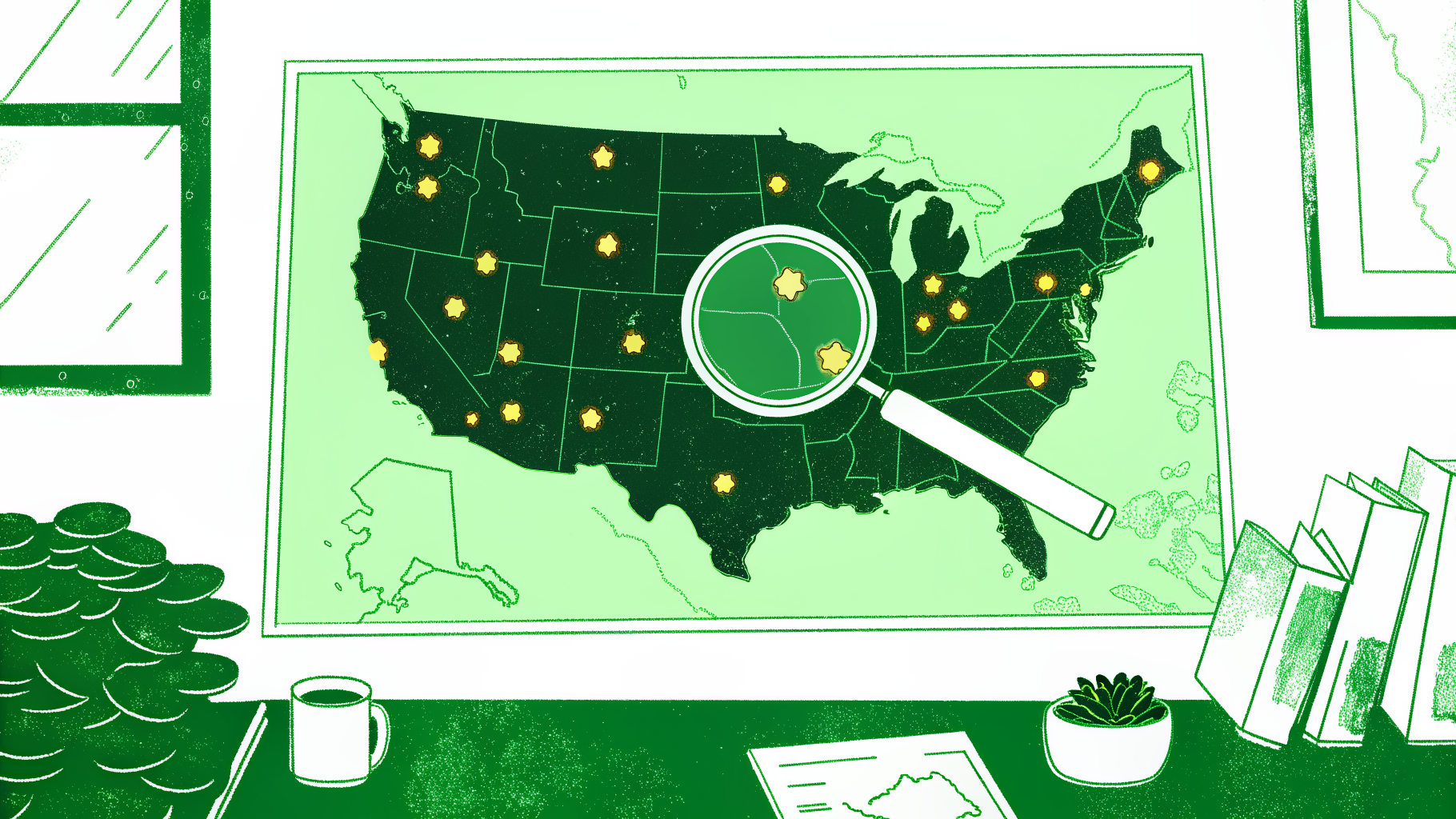

Florida is holding $4.5 billion in unclaimed money, and one search of the state portal won’t find most of it. Here’s where it actually hides and how to claim what’s yours.
Florida is currently holding $4.5 billion in unclaimed property on behalf of residents who have no idea it exists. The common assumption is that searching Florida’s official portal once is enough. If nothing shows up, there’s nothing to find. But that figure is the quiet byproduct of ordinary life: a job change, a cross-town move, a bank account you closed and forgot. See our best class action settlement finder for consumers for how this works in practice.
$4.5 billion in unclaimed property Florida is holding
Florida law does not require you to be careless, elderly, or financially disorganized for your property to be classified as abandoned. Under Florida Statutes Chapter 717, a financial institution, insurer, or employer that loses contact with an account holder is required to report and remit those funds to the state after a standard dormancy period.
The critical word is “contact.” If a bank cannot confirm you are aware of an account, that account begins aging toward the dormancy threshold regardless of your financial activity elsewhere. Being financially active with one bank does not protect a forgotten account at another. The dormancy clock runs independently per account, per institution.

The most common sources are not exotic. Bank checking and savings accounts top the list, followed by uncashed payroll checks, insurance policy proceeds, utility security deposits, and stock dividends. An uncashed payroll check mailed to an old address, a utility deposit from an apartment you vacated years ago, a life insurance payout to a beneficiary who never knew the policy existed: all of these feed the pool. Life insurance is a particularly invisible source, as beneficiaries frequently have no idea a policy existed. Roughly 1 in 5 Floridians has unclaimed money waiting right now.
1 in 5 Floridians have unclaimed money waiting
Florida’s standard dormancy period for most property types is several years, after which the holder is required to remit those funds to the state. The state holds those funds indefinitely on the owner’s behalf but will not come looking for you. Florida has already returned over $847 million to residents, yet the remaining $4.5 billion reflects how rarely people think to look. The burden of discovery sits entirely with the owner.
Key takeaways
- Florida is holding $4.5 billion in unclaimed property right now, and the state will keep it indefinitely, but it will never contact you to claim it.
- A single search on fltreasurehunt.gov only tells you what Florida is holding. Every state where you ever worked, rented, or banked is a separate jurisdiction that may be holding money under your name.
- Under a 1965 U.S. Supreme Court ruling, unclaimed property stays in the state where the business was located, not where you lived, which is why a forwarding address never follows the money.
- Floridians reclaimed over $36 million in a single month (October 2024), which means the money is real and the portal works, the only barrier is knowing how to search it correctly.
- Florida’s documentation requirements kill more claims than the search does, a verified match can sit uncollected for months because the paperwork feels vague and the stakes feel uncertain.
- Five parallel systems, including class action settlement funds and federal agency holdings, operate entirely outside fltreasurehunt.gov, each governed by a different agency and a different clock.
- Sparrow’s Unclaimed Money Search closes the multi-state gap by automatically searching all 50 states for unclaimed money and lost property in your name, one search instead of fifty.
Why Searching Only Florida Leaves Most Unclaimed Money Unfound
That means funds from old paychecks, bank accounts, or life insurance policies can be sitting in Georgia, Ohio, or a dozen other states, with no trace of them ever appearing in a Florida search.

Why Your Money Follows the Business Not Your Forwarding Address
In Texas v. New Jersey, 379 U.S. 674 (1965), the U.S. Supreme Court established that unclaimed intangible property escheats to the state of the owner’s last known address as recorded by the holder, not the state where the owner currently lives. A former Miami resident who spent five years working in Georgia will have any uncashed employer paychecks reported to Georgia’s unclaimed property office, because that is the address the employer had on file.
This matters especially for anyone on a fixed income, where leaving any legitimate asset uncollected has a direct and immediate cost. The Bureau of Labor Statistics reports that the average American holds many jobs over their working life. Each job change is a potential unclaimed paycheck, 401(k) rollover, or pension credit reported to whichever state held the employer’s address records at the time.
The Blank Result Trap – What “No Records Found” Actually Means
A Florida search result showing nothing found means only that Florida holds nothing under that name. It says nothing about Ohio, Texas, New York, Georgia, or any of the more than 50 separate unclaimed property databases maintained across U.S. states and territories. Beyond unclaimed money, Sparrow also identifies class action settlement money you may be entitled to, including cases where the research and filing paperwork are handled for you, so assets you didn’t know to look for don’t stay hidden because the process seemed too complex to navigate.
Florida Will Hold Your Money Forever But It Won’t Call You
The burden of discovery sits entirely with the owner. Sparrow’s search and payout tracking are built around that reality: find what is sitting in state databases under your name, identify settlement money you qualify for without navigating complex legal processes, and track what you’re owed through to payment.
How to Search for Unclaimed Money in Florida Step by Step
Floridians reclaimed over $36 million in unclaimed property in October 2024 alone. That single month figure tells you one thing clearly: the money is real, the portal works, and the only thing standing between you and a match is knowing how to search it correctly.
Understand What a Blank Result Actually Means
A clean “no results” on fltreasurehunt.gov confirms only that Florida is not holding funds under that exact name combination you typed. Property escheats to the state where the holder’s records show the owner’s last known address, so every job, bank account, or insurance policy from another state creates a separate pool that Florida’s database will never contain, regardless of how long you have lived here since. Someone who moved to Florida from Georgia in 2015 and banked with a nationally chartered institution may have property sitting in Georgia’s treasury right now, and fltreasurehunt.gov has no way to surface it.
Most people who finish all four search passes above have only checked one state out of fifty. Sparrow’s unclaimed property search runs all 50 state databases simultaneously under every name variation, so the same effort that just took four manual passes in Florida happens automatically across every state where funds could be sitting. It is most valuable for anyone who has moved, changed jobs, or held accounts outside Florida at any point in their adult life.
Once fltreasurehunt.gov surfaces a match under your name or a relative’s, the search is only half the job. What happens next, and where most people quietly give up, is the documentation and filing step: here is how to get through it without stalling out.
1. Go Directly to fltreasurehunt.gov – Florida’s Only Official Free Search Portal
The official Florida unclaimed property search portal is fltreasurehunt.gov, operated by the Florida Department of Financial Services. The search is completely free. No registration required, no fee, no third-party service needed. If you land on a site asking for payment to search Florida’s database, close the tab. The government portal costs nothing, and any result you find links directly to a free claim form on the same site.
2. Enter Full Legal Name, Prior Names, and City to Maximize Search Results
The search fields on fltreasurehunt.gov ask for last name, first name, and city. Enter your current legal name first, then run separate searches for every prior name you have used on financial accounts: maiden names, names from a previous marriage, and any shortened or alternate versions your bank or employer may have recorded. Adding a city narrows results usefully in a large state, but if you lived in multiple Florida cities, run the search under each one. A single name variation missed means a matching account stays invisible.
3. Search for a Deceased Family Member’s Unclaimed Property Using Their Legal Name
Run the search under your deceased relative’s full legal name, exactly as it would have appeared on their bank accounts or insurance policies, not a nickname or informal version. The Florida Department of Financial Services holds property in the original owner’s name until a valid claim is filed, so a parent’s uncashed dividend check from 2009 will still appear under their name today. Heirs and estate representatives are eligible to claim, but the search itself is identical to any other. The documentation requirements that follow are covered in the next section.
4. Search Business Names Separately to Uncover Corporate Unclaimed Property in Florida
A personal-name search will never surface funds held under a business entity. If you have ever owned a sole proprietorship, LLC, or corporation registered in Florida, run a separate search using the exact business name as it appeared on state filings or vendor contracts. Uncollected vendor refunds, security deposits, and dormant corporate accounts all escheat under the business name, not the owner’s. This step is easy to skip and consistently overlooked, which is precisely why it deserves its own pass rather than an afterthought.
Florida Unclaimed Money Search Checklist
Use this checklist to ensure you complete every search pass before moving to the claim filing step:

Search your current legal name on fltreasurehunt.gov (last name first)
Search every prior name you have used on financial accounts (maiden name, married name, hyphenated variants)
Search every Florida city where you have lived or held accounts
Search any business name you have owned or operated in Florida
Search deceased relatives you may have a claim interest in (run under their legal name)
Note every other state where you held a job, bank account, or lease, each requires a separate search
Check MissingMoney.com for multi-state participating databases
Check federal sources separately: TreasuryDirect (savings bonds), IRS (tax refunds), PBGC (pensions)
Run a 50-state search (e.g. Sparrow) to consolidate remaining state databases in one pass
How to File a Claim for Unclaimed Property in Florida Without Getting Stuck

How to Initiate the Claim Directly From Your Search Result on fltreasurehunt.gov
From your search result on fltreasurehunt.gov, click directly on the property listing, which opens a claim form covering your owner information, contact details, and your relationship to the property. One friction point that catches beginners off guard: the form asks for your Social Security Number, and that request alone makes many claimants hesitate or abandon the process entirely, worried it signals identity theft risk. That concern is understandable, but the SSN field is a standard authentication step mandated under Florida Administrative Code Ann. 69G-20.035, Florida Department of Financial Services.
The Exact Documents Florida Requires and Which Ones Trip People Up
Standard claims require a government-issued photo ID and proof of current address, such as a utility bill or bank statement. Keep in mind that property held in your name may have been reported under an old address, a former surname, or a slightly misspelled name by the original holder. This same documentation burden applies when the unclaimed property traces back to a class action settlement.
Third-Party and Heir Claims – What Estate Representatives Must Submit Beyond the Basics
For those claiming on behalf of a deceased owner, Florida requires a death certificate and letters testamentary from the probate court to establish your legal authority to act, as confirmed by the Florida Department of Financial Services.
Florida Claim Processing Times and How to Handle Delays
Florida’s Department of Financial Services typically processes straightforward claims within a few months, with more complex cases taking longer. If your claim sits well past the standard processing window without a decision, contact the Florida DFS Division of Unclaimed Property directly through the portal’s claim status tool. Sparrow’s Payout Tracking monitors the status of claims so you are not left guessing whether anything is happening on the other end.
Related Reading
- What Is Unclaimed Property
- How Long Does Unclaimed Property Stay With The State
- How Do I Find Unclaimed Money In Illinois For Free
- How To Claim Unclaimed Money In Michigan
- How Do I Find Unclaimed Money In Massachusetts For Free
- How To Claim Unclaimed Money
- How Do I Find Unclaimed Money In Kansas For Free
- How To Claim Unclaimed Property
- How To Find Unclaimed Money In Florida
- How To Claim Unclaimed Property In California
- How To Claim Unclaimed Money In Indiana
- How To Find Unclaimed Money In California
What Happens to Unclaimed Property Florida Isn’t Holding for You
Unclaimed Property Florida Isn’t Holding for You
Why Your Unclaimed Property Stays in the State Where It Was Created
A person who relocated from Illinois to Florida in 2018 may have a final paycheck or an employer-held security deposit sitting in Illinois’s I-Cash database, completely untouched, while their Florida search returns nothing. Sparrow’s Automated Filing is built around getting a claim submitted correctly the first time so it isn’t rejected.
MissingMoney.com, the NAUPA-Affiliated Tool That Searches Multiple States in One Pass
The most practical starting point for a multi-state unclaimed property search is MissingMoney.com, the free tool jointly developed by NAUPA and the National Association of State Treasurers (NAST) to address the gap that arises when consumers search only their current state’s portal, querying multiple participating states’ databases in a single pass.
Pros and cons at a glance
| ✓ Pros | ✗ Cons |
| Queries multiple participating states’ databases simultaneously | Not every state participates |
| Removes need to visit each treasury website individually | States like California and New York require separate visits |
| Strong first pass for multi-state unclaimed property search | Multi-state search is a strong first pass, not a final answer |
Sparrow’s Payout Tracking gives you a clear record of every claim and disbursement in one place, so an unexpected deposit has context rather than causing alarm.
The Federal Gap – IRS Refunds, Savings Bonds, and Pension Funds
State databases and MissingMoney.com share one structural blind spot: federal unclaimed funds, which require separate searches through federal portals entirely outside those systems. Sparrow searches all 50 states automatically for unclaimed money and lost property in your name, and its Automated Filing handles the paperwork once something is found, with a Money-Back Guarantee if results don’t materialize.
The Types of Unclaimed Money Most Florida Searches Miss Entirely
A clean result on fltreasurehunt.gov tells you exactly one thing: Florida’s Bureau of Unclaimed Funds is not currently holding money in your name. It says nothing about the five parallel systems that operate entirely outside that portal, each governed by a different agency, a different clock, and a different search process.
“People are confused about what types of money qualify as ‘unclaimed’ in Florida, conflating court-held child support funds with state unclaimed property, suggesting most searchers don’t distinguish between the two.”
— what we hear from Florida unclaimed property seekers
1. Class Action Settlement Proceeds – Held by Claims Administrators, Not Florida’s Treasury
When a class action settles, the funds go to a third-party claims administrator, not to any state treasury. A consumer data breach settlement, a product overcharge case, a privacy violation payout: all of these sit with private administrators until the deadline passes. No state portal can see these funds because no state ever touches them.
One of the most persistent struggles we see among people searching for unclaimed money in Florida is a complete unawareness that they are eligible for class action settlement payouts at all. Claiming that money requires knowing about specific legal cases you were likely never told about. By the time most people find out a settlement exists, the filing window is already closing. That deadline problem is real: studies of large settlements consistently show that a significant share of eligible claimants never file, leaving money they already qualify for permanently uncollected.
Sparrow surfaces settlement eligibility in the same pass as state unclaimed property and, critically, handles the Automated Filing so you can file a claim before the deadline passes. Never missing a filing deadline is the core reason this category requires a dedicated tool rather than a one-time manual search.
2. Forgotten 401(k) and Pension Balances from Former Florida Employers
31.9 million retirement accounts worth $2.1 trillion sit forgotten by Americans who changed jobs and left balances behind. These balances must be tracked through the Department of Labor’s Abandoned Plan database or the National Registry of Unclaimed Retirement Benefits, not through any state treasury portal. For anyone who has switched employers more than once, this category alone can dwarf anything fltreasurehunt.gov would ever return.
Heirs and estate administrators face a compounding version of this problem: unclaimed retirement property can surface many years after a loved one’s death, long after probate was assumed to be fully settled. Most families aren’t actively searching at that point, which is precisely why these accounts stay lost. Sparrow’s Unclaimed Money Search covers these databases so that post-probate discovery is part of the process, not an afterthought.
3. Unclaimed Life Insurance Death Benefits – A Parallel System Invisible to fltreasurehunt.gov
Life insurers are not required to transfer unclaimed death benefits to state unclaimed property funds immediately; many hold them internally for years before any escheatment occurs. Beneficiaries who don’t know a policy existed, or who lost contact with the insurer after a parent died, have no way to find these funds through Florida’s portal. The NAIC Life Insurance Policy Locator is the correct starting point, and it operates entirely separately from any state treasurer’s database.
Trust beneficiaries face a parallel version of this problem: it is common for beneficiaries to be unaware their own accounts exist until years after the fact, so transferred or unclaimed funds sit completely undetected. A single search of fltreasurehunt.gov cannot resolve this; the funds may not have escheated to Florida yet, or may never do so at all.
4. Unclaimed Child Support Payments – Florida Department of Revenue’s Separate Database
Custodial parents searching fltreasurehunt.gov for unclaimed child support payments are looking in the wrong place entirely. A persistent point of confusion we see is people conflating court-held child support disbursements with state unclaimed property. Florida’s Child Support Program, administered by the Department of Revenue, maintains its own disbursement records for payments that could not be delivered. These funds never enter the Bureau of Unclaimed Funds system. Searching both databases is not optional if child support is a realistic category for you; treating a clean result on one portal as confirmation that nothing exists is a common and costly assumption.
5. Federal Tax Refunds – Issued by the IRS, Never Transferred to Florida’s Unclaimed Funds
The IRS holds undelivered refund checks when a taxpayer’s address is outdated or a return goes unfiled. These funds do not transfer to Florida or any other state; they stay with the federal government until claimed directly through the IRS. The IRS “Where’s My Refund” tool and the agency’s unclaimed refund process are the only paths to recovery. A state portal search cannot surface a federal refund under any circumstances, regardless of how thorough that search was.
Each of these five categories requires a different portal, a different agency, and in some cases a different clock. That fragmentation is the core problem. The next section shows how a single search with Sparrow can cut across all of them at once, without requiring you to become an expert in every system that might be holding your money.
How Sparrow Searches All 50 States for Unclaimed Money So You Don’t Have To
Searching one state portal and calling it done is like checking one pocket for your keys when you’ve been carrying three bags. The multi-database problem is not a quirk of any single state’s system; it is a structural feature of how U.S. unclaimed property law works, and no government portal has ever been built to solve it.
The structural gap goes deeper than inconvenience. As the U.S. Department of Labor’s open data portal shows, federal-level funds such as unpaid wages held by the Wage and Hour Division exist entirely outside every state unclaimed property database. A Florida resident who previously lived in Ohio, Pennsylvania, and Georgia would need to visit four separate state portals and still miss anything sitting at the federal level. That is the problem a unified search is built to close.

Sparrow’s Unclaimed Money Search scans all 50 state databases simultaneously, so a single search surfaces results from every state where you lived, worked, or held an account, without you having to remember or list them, addressing the same fragmentation that causes most people to abandon the search after checking only their current state. It also flags class action settlement eligibility tied to past purchases and memberships, a category that never appears on any state portal, as documented by class action settlement administrators who report significant shares of eligible claimants never file.
One honest limitation: Sparrow surfaces what is findable. If a reporting cycle has not yet deposited a newly dormant account into a state’s database, that account will not appear in any search, including this one. Finding a match also does not guarantee receipt; the state or settlement administrator controls approval and timing. What the search eliminates is the hours of manual work that cause most people to give up before they ever get that far.
You now have the full map: where Florida’s unclaimed money comes from, how to search and claim it, what the state is not holding for you, and a faster path to checking everywhere at once. The only move left is the one that actually puts money back in your account, and the longer you wait, the older the paper trail gets.
Next steps
If your Florida search came back empty and you walked away assuming there was nothing to find, the path forward starts with recognizing what that result actually confirmed: Florida is not holding money under that exact name. Nothing more. Property escheats to the state where the holder recorded your last known address, which means every job, bank account, and lease you held in another state created a separate pool that fltreasurehunt.gov was never built to reach. Start with our best class action settlement finder for consumers.
A blank Florida result only eliminates one database out of more than fifty. The 31.9 million forgotten retirement accounts worth $2.1 trillion that the Department of Labor tracks, and the class action settlement proceeds held by private administrators that never enter any state treasury system, exist in a completely separate administrative universe. Those two categories alone can dwarf anything a state portal would ever surface, and both require a different search entirely. Together, they make the case for a single consolidated search that covers every state and every asset class at once, rather than a series of manual passes across portals that were never designed to talk to each other.
Start with Sparrow, which scans all 50 state databases simultaneously and surfaces settlement eligibility in the same pass. What happens after is straightforward: matches surface across every state where you ever had a financial footprint, and the filing process moves forward without you having to reconstruct a multi-state history from scratch.
Frequently Asked Questions
How does money become unclaimed in the first place?
Money becomes unclaimed when a financial institution, insurer, or employer loses contact with an account holder, not because the owner is careless, but because ordinary life events like a job change or move break the connection. Under Florida Statutes Chapter 717, once a holder can no longer confirm the owner is aware of an account, a dormancy clock begins running independently for that account, and after the standard dormancy period the holder is required to remit those funds to the state.
If I searched fltreasurehunt.gov and got no results, does that mean I have no unclaimed money?
No, a blank result only confirms that Florida is not currently holding unclaimed property under the exact name you searched. Because unclaimed property escheats to the state where the holder’s records show the owner’s last known address, any job, bank account, or insurance policy tied to another state creates a separate pool that Florida’s database will never contain, no matter how long you have since lived in Florida.
Can I claim unclaimed money that belonged to a deceased parent or relative?
Yes, heirs and estate representatives are eligible to claim unclaimed property on behalf of a deceased owner. You need to run the search under the deceased person’s full legal name exactly as it would have appeared on their financial accounts, and claiming as an heir requires additional documentation beyond what a standard personal claim does.
Why would my unclaimed money be held by a state I’ve never lived in?
Under the rule established in Texas v. New Jersey, 379 U.S. 674 (1965), unclaimed property escheats to the state of the owner’s last known address as recorded by the holder, not the state where you currently live. So if an employer or bank had an out-of-state address on file when your account went dormant, that state receives the funds, and a search of Florida’s portal will return nothing for it.
What are the most common sources of unclaimed money in Florida?
The most common sources are bank checking and savings accounts, uncashed payroll checks, insurance policy proceeds, utility security deposits, and stock dividends. Life insurance is a particularly invisible source because beneficiaries frequently have no idea a policy existed, meaning those proceeds can sit unclaimed in a state database for years.

Leave a Reply