


California holds billions in lost money owed to residents who never look. Here is exactly how to search, what name mistakes to avoid, and how to file a claim without paying anyone a cent.
California is sitting on billions in lost assets belonging to residents who have no idea the money exists. That figure isn’t a rounding error or a projection. It’s the current balance held by the California State Controller’s Office, and it grows every year because the people owed that money simply never look. The common assumption is that finding all the money owed to you requires manually searching every state you’ve ever lived or worked in, which feels so overwhelming that most people never finish the search, or never start it at all.
billions in lost California assets never claimed
California returns a substantial sum in unclaimed funds on an ongoing basis. In recent fiscal years, total returns have reached into the hundreds of millions of dollars.

That sounds like progress until you realize the backlog keeps climbing anyway, because new property flows in faster than old claims get filed. See our best class action settlement finder for consumers for how this works in practice. According to American Fund Recovery (2026), roughly $70 billion sits unclaimed nationally. California alone accounts for a disproportionately large share of that national total. The overwhelming majority of rightful owners never initiate a search at all.
$70 billion sits unclaimed in the US nationally
The most common lost assets in California are old bank accounts, uncashed payroll checks, insurance payouts, security deposits, utility refunds, and stock dividends. Under California’s unclaimed property rules, financial accounts and instruments that go untouched for a set dormancy period must be escheated to the state, which then holds those funds indefinitely waiting for the rightful owner to claim them.
Life events break the paper trail quietly. A job change means a final paycheck goes to an old address. A name change means insurance correspondence stops matching records. As Market Realist noted, owners lose track when they move without updating contact details, change their name, or close an account without clearing outstanding balances. None of these are careless mistakes. They’re ordinary life.
The money isn’t hard to find once you look. The state database is free, searchable, and updated regularly. Anyone who has also worked, rented, or held accounts in another state faces a separate portal and a separate search. Sparrow’s all-50-states search closes that gap in a single pass.
Key takeaways
- California’s State Controller’s Office is currently holding billions in unclaimed assets, and the balance grows every year because most people never search.
- The only official, free portal for California unclaimed property is claimit.ca.gov, look-alike sites that mimic government pages exist specifically to intercept people who search instead of type the URL directly.
- Filing a claim costs nothing and requires no third-party; any site charging a fee or taking a percentage cut before you’ve even filed is a scam, not a service.
- Funds are held by whichever state the paying institution reported to, not necessarily any state you ever lived in, which means your unclaimed property footprint is almost certainly wider than your residential history.
- Fifty states run fifty separate unclaimed property programs with zero automatic cross-talk, so a clean California search still leaves every other state unsearched.
- Sparrow’s Unclaimed Money Search closes that gap by running your name across all 50 states automatically, one search instead of fifty manual ones.
How To Search for Unclaimed Property on California’s Official Portal
The California State Controller’s Office operates exactly one official, free portal for unclaimed property searches: claimit.ca.gov. Most people assume a quick Google search will land them in the right place, but look-alike sites designed to mimic government portals are common enough that even skeptical searchers get caught.

Step-by-Step – Running Your First Search on claimit.ca.gov
Start at claimit.ca.gov, the portal confirmed by the California State Controller’s Office as the official, free search tool.
- Enter your last name (or business name) in the search field. First name is optional but narrows results.
- Review the results list. Each row shows the property type, reported amount (if available), and the holder who turned it over.
- Click the CLAIM button next to any matching property to select it.
- Click CONTINUE TO FILE CLAIM to begin the claims process.
Why Searching Only Your Current Name Leaves Money on the Table
The California State Controller’s Office explicitly advises searching under maiden names, previous last names, and past addresses, because unclaimed property is filed under whatever name or address the original holder had on record. A Garcia who was a Martinez before marriage, or a renter who held a security deposit at a 2018 address, may find nothing under the current name and everything under the old one. Run the search at least three times: current legal name, any previous last name, and a common misspelling of your surname.
The Zero-Fee Rule – What the Official Portal Will Never Ask You For
The search and the claim are both completely free. That is the gap Sparrow’s Unclaimed Money Search closes. It runs every state database simultaneously so you are not manually repeating this same process 49 more times. And because Sparrow also handles Automated Filing, matching property across states does not have to mean juggling 49 separate claim portals.
How To File a Claim and Submit Verification Documents
Filing a claim sounds like the hard part, but the submission portal on claimit.ca.gov walks you through it step by step, and you can complete the entire process yourself without a paid recovery service or legal help.

Click CLAIM Then CONTINUE TO FILE CLAIM and What Happens Next
According to the California State Controller’s Office, once you locate your matching property, you click the CLAIM button next to it, then select CONTINUE TO FILE CLAIM to open the submission portal.
“People are confused about whether they need a third-party service (like US Recovery Services) to file a claim, not realizing they can do it themselves directly on the official government portal (claimit.ca.gov).”
— what we hear from California unemployment claimants
Sparrow’s own Class Action Settlement Discovery and Filing workflow is built on exactly this principle: automated filing that removes the paperwork burden without inserting a fee-charging middleman between you and money that is already yours.
The Three-Document Checklist That Prevents Claim Rejections
The California State Controller’s Office specifies a government-issued photo ID (driver’s license or passport), proof of your Social Security number (a Social Security card, a W-2, or a tax return showing the full SSN), and a document linking you to the property itself, such as a bank statement, pay stub, or utility bill matching the address on record. Sparrow’s Unclaimed Money Search and Class Action Claim Filing tools are designed around this same front-loading logic: surface what you are owed, confirm the evidence, then file in a single organized pass rather than piecing it together under deadline pressure.
How To Track Your Claim Status With Your Claim ID
You can check status at any point using that Claim ID on the SCO’s claim status portal, and Sparrow’s Payout Tracking feature applies the same discipline to class action settlements.
Related Reading
- What Is Unclaimed Property
- How Long Does Unclaimed Property Stay With The State
- How Do I Find Unclaimed Money In Illinois For Free
- How To Claim Unclaimed Money In Michigan
- How Do I Find Unclaimed Money In Massachusetts For Free
- How To Claim Unclaimed Money
- How Do I Find Unclaimed Money In Kansas For Free
- How To Claim Unclaimed Property
- How To Find Unclaimed Money In Florida
- How To Claim Unclaimed Property In California
- How To Claim Unclaimed Money In Indiana
- How To Find Unclaimed Money In California
How To Identify and Avoid Third-Party Recovery Scams
The official process is free by law, and the slick design you’re seeing is engineered to extract a fee from a transaction that costs you nothing at the government portal.

Why the Official Government Portal Is the One You Should Trust
As the California State Controller’s Office confirms, the official claim process is always free; claimants never pay a fee to recover money the state already holds on their behalf.
The Four Red Flags That Separate Scams From Legitimate Help
First, check the domain: as MuleOne’s November 2024 analysis notes, any site that is not a.gov domain should be treated with skepticism.
What Third-Party Services Can Legally Do
Sparrow’s unclaimed money search covers all 50 states automatically, costs nothing to search, and never asks for a percentage of what you find, closing the trust gap without opening your wallet. Beyond unclaimed property, Sparrow also identifies class action settlements you may qualify for and handles the claim filing automatically, so you’re not re-entering the same personal details on every form. If a settlement is waiting with your name on it, Sparrow surfaces it; if a claim needs to be filed, Sparrow files it.
Where To Search When You’ve Lived or Worked Outside California
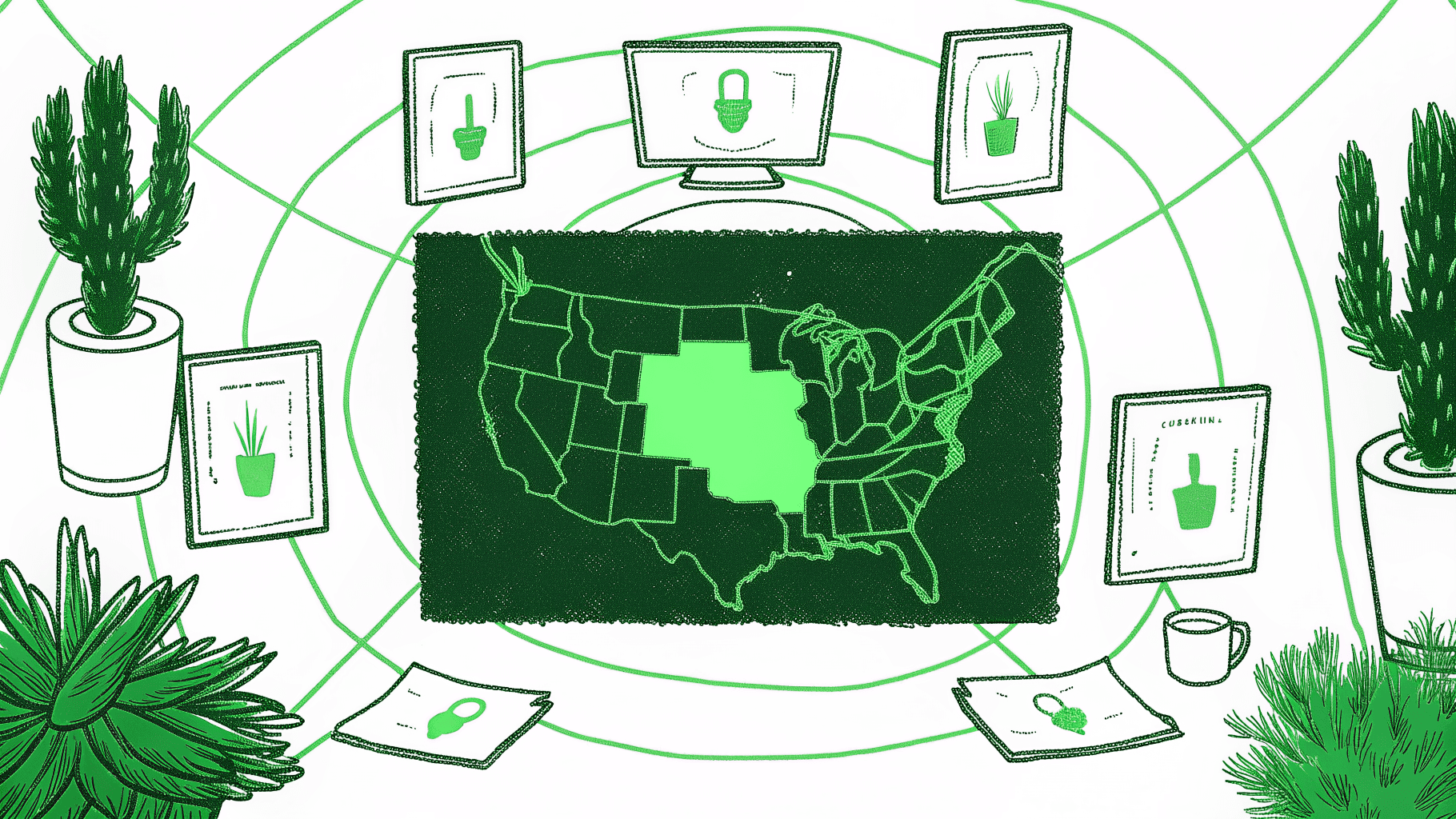
Why claimit.ca.gov Has a Hard State Border and What Falls Through It
According to the National Association of Unclaimed Property Administrators (NAUPA), each U.S. state administers its own unclaimed property program under its own escheatment laws, producing 50-plus separate databases with no unified national search interface.
The Multi-State Search Map – Which Official Portals Cover Which Gaps
Workers who have held jobs across multiple states must check federal sources independently of any state search.
The Hidden Cost of Manual Cross-State Searching and Who It Hurts Most
Sparrow’s Unclaimed Money Search collapses that fragmentation into a single search across all 50 states, a structural gap the National Association of Unclaimed Property Administrators (NAUPA) confirms no single state portal can bridge. Sparrow’s Automated Filing and Payout Tracking handle claim submission and track where each filing stands so nothing stalls silently.
For class action settlements, which frequently arise from multi-state consumer relationships and are easy to miss entirely when you’ve moved, Sparrow’s Class Action Settlement Discovery and Filing layer runs alongside the unclaimed property search, automatically matching your purchase history to open settlements and filing on your behalf. The trade-off worth naming honestly: an aggregation tool is most valuable when you have lived or worked in multiple states, or held accounts, subscriptions, or consumer relationships across state lines.
Related Reading
- How To Get Money From The Government
- How Do I Get My Stimulus Check
- How To Claim Unclaimed Funds In Ohio
- How Do I Find Unclaimed Money In Arizona
- How To Claim Unclaimed Money In Texas
- How Do I Claim Unclaimed Money In Nj
- How To Claim Unclaimed Money In Louisiana
- How To Claim Unclaimed Money In Wisconsin
- How To Claim Unclaimed Money In Pennsylvania
- How To Check For Unclaimed Money
- How To Find Unclaimed Life Insurance
Search All 50 States for Unclaimed Money Without the Manual Work
California’s claimit.ca.gov is the right first move for any resident, but it covers exactly one state, and your unclaimed property footprint almost certainly stretches further than your residential history suggests.
Funds are held by whichever state the paying institution reported to, not necessarily any state you ever lived in. Your former employer’s incorporation state, your bank’s headquarters state, a deceased relative’s beneficiary designation filed in a completely different state, all of these can generate unclaimed property in your name in places you have never set foot. A search built around where you have lived will systematically miss those accounts.

The familiar workaround is checking each state portal one by one. As industry research has noted, a complete search requires visiting dozens of separate state portals, and that fragmentation causes most people to abandon the process before they finish. That is a structural barrier.
Sparrow’s Unclaimed Money Search collapses those 50 separate searches into one, scanning all 50 state databases in a single pass. It surfaces unclaimed funds tied to past purchases, memberships, and accounts regardless of which state holds them, the same fragmentation that, according to the National Association of Unclaimed Property Administrators, causes most multi-state movers to abandon the process before completion. For anyone who has moved states, changed jobs, or simply held accounts at a national bank, that single search is the difference between a partial check and a complete one.
One honest limit: Sparrow surfaces what exists. Whether a specific property is yours to claim still runs through the official state process. If you have spent your entire working life in a single state and have never held accounts, received paychecks, or rented property outside California, the manual claimit.ca.gov search is likely all you need. A multi-state aggregation tool adds the most value for people whose financial and residential history crosses state lines.
Next steps
If your unclaimed property search stalled the moment you realized California is just one of fifty separate registries, the path forward starts with accepting that a search built around where you have lived will systematically miss the funds held by institutions that filed in their own states, not yours.
The structural math problem that causes most multi-state movers to abandon the process before finishing is real, not a motivation failure. Fifty separate portals, no unified interface, and a federal layer sitting entirely outside all state systems make incompletion the statistically rational outcome for anyone without an aggregation tool. At the same time, your unclaimed property footprint almost certainly extends beyond your residential history, because funds are reported by whichever state the paying institution filed with, not the state you lived in. Together, those two realities point to one action: a single search that collapses all fifty databases at once, rather than a manual process that quietly defeats itself.
Start with Sparrow, the class action settlements, to run all fifty state databases in one pass and surface class action settlements tied to purchases and accounts you may have forgotten entirely. Once matches appear, Automated Filing and Payout Tracking handle the submission and follow up, so a match does not just sit there uncollected while you juggle separate claim portals.
Frequently Asked Questions
What is the official California website to search for unclaimed money?
The only official, free portal is claimit.ca.gov, operated by the California State Controller’s Office. No login or fee is required, and any site that is not a.gov domain should be treated with skepticism.
What types of property show up most often in California’s unclaimed money database?
The most common lost assets are old bank accounts, uncashed payroll checks, insurance payouts, security deposits, utility refunds, and stock dividends. These end up with the state because the accounts or instruments went untouched long enough to trigger California’s dormancy rules, requiring the holder to turn them over to the State Controller’s Office.
Does unclaimed property expire, can I still claim money that’s been sitting there for 10 years or more?
There is no deadline. The California State Controller’s Office confirms that property transferred to the state can be claimed at any time, with no statute of limitations.
What’s the fastest way to avoid delays when filing a claim?
Assemble all your documents before you open the portal, a government-issued photo ID, proof of your Social Security number, and a document tying you to the property, and submit everything in one complete pass. Incomplete submissions don’t simply pause; they restart the review clock, so front-loading your paperwork is the single highest-leverage action you can take.
I only searched my current name and found nothing, does that mean I have no unclaimed money in California?
Not necessarily. Unclaimed property is filed under whatever name and address the original holder had on record, so money from a former employer, a closed bank account, or an old security deposit may be listed under a maiden name, a previous last name, or a past address. The California State Controller’s Office explicitly advises searching under all former names, and the post recommends running the search at least three times, current legal name, any previous last name, and a common misspelling of your surname.

Leave a Reply