


Airlines count on you taking the voucher. You were likely owed cash the whole time, and the 2024 DOT rule proves it.
Most frequent flyers dealing with delays, cancellations, and denied compensation think a travel voucher or rebooking is the standard resolution for a cancelled flight, and that a cash refund is a special exception you have to fight for. Most passengers find out their flight is cancelled the same way: a gate agent hands over a tablet, a push notification appears, or an airline rep on the phone walks through “your options.” The word options is doing a lot of work there. What gets presented as a choice is often a carefully ordered menu designed so that one item never quite makes it to the top.
That gap between what airlines present and what passengers are actually entitled to costs travelers real money every year. Tools like Sparrow’s flight compensation tracker exist precisely because that gap is wide, consistent, and rarely accidental. The standard airline response to a cancellation follows a predictable sequence: rebooking first, travel credit second, cash refund nowhere in sight unless you know to ask. Before the U.S. Department of Transportation’s April 2024 final rule, this was the industry norm the DOT called out as the problem the rule was designed to fix.

The part airlines do not announce over the intercom: accepting a travel voucher or credit after a cancellation is a voluntary waiver of your cash refund right. The moment you click “accept credit,” you have made a legal choice, even if it felt like you were confirming the obvious next step. The voucher is a substitution the airline is hoping you’ll take in place of money you may already be entitled to.
Key takeaways
- A cancelled flight triggers a legal right to a cash refund under DOT rules, not a voucher or a rebooking, and that right exists regardless of whether the cancellation was caused by weather, a mechanical fault, or air traffic control.
- Accepting a travel credit the moment the gate agent offers it is the one move that can permanently waive your cash entitlement; declining the rebooking offer must come first, before you touch anything else.
- The DOT’s April 2024 final rule sets a binary threshold for cancellations: if the flight doesn’t operate, the refund right is triggered: no minimum delay window, no fault requirement.
- For delays, specific hour thresholds determine eligibility; domestic and international flights are measured differently, and landing on the wrong side of that line is the difference between a legal right and a courtesy request.
- A refund request is the opening entry in a documentation trail, not a one-time submission; that paper trail is what gives you enforcement power when the airline stalls or loops you back to the booking agent.
- Airlines routinely say no through frontline agents; that answer is a customer-service script, not a legal ruling, and passengers who escalate to the DOT complaint portal routinely recover full refunds after being told no more than once.
- The DOT refund covers your ticket price and nothing else; the same cancellation often activates separate claims under EC261 or other frameworks that most passengers never file because they close the folder the moment the refund clears.
- usesparrow.com’s Flight Delay Compensation closes the gap by letting passengers claim up to $650 for a delayed or cancelled flight by sharing their booking info, handling the claim process that most people abandon halfway through.
When Am I Entitled to a Refund for a Cancelled or Delayed Flight?
The cancellation reason feels like it should matter. It doesn’t. Under U.S. Department of Transportation rules, your right to a cash refund is triggered by the cancellation itself, not by why it happened. Weather, mechanical failure, air traffic control holds: none of these create a carve-out. That distinction catches most passengers completely off guard, and airlines rarely rush to correct the misunderstanding, and in some cases, gate agents actively deepen the confusion.

The DOT Rule That Makes the Cancellation Reason Irrelevant to Your Refund
In April 2024, the U.S. Department of Transportation finalized a rule requiring airlines to issue cash refunds automatically when a flight is cancelled and the passenger chooses not to travel. The word “automatically” is doing real work there. Airlines are no longer permitted to default to vouchers or rebooking as a substitute. The cash refund is the legal baseline, not a special exception you have to argue for.
The same U.S. Department of Transportation Final Rule: Refunds and Other Consumer Protections is explicit that cancellation reason is irrelevant to this right. A storm that shuts down an entire hub does not change what you are owed. The reason affects whether the airline owes you additional delay compensation; it does not affect whether you get your ticket money back.
One misinformation pattern passengers encounter repeatedly: airline ground staff tell travelers that a Saver fare or basic economy ticket means no refund is owed. That is flatly wrong when the airline cancels the flight. Those fare restrictions govern voluntary cancellations, situations where you decide not to fly.
When the airline cancels, fare class is irrelevant. The U.S. Department of Transportation rule makes no exception for ticket tier. If a gate agent or customer service rep tells you otherwise, they are conflating two entirely different sets of rules, and you are under no obligation to accept a voucher in place of the cash you are owed. Sparrow’s Flight Delay Compensation filing process is built to flag exactly this scenario and push the correct claim on your behalf.
It’s Not Just the Ticket – Ancillary Fees You’re Also Owed Back (Bags, Seats, Wi-Fi)
Most passengers think about the base fare. They forget everything else they paid. According to the U.S. Department of Transportation April 2024 final rule, ancillary fees (checked baggage, seat selection, Wi-Fi) must also be refunded in cash if the associated service was not provided. If your flight never departed, the airline collected money for a bag that never flew and a seat that was never occupied. That money comes back too.
These ancillary amounts are often small enough that passengers write them off. That is exactly the kind of recoverable money Sparrow is designed to surface. The platform’s Unclaimed Money Search and Recover Small Refunds capabilities exist precisely because individually modest amounts, a $35 bag fee here, a $15 seat upgrade there, add up, and airlines count on passengers not chasing them. Sparrow’s Automated Filing submits those claims without requiring you to manage a paper trail manually.
Significant Changes That Qualify the Same Way a Full Cancellation Does
A full cancellation is the obvious trigger. Less obvious: significant changes to your itinerary carry the same refund right under the U.S. Department of Transportation rule. A passenger booked in business class who is downgraded to economy at the last minute qualifies, even if the flight operates on time. A passenger whose connecting hub shifts from Denver to Dallas may qualify, even though the origin and destination are unchanged. Airport changes, added connections, and cabin downgrades all fall under the same framework.
One real-world complication worth understanding: using one leg of a multi-leg itinerary changes your refund exposure. If your itinerary is Vancouver → San Francisco → Los Angeles and the airline cancels only the San Francisco → Los Angeles segment after you have already flown the first leg, you are not entitled to a full round-trip refund; you completed part of the journey you paid for. Passengers who expect a full refund in that situation are regularly disappointed. What you may still be owed is a partial refund for the unused segment, plus any ancillary fees tied to it. Sparrow’s claim process is structured to identify the recoverable portion accurately rather than filing an all-or-nothing claim that gets denied and closes the door.
A separate barrier that stops many passengers before they even start: the belief that without a physical boarding pass, there is nothing to file. That is not true. Booking confirmation numbers, email receipts, and payment records are sufficient documentation for a refund or compensation claim. Sparrow’s Automated Filing and Payout Tracking tools are built to work with the documentation passengers actually have, not an idealized paper trail, so a missing boarding pass is not grounds to abandon a legitimate claim.
Refund Rights for Flight Delays vs. Cancellations – The Specific Thresholds That Qualify
The DOT’s 2024 refund rules don’t treat all disruptions equally. Where your flight lands on the eligibility spectrum determines whether you’re holding a legal right or a polite request, and that difference is measured in hours.

Cancelled Flights: the Threshold Is Binary
A cancellation alone triggers the refund right. Under the DOT’s April 2024 final rule, when an airline cancels your flight, you are entitled to a cash refund to your original payment method if you choose not to travel or accept rebooking. There is no minimum delay window to clear, no cause requirement to satisfy. A weather cancellation counts. A mechanical cancellation counts. The reason is legally irrelevant once the cancellation is confirmed.
Delayed Domestic Flights: the 3-Hour Rule
Domestic flight delays of 3 hours or more cross the DOT’s “significant change” threshold, converting your frustration into an enforceable refund right. A 3.5-hour domestic delay the airline attributes to weather still qualifies. The clock governs, not the cause.
3 hours Domestic delay threshold for cash refund right
Airlines sometimes post delays in small increments, each update individually under the threshold, while the real cumulative delay exceeds it. The DOT threshold is not self-executing; it is an evidence standard. You need to capture it yourself.
Delayed International Flights, Why the Threshold Doubles
For international routes, the qualifying threshold is 6 hours or more, per the same 2024 DOT rulemaking. The longer window reflects the practical complexity of international rebooking, but the underlying right is identical: decline the alternative, and you are owed cash.
6 hours International delay threshold for cash refund right
The Voucher Trap – What to Say to Get Cash Instead of a Travel Credit
Most passengers assume the DOT’s automatic refund rule works the way the name implies: that a cancelled flight triggers a refund without any action required on their part. It does not. The refund right exists only in the brief, pressured moment between the airline’s alternative offer and your response, which means knowing exactly what to say, and what not to accept, before that moment arrives is the only thing standing between you and a travel credit you never wanted.
What Declining the Rebooking Offer Actually Means and Why It Must Come First
Declining must happen before you accept anything else, including a seat on the next flight. The DOT’s “automatic refund” rule is not automatic. It is a conditional right that exists only in the single, pressure-filled moment between the airline’s alternative offer and the passenger’s response. Every passenger who passively accepts a voucher or rebooking, even without fully understanding the choice, has not been protected by the rule; they have voluntarily waived it. That structural gap is the hidden behavioral trap, and it is the gap airlines are best positioned to exploit.
Pros and cons at a glance
The DOT’s 2024 automatic refund rule contains a critical behavioral trap, identified by U.S. PIRG Education Fund: the refund is technically automatic only after a passenger rejects the airline’s alternative offer. One passive click on “accept rebooking” or “take travel credit” surgically removes the legal protection the rule was designed to guarantee. Airlines have long relied on the asymmetry between what agents are trained to offer and what passengers are trained to expect, and the 2024 rule does not fully close that gap. It shifts the default, but it does not eliminate the moment of vulnerability.
That moment is where enforcement actually lives. A passenger who says nothing, clicks the first available option, or accepts a rebooking under time pressure at the gate has not been wronged by the airline in any legally actionable sense under the current rule. They have made a choice, even if that choice was shaped by incomplete information, a crowded terminal, and a gate agent working from a script designed to minimize cash outlays.
This is why the sequence matters more than the rule itself. Knowing the regulation exists is not enough. Your right to a cash refund is extinguished the moment you accept anything else. That is the operational knowledge that determines whether the rule protects you or simply exists on paper while you fly home on a voucher you never wanted.
Knowing that your right to a cash refund is extinguished the moment you accept anything else, that is the operational knowledge that determines whether the rule protects you or simply exists on paper while you fly home on a voucher you never wanted.
How to Request a Refund from the Airline – Step by Step
A refund request is the first entry in a documentation trail, and that trail is what gives you real enforcement power if the airline stalls. One of the most frustrating patterns beginners face is the circular blame loop: the airline tells you to contact the booking agent, the agent says they’re waiting on the airline, and you’re left holding a cancelled ticket with no actionable path forward. A second trap is silence: you call, you request a refund, and then two weeks pass with no confirmation email and no status update, leaving you genuinely unsure whether anything is happening at all. Both of these situations are solvable, but only if your documentation trail is airtight from the very first step.
Call the Refund Line When the Portal Fails
If the portal is down or pushes you toward a voucher without a clear cash-refund path, call the airline’s refund line early, as hold times during mass cancellation events can stretch for hours. When you reach an agent, state clearly that you are declining any rebooking offer and requesting a cash refund to your original payment method. Ask for a confirmation number before you hang up, and note the agent’s name, the date, and the call time. If the agent tells you to contact your booking platform and the platform says to contact the airline, document that exchange in writing immediately; that circular deflection is itself relevant if you later need to escalate.
Step 1: Confirm the Cancellation and Gather Your Booking Documents
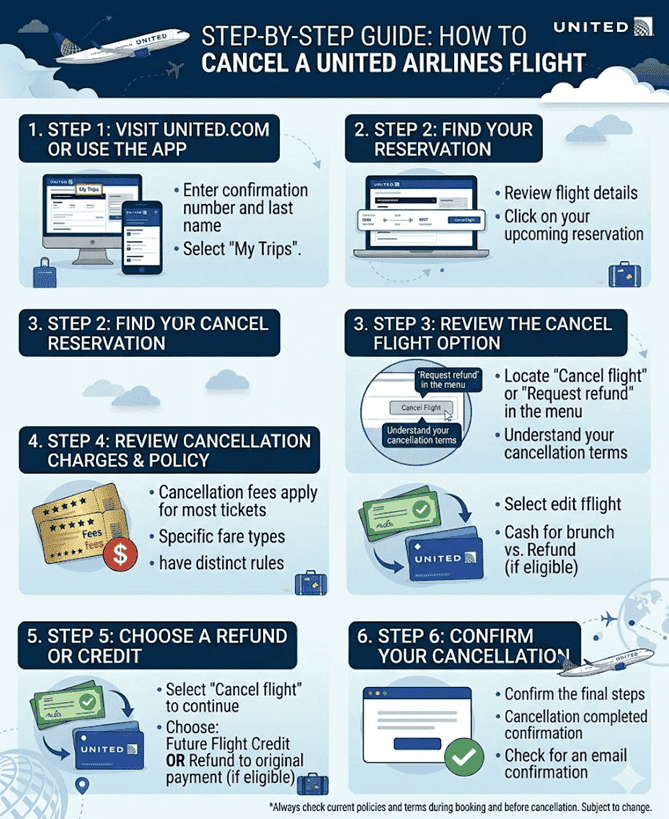
Before contacting anyone, verify the cancellation is official and collect your booking confirmation, ticket number, and any cancellation notification the airline sent. The U.S. Department of Transportation confirms that passengers are entitled to a full cash refund when an airline cancels a flight, but you need documentation to support your claim. Skipping this step often leads to delays or agents offering vouchers instead of cash.
Step 2: Submit a Refund Request Directly Through the Airline’s Online Portal
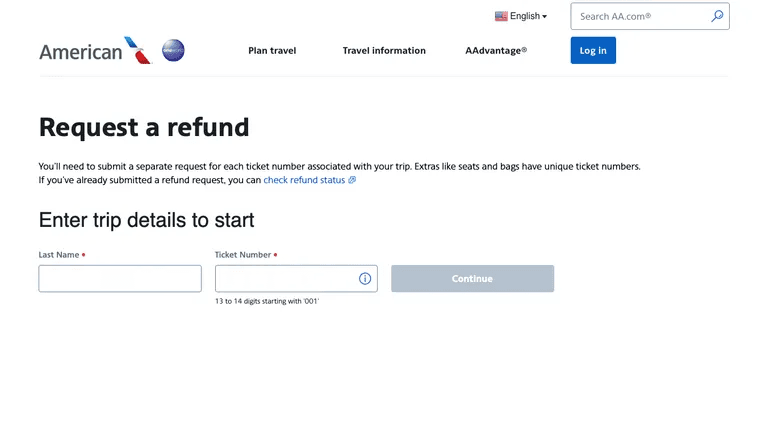
Most major carriers, including American Airlines, offer a dedicated online refund request form where you enter your ticket number and last name to begin the process. This is the fastest route for straightforward cancellations and creates a timestamped paper trail. The tradeoff: automated systems sometimes default to travel credit offers, so read every screen carefully before submitting to ensure you select a cash refund.
Step 3: Call the Airline’s Customer Service Line If the Portal Fails or Is Unclear
Image: How to Get Refund for Cancelled Flight – step call airline customer
When the online portal doesn’t surface a cash refund option or your booking was made through a third party, a direct phone call to the airline’s customer service team is the next best step. Have your booking reference, flight details, and cancellation notice ready before dialing. The main limitation is wait times, which can stretch to hours during irregular operations; call early in the morning for the shortest queues.
Step 4: Send a Formal Written Refund Request via Email or Certified Letter
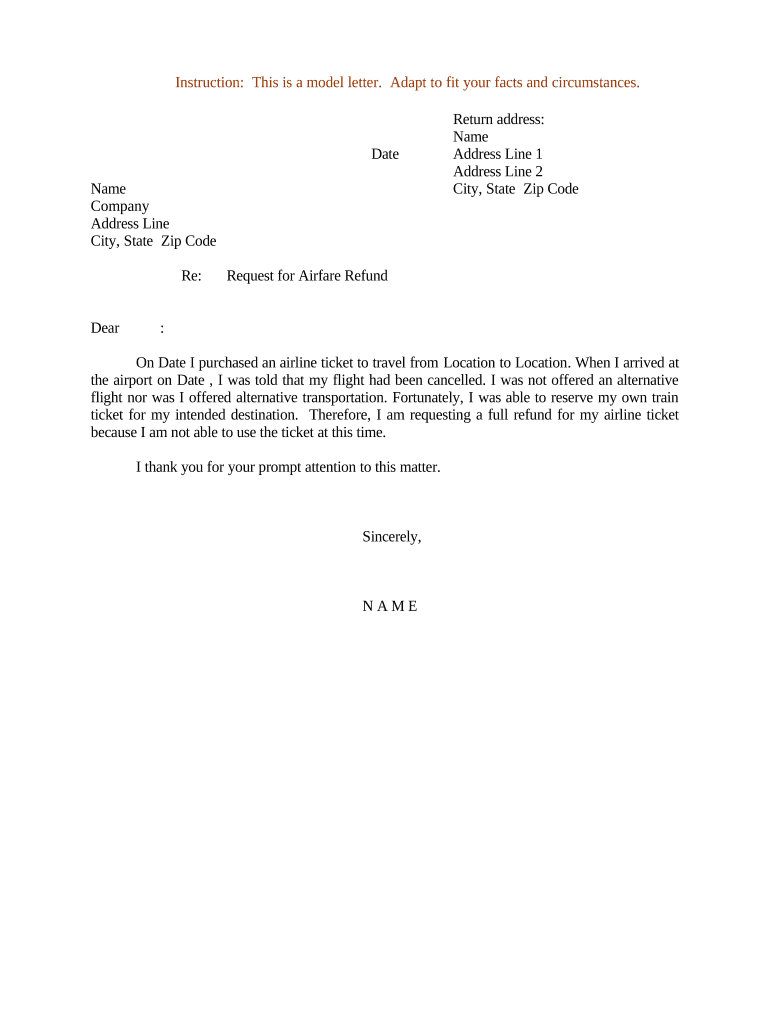
A concise, professional written request citing your legal right to a refund, your ticket number, flight details, and the cancellation date creates an official record that strengthens any future dispute. Use a neutral, factual tone and state a clear deadline for response, typically 7 business days. The tradeoff is that written requests take longer to process than portal submissions, but they are essential if verbal requests have already been denied.
Step 5: Escalate to the DOT or Your Credit Card Issuer If the Airline Refuses
Image: How to Get Refund for Cancelled Flight – step escalate dot or
If the airline denies a legitimate refund for a cancelled flight, passengers can file a complaint with the U.S. Department of Transportation’s Aviation Consumer Protection Division or initiate a chargeback through their credit card issuer. The DOT complaint process is free and puts regulatory pressure on airlines to comply. The limitation is that resolution can take weeks to months, making this a last resort rather than a first move.
Related Reading
- Class Action Lawsuit Payout Time
- Should I Cash a Settlement Check
- How is Settlement Money Divided
- How Can I Get Free Money
- Can You Sue for Data Breach
- How to Claim Money From a Closed Bank Account
- How to Get Refund for Cancelled Flight
- Unclaimed Federal Tax Refunds
What If the Airline Refuses to Give You a Refund – Your Escalation Options
When an airline says no to a refund, that answer feels final. It isn’t. A refusal from a frontline agent is a customer-service script, not a legal ruling. Passengers who know which lever to pull next routinely recover full cash refunds after being told no, sometimes more than once. The pattern is consistent: an airline cancels a flight, offers a fraction of what it owes, or nothing at all, and counts on passengers not knowing where to escalate. We see this regularly with passengers who were offered only a partial refund after an airline-initiated cancellation, or who were hit with thousands of dollars in forced reissuance fees and told that policy simply doesn’t allow a refund. The airline’s willingness to pay changes the moment a regulatory body or card network enters the picture.
1. File a Formal DOT Complaint – The Escalation That Forces Legal Review
File your complaint through the U.S. Department of Transportation Aviation Consumer Protection portal. According to the DOT’s own guidance, the agency uses complaint volume to identify patterns and open civil-penalty investigations against carriers.
A DOT Office of Inspector General audit confirmed that the DOT has revised its processes to address rising consumer complaints. Your filing feeds a real enforcement mechanism. A well-documented complaint creates an official record that raises the airline’s regulatory risk, which often prompts proactive resolution before any formal investigation begins. File it the same day you receive the denial, not weeks later when your position is weakest.
One underappreciated wrinkle: if your booking was made through a third-party travel portal, that intermediary can sit on your refund indefinitely, leaving you caught between the airline and the portal. Name both parties explicitly in your DOT complaint, the airline that cancelled the flight and the portal that is holding your funds, and document every interaction with each separately. Sparrow’s Automated Filing feature handles exactly this scenario, structuring your complaint so the right entity is on record for the right failure.
2. Credit Card Chargeback – Dispute as ‘Services Not Rendered’ for Fast Relief
Contact your card issuer and dispute the charge under “services not rendered.” For cancelled flights where the airline failed to deliver transportation, this framing is accurate and gives the dispute its strongest legal footing. Document the cancellation notice, your refund request, and the airline’s denial before you call. The trade-off: initiating a chargeback while a DOT complaint is pending can complicate both tracks, so file both on the same day and keep records of each separately. Sparrow’s Payout Tracking feature lets you log and monitor both tracks in parallel so nothing slips through the gap.
3. Small Claims Court – Sue the Airline Directly Without a Lawyer
Small claims court lets passengers file directly against an airline without legal representation. Most state caps sit between $5,000 and $10,000, covering the majority of individual ticket disputes, including the kind of mid-range losses passengers regularly face when an airline refuses to return reissuance fees or converts a cash fare into a near-worthless travel credit.
Airlines frequently settle before a hearing rather than send a lawyer. Sparrow’s Recover Small Refunds expertise is built for exactly these cases: amounts that feel too small to fight but are absolutely worth pursuing. This works best for domestic carriers; international carriers can raise jurisdictional objections that slow the process considerably.
4. CFPB Complaint – Escalate Against Your Bank If the Chargeback Is Denied
If your card issuer sides with the airline and reverses your chargeback, file a complaint with the Consumer Financial Protection Bureau at consumerfinance.gov. The CFPB complaint puts your bank, not just the airline, on notice that its dispute resolution is under regulatory scrutiny. Before you file, use your U.S. Department of Transportation Aviation Consumer Protection complaint record as supporting documentation; a concurrent federal complaint on file strengthens your CFPB submission and signals that you have already escalated through the proper channels. Keep both complaint numbers recorded in one place, Sparrow’s Payout Tracking gives you a single dashboard to monitor every open action until a resolution lands.
5. Build a Paper Trail of Proof – The Foundation Every Escalation Depends On
No escalation strategy for getting a refund on a cancelled flight succeeds without documented evidence. Uber receipts, Google Maps timeline data, call logs, airport purchase receipts, and screenshots of correspondence have all been used to disprove airline misclassifications like ‘no-show.’ Do not accept any partial goodwill payment before your dispute is resolved; accepting partial compensation can legally bar you from recovering the remainder through your bank.
Your DOT Refund Is One Claim – Here’s What Most Passengers Miss Alongside It
Getting a DOT cash refund feels like crossing the finish line. It isn’t. The same cancellation that triggers your refund entitlement often activates two or three separate, legally independent claims at the same time. Most passengers never discover them because they close the folder the moment the refund hits their account.

The DOT Refund Covers the Ticket, and These Separate Entitlements Cover Everything Else
The U.S. Department of Transportation’s April 2024 rules are explicit: refund entitlements extend beyond the base fare to include checked baggage fees, seat upgrade fees, and other ancillary charges for services you paid for but never received. That $35 bag fee and $45 seat selection are separately refundable. Most passengers never ask for them. That gap is not accidental. Airlines process refund requests one line item at a time, with no obligation to surface what else you’re owed.
Why Cancelled Flights Appear in Class Action Settlements More Often Than Passengers Realize
A single flight cancellation can qualify you for a concurrent class action settlement tied to systemic overbooking, fare practices, or data handling by the same airline. These settlements run on a separate legal track from your DOT refund. The airline will not mention them. The DOT refund process has no mechanism to surface them. You find out only if you go looking, or if something goes looking for you.
The Same Documentation Files Both Claims
The booking confirmation, flight number, and cancellation record you already assembled for your DOT refund request are the inputs needed to check eligibility for active airline settlements. You built the file once. The question is whether you use it twice. Sparrow’s Flight Delay Compensation feature monitors active settlements and prefills claim forms using the booking data you provide, running that second recovery layer in parallel with your refund.
Related Reading
- How Are Settlement Checks Mailed
- Settlement Check Timeline
- Average Class Action Lawsuit Payout Per Person
- No Proof Required Class Action Lawsuits
- Class Action Lawsuit Unclaimed Funds
- Data Breach Compensation Examples
- Data Breach Class Actions
Next steps
If your cancelled flight left you staring at a voucher offer you weren’t sure you could refuse, the path forward starts with understanding that the cash refund is already yours by default, and the voucher is what the airline is hoping you’ll take instead.
The DOT’s automatic refund rule only protects you if you actively decline the alternative offer, meaning the entire right hinges on a single moment most passengers don’t realize is legally consequential. And because the DOT and EC261 compensation are independent entitlements that can stack on qualifying international itineraries, resolving your disruption through any single channel almost certainly leaves at least one recovery layer completely uncaptured. Together, those two realities point to the same next step: check every claim layer your cancellation may have triggered, not just the one the airline acknowledged.
For passengers who want to go deeper on how airline class action settlements run on a parallel track to your DOT refund, see sign up for class action lawsuits for further reading on how those recoveries work alongside individual claims.
Frequently Asked Questions
Does a weather cancellation still qualify me for a cash refund?
Yes. Under the U.S. Department of Transportation’s April 2024 final rule, the cancellation reason is legally irrelevant to your refund right, weather, mechanical failure, and air traffic control holds all qualify equally. The reason only affects whether the airline owes you additional delay compensation, not whether you get your ticket money back.
Can I get my checked baggage fee refunded if my flight was cancelled?
Yes. The DOT’s April 2024 final rule requires airlines to refund ancillary fees, including checked baggage, seat selection, and Wi-Fi, in cash if the associated service was not provided. If your flight never departed, the airline owes you that money back too, not just the base fare.
My flight was booked through a third-party agent and the airline keeps redirecting me there, what do I do?
Document everything from the start: pull together your record locator, booking confirmation email, and a screenshot of the cancellation notice. Having your own timestamped paper trail lets you demonstrate directly to the airline that the cancellation originated on their end, which breaks the circular blame loop where the airline points to the agent and the agent points back to the airline.
What actually counts as a “significant change” that gives me a refund right, short of a full cancellation?
Under the DOT’s April 2024 rule, significant changes include domestic delays of 3 hours or more, international delays of 6 hours or more, airport changes, added connections, and cabin downgrades, for example, being moved from business class to economy at the last minute qualifies even if the flight operates on time.
If I accept a travel voucher instead of a cash refund, can I change my mind later?
No. Accepting a travel voucher or credit after a cancellation is typically a voluntary waiver of your cash refund right; the moment you click “accept credit,” you have made a legal choice. This is why declining any alternative offer must happen before you accept anything else, including rebooking.


Leave a Reply